Glazed Pear: Round 1

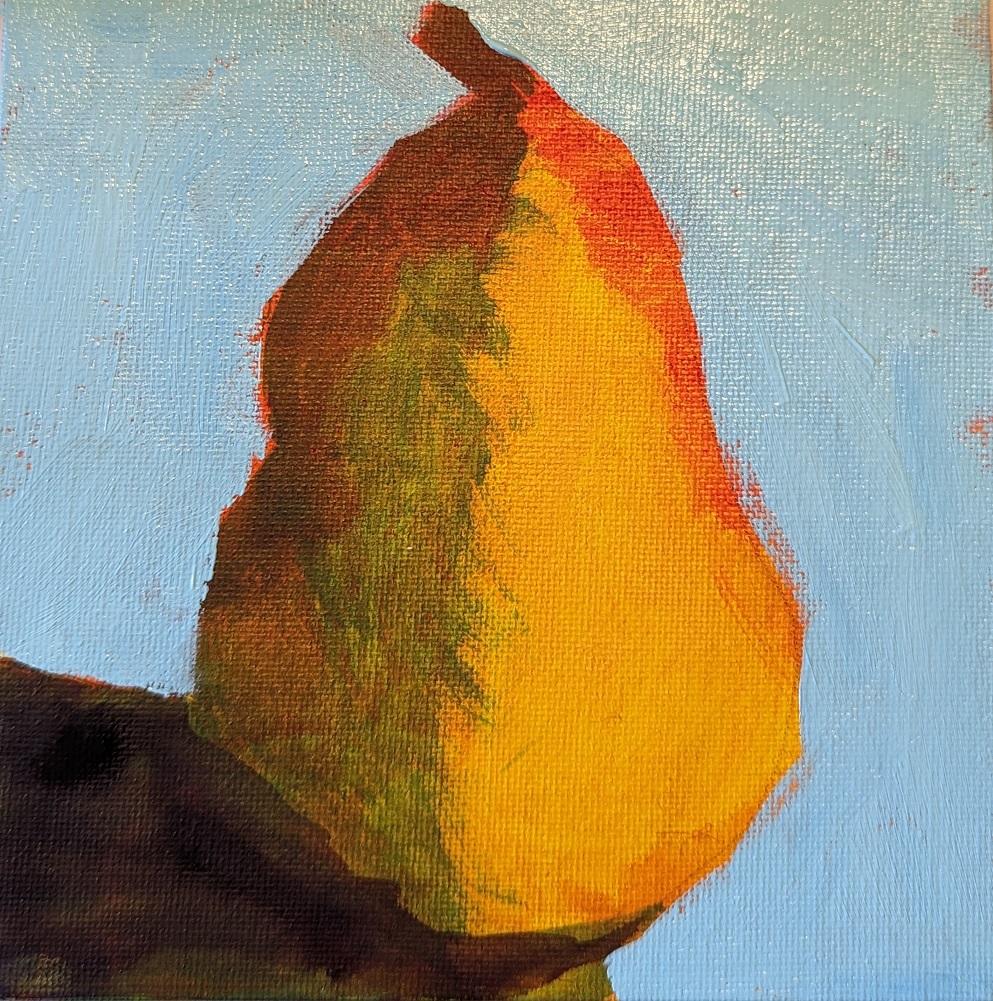
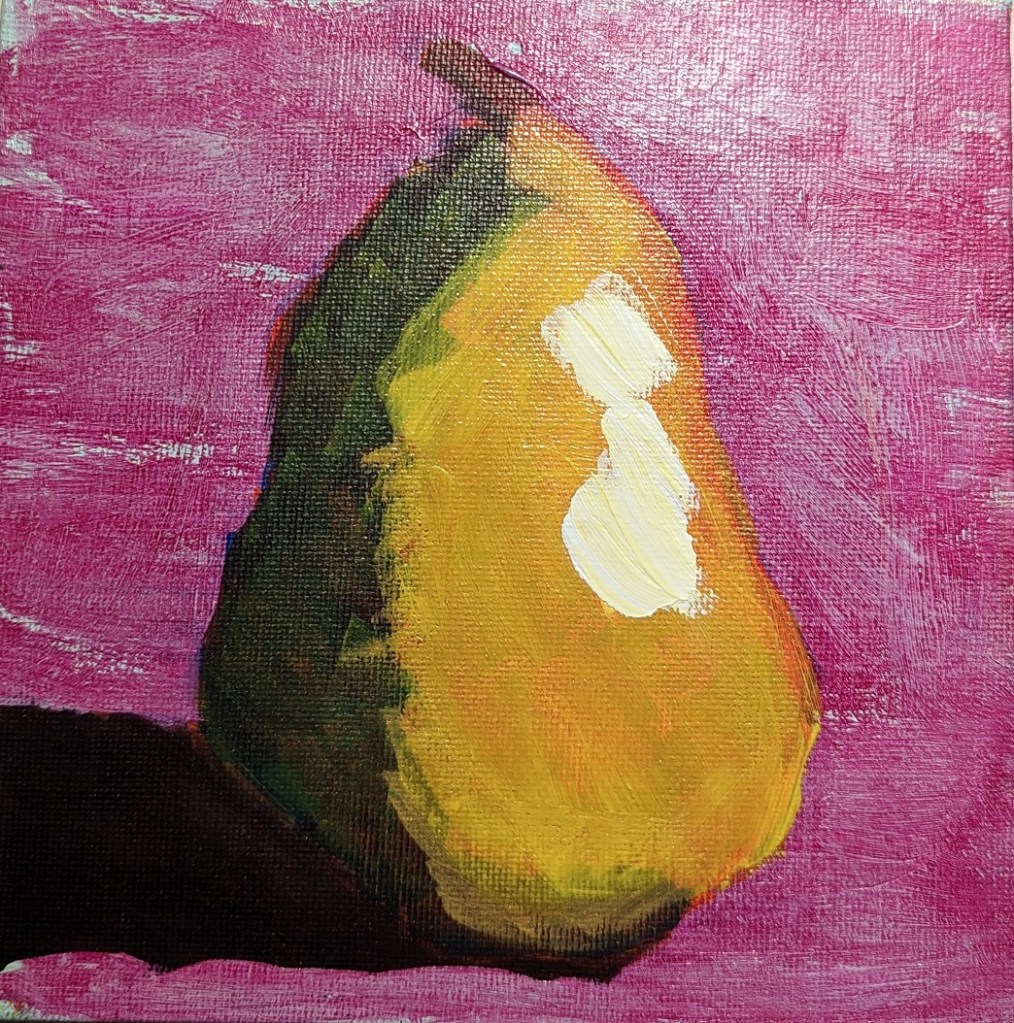
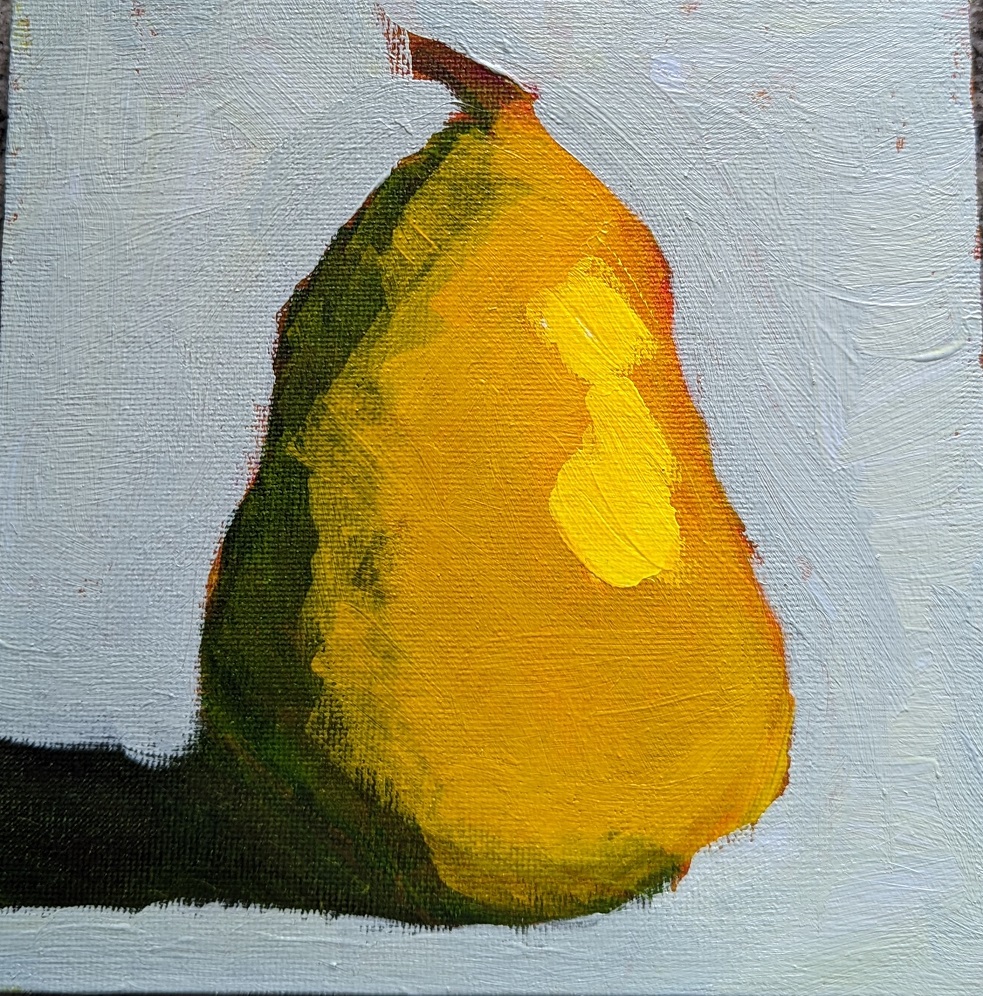
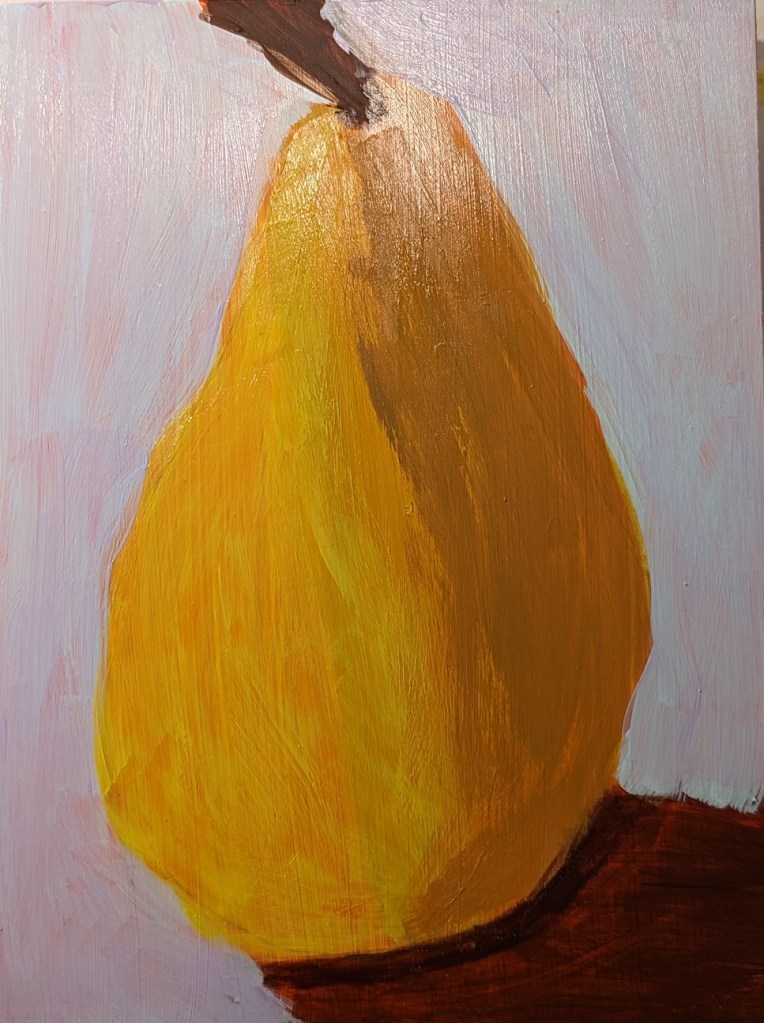
I signed up for Marla Baggetta‘s class “Adventures in Acrylics“. The first demo she provides is treating acrylics rather like watercolors, and building up glazes of a single pear, and a group of 3 pears. So, before I watched her video demo, I did my own interpretation.

I have two pear paintings which I did side by side: one is on gessoboard (which I mostly haven’t used so far) and one is an 8×8 “super saver” cotton canvas from Dick Blick. I find the paint slips and slides more on the gessoboard; something I find irritating in my beginner-ness.

That said, on the whole, I prefer the pear I did on the gessoboard; it’s a more accurate shape. (I actually sketched the pear with an HB pencil in that version. In the other, I just painted the shape with a bit of yellow ochre paint.)

Otherwise, I did the same process and used the same colors on both substrates, finishing off with a satin gloss.

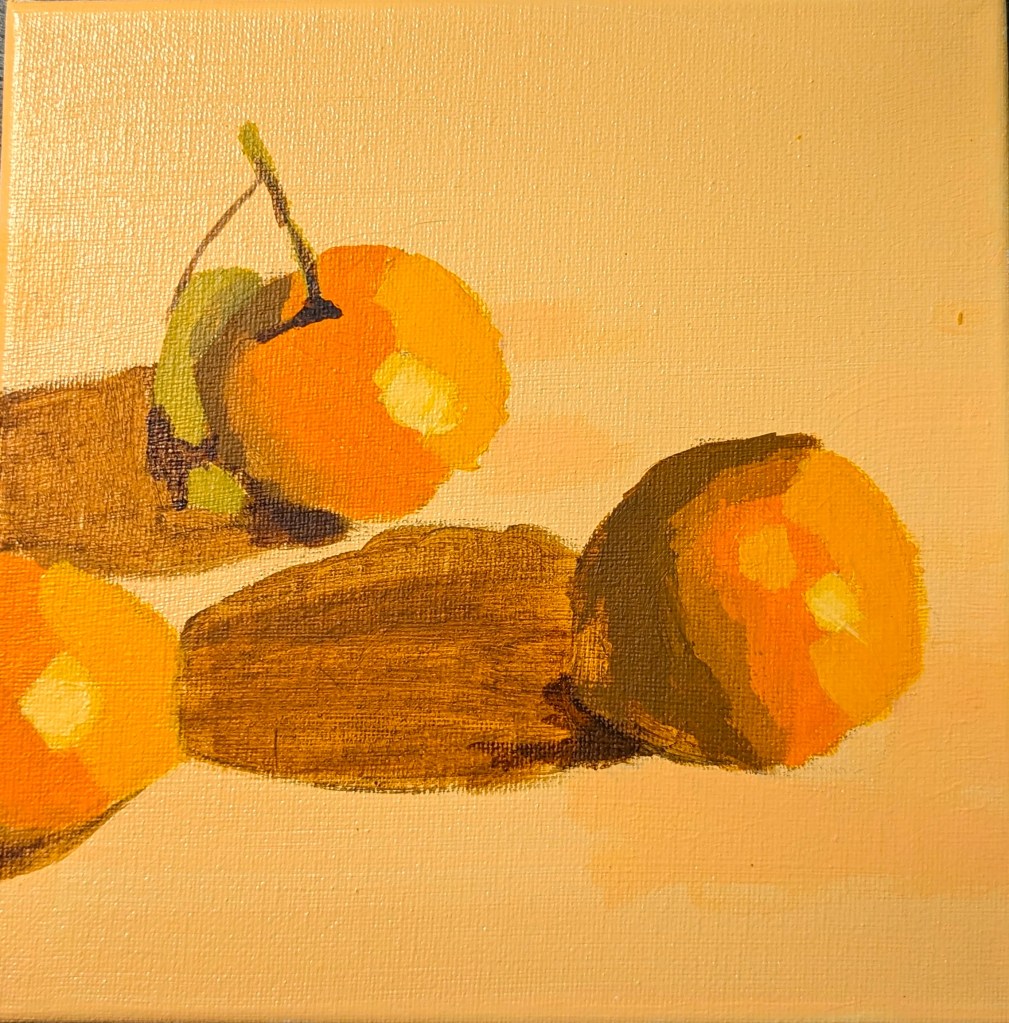
Clementines… From Will Kemp’s Art School

Another artist I found and follow on YouTube and his personal site is Will Kemp, from the UK. He is classically trained, and began with painting in oils, later switching to acrylics because he was working in an area not properly ventilated for the paint thinners and solvents he had been using.

Will Kemp has multiple YouTube videos, online tutorials on his website, online classes for sale (and downloading) in acrylics, and I am finding his style as a useful enhancement to what I’m learning from Paint Coach.

I bought Kemp’s Still Life Acrylic Project E-Book, and am working through it. First up was a project that involved painting a group of clementines. Much of the focus is on setting up your colors by color mixing, which is something I need to learn about.

This was painted on an 8×8 canvas.

Still Life — Another Study

The still life of fruit is yet another study from Patti Mollica’s book How to Paint Fast, Loose and Bold: Simple Techniques for Expressive Painting.

As far as my efforts in copying still life demonstrations from various painting teachers, this is one of my better ones in my opinion. I’m most pleased with the dark red (purple) cherry.

That said, all the stems I painted are sloppy — I need to practice painting thin lines. And the brushwork on the red apple is awful. The paint choices as well could be improved — the red is so transparent you can see through to the raw sienna underpainting, and my charcoal pencil outline. Sigh.

Glazed Apple in Acrylics

I wish I had taken a photo of this red apple before I applied a glaze of Naphthol Red (PR112) and Satin Glazing medium, but I didn’t. It was inspired by Patti Mollica’s How to Paint Fast, Loose and Bold: Simple Techniques for Expressive Painting (also mentioned in yesterday’s post).

This was painted on 5×5″ gesso board.

Studies from Patti Mollica’s Book

Because Patti Mollica works in acrylics, I bought her book How to Paint Fast Loose & Bold. Obviously, as a professional artist, she too focuses on values and shapes, and starting from big to small. Her book is valuable to me because I’m using acrylics.

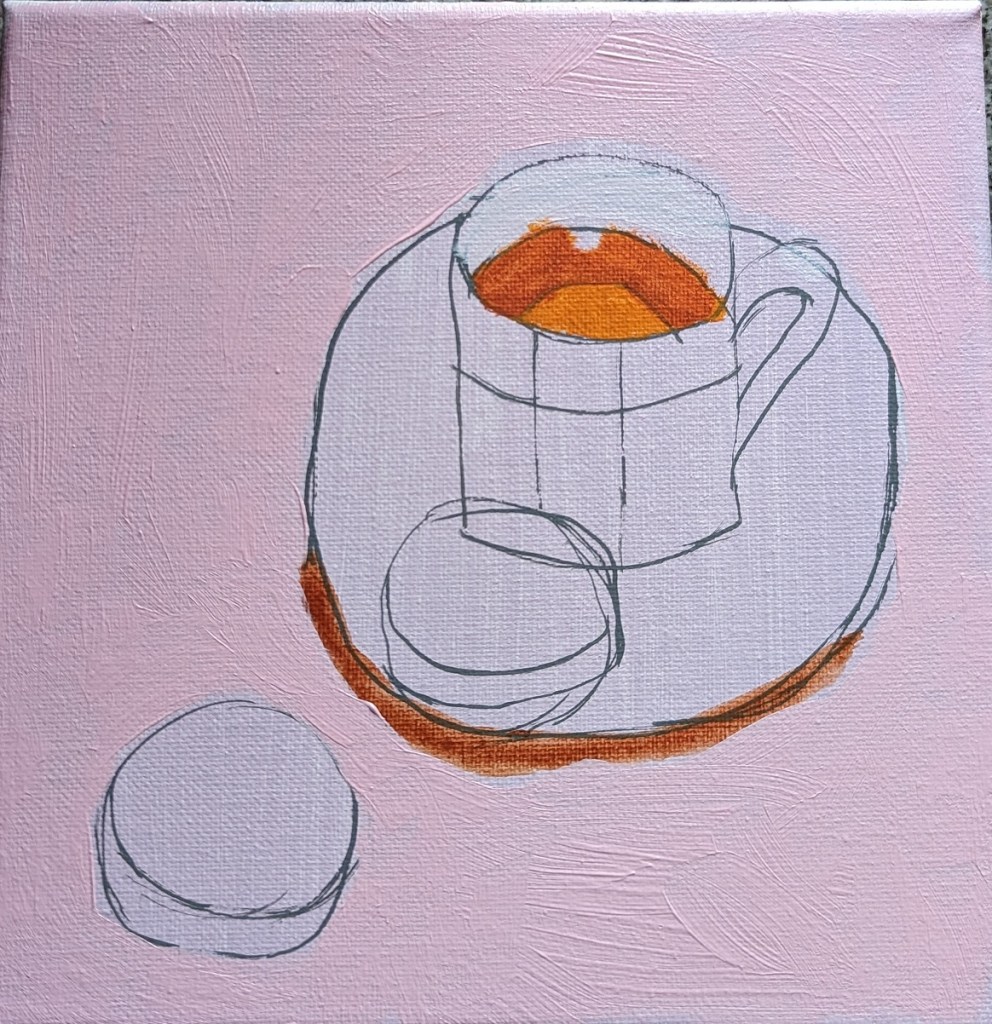
In the book she demos one of her paintings (Stacked, 8×8), which I did on a 5×5 gesso panel, and a second time on an 8×8 canvas. She did an underpainting in burnt sienna (and generally uses Golden brand paints). I found burnt sienna (Blick heavy body) to be quite dark. For drawing the initial shapes, I used a charcoal pencil.

I’m pleased with my drawing — which you can see in my “in progress” photo — but clearly have work to do on brushwork and color mixing!

Below is the 5×5 version which I did first. The dark area in the lower right of the image is an artifact of my photography.