I wasn’t particularly satisfied with my pink and white roses in the vase a few posts back so I tried winging this one (on 6×8 watercolor paper). I like the colors, but this is a pretty abstract “symbolic” rose.


I wasn’t particularly satisfied with my pink and white roses in the vase a few posts back so I tried winging this one (on 6×8 watercolor paper). I like the colors, but this is a pretty abstract “symbolic” rose.
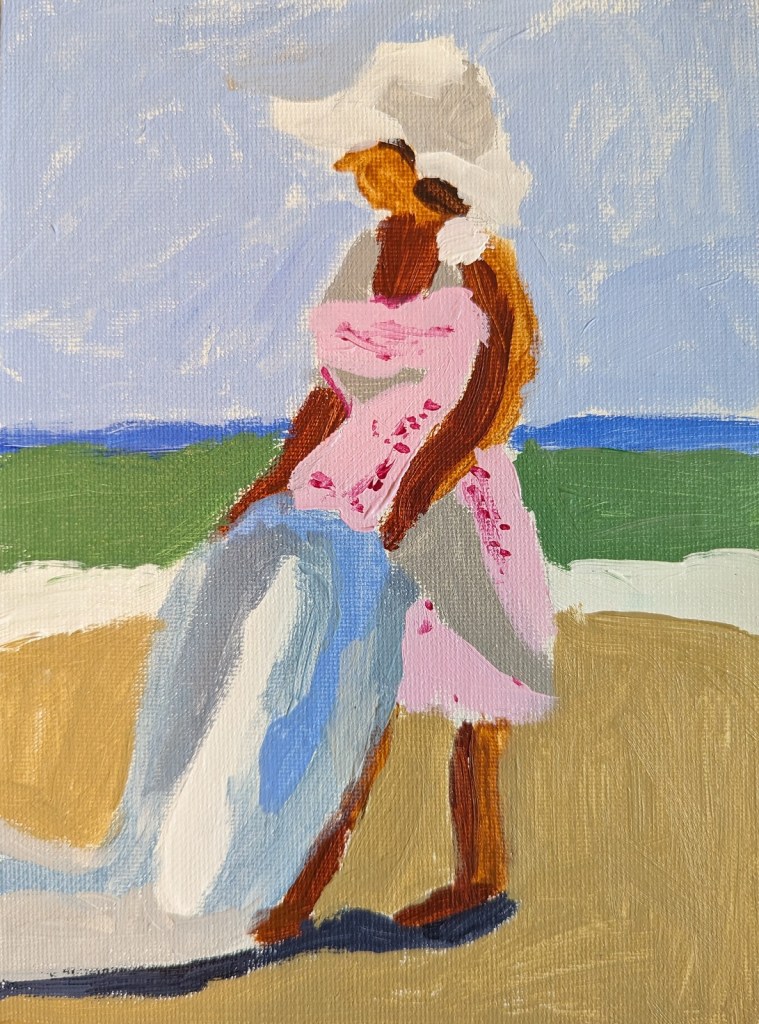
I recently purchased the June 2019 of Leisure Painter which had an article by Steve Strode about the basics of acrylics. He suggests you model good painters, and gives an example in the magazine of his painting based off of Peggi Kroll-Roberts‘ style.
This is the first figure I’ve ever painted, and my goal was 1) just to do one, and 2) was trying to focus on using minimal brush strokes — just to boldly attempt it, in other words.

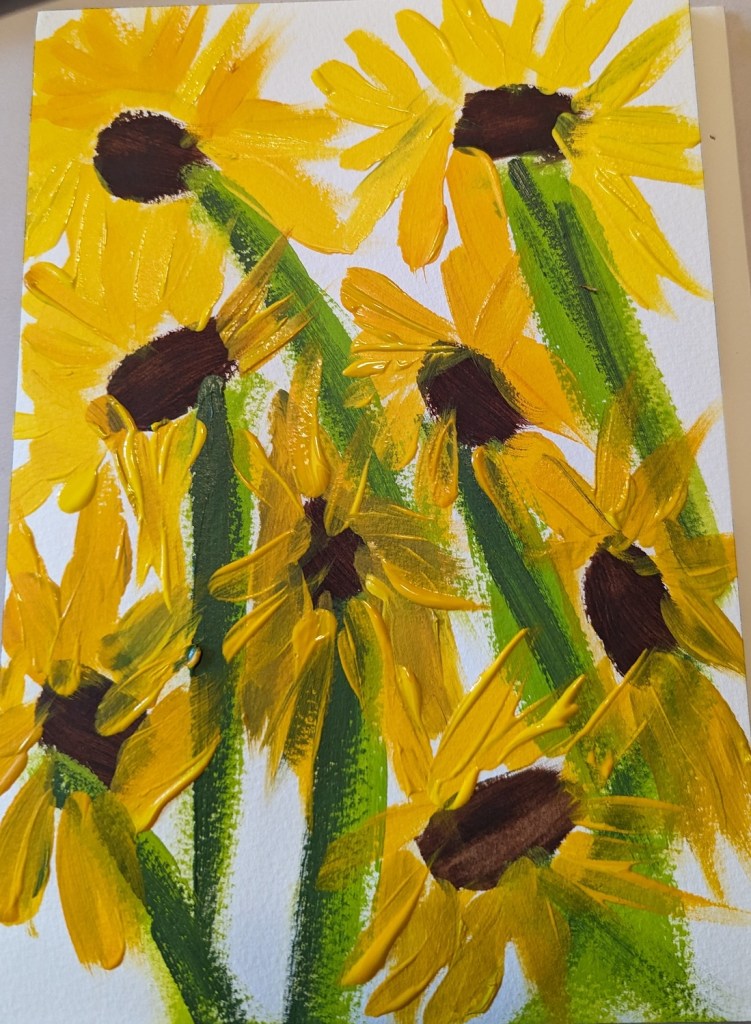
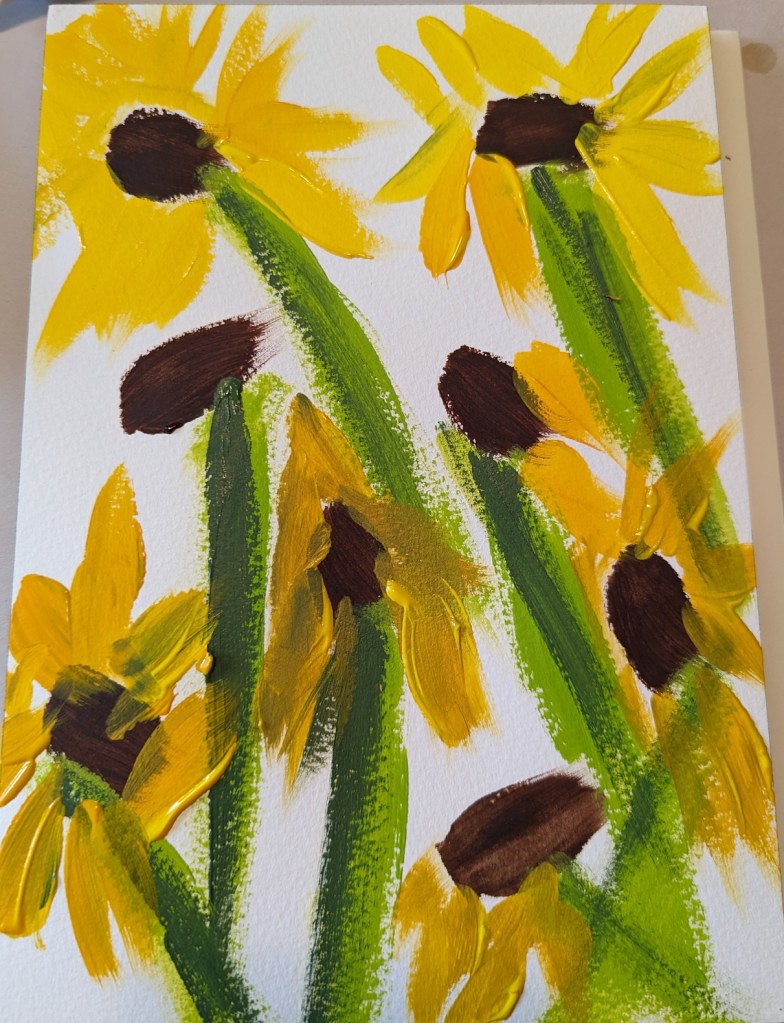
After painting the sunflowers in my two previous posts — as much as fun as it was — I wanted to make my flowers more artistic and less symbolic. I was reading blog posts from Karen Margulis, a pastel painter, and was inspired to up my game.
This was done in pastel on a terracotta-colored 6×8 Pastel Premier 4-ply board.

After doing a quickie version in pastels, I decided to a similar scene in acrylics. This was done on 7×10 300-lb. cold-pressed watercolor paper.
Here’s the work-in-progress (right) and the finished version (left).
I did this quick study from memory and on a 6×6 canvas panel based on one of my own photos. I had previously underpainted the panel in an Ultramarine Blue-Titanium White mix, which seriously affected the magenta paint.

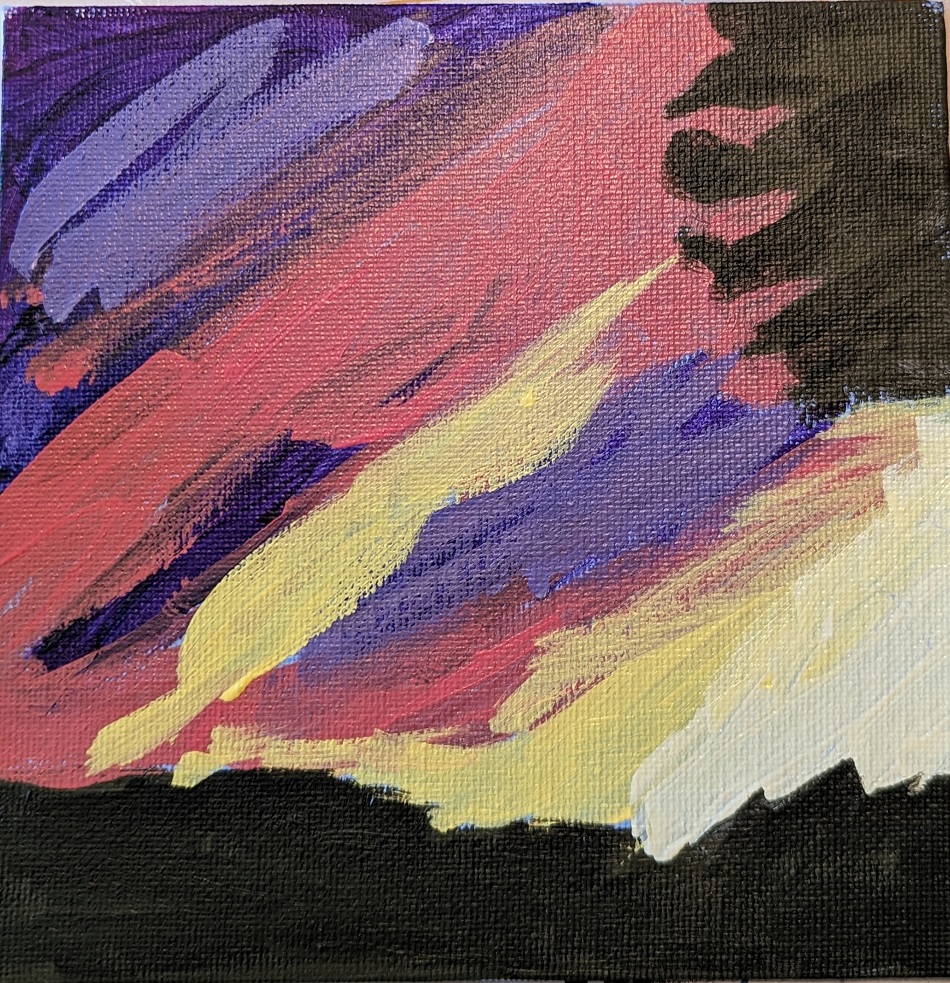
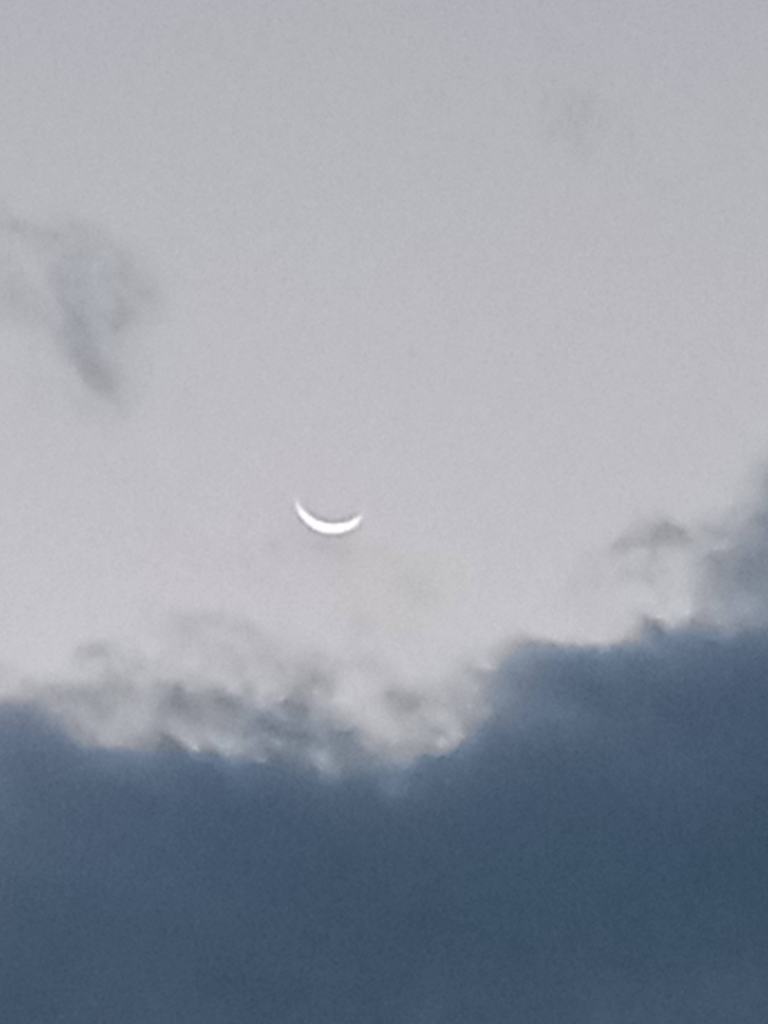
This painting was done in acrylic on a 4×6 piece of 300 lb. cold-pressed watercolor paper. It’s based off of a photo I took of the waning crescent Moon one morning back in November 2021.
I felt the original image of the sky was too gray and blue, so I changed it up at bit. The sky was painted with Liquitex BASICS blue gray; the pink is Cadmium Red Medium Hue from Golden, and the Moon is Titanium White mixed with Hansa Yellow Light (PY 73).

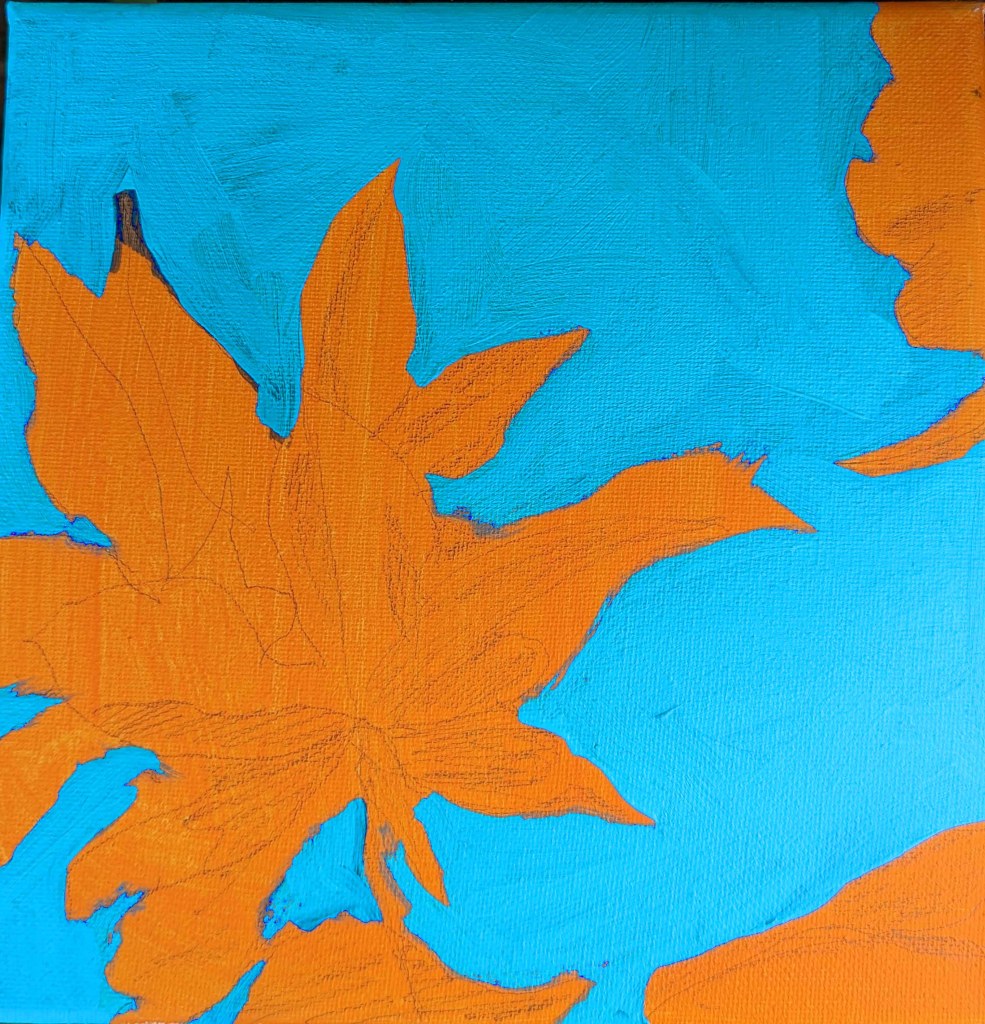
One more study I’ve done in the Adventures in Acrylic class. I did not do the fluorescent orange spray paint, and this time, instead of using my Perinone Orange (a close substitute), I went with Liquitex’s Cad-Free Orange paint, more soothing to my eyes.
Then I did a free-hand drawing in pencil of some of the orange leaves from the reference photo provided in the class, and did some light shading of the shadow areas as I saw them.
My blue was a mix of Utrecht’s cerulean blue (fluid) and Liquitex’s soft-body Light Blue Permanent (I think it is). I used a long-handled small bright brush to paint in the negative spaces.
This is really an in-progress painting, but I’m tempted to leave it as it is and go on to something else. We’ll see!
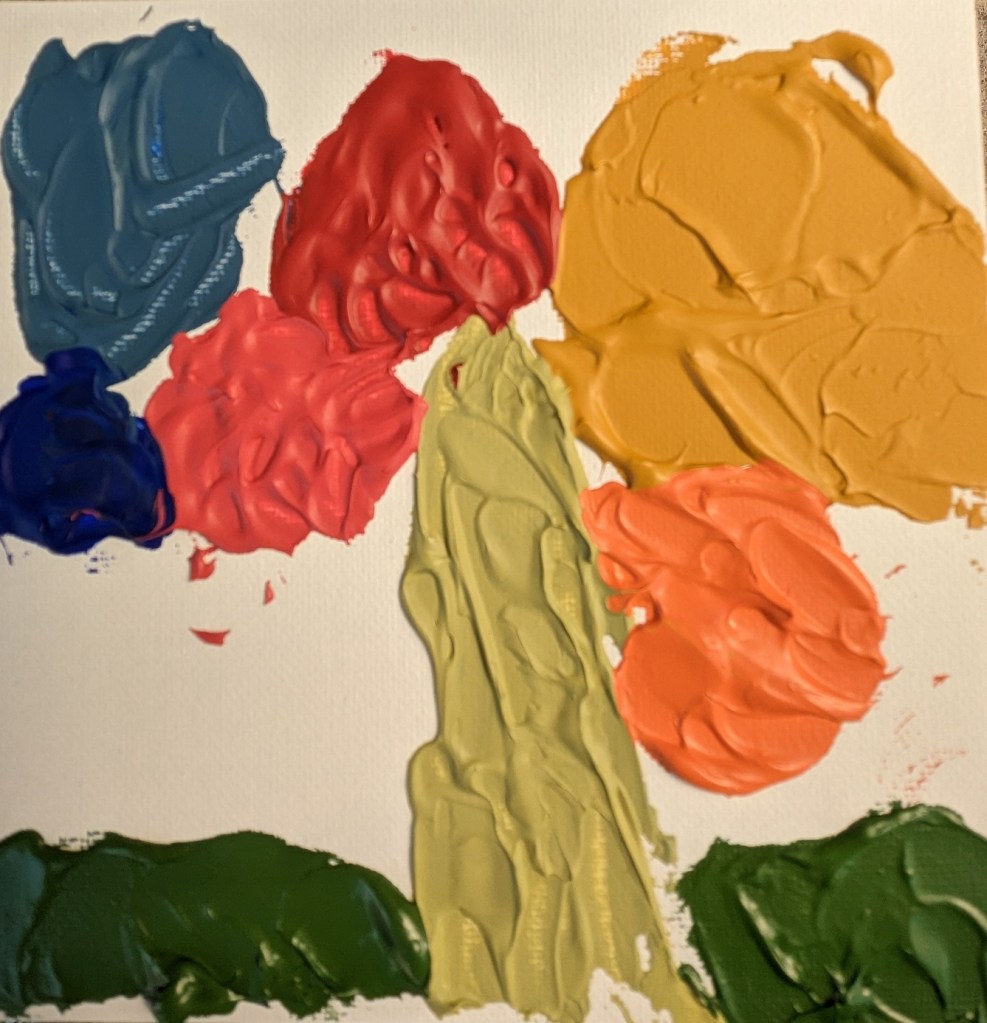
I bought some LUKAS CRYL Pastos Heavy Body Artist Acrylics a while back, so I thought I’d try them out. To my surprise, they weren’t more heavy-body than Liquitex or Golden. The blue and yellow didn’t make a decent green; the red and yellow didn’t make a great orange (I had to add some Liquitex Cad-Free orange).
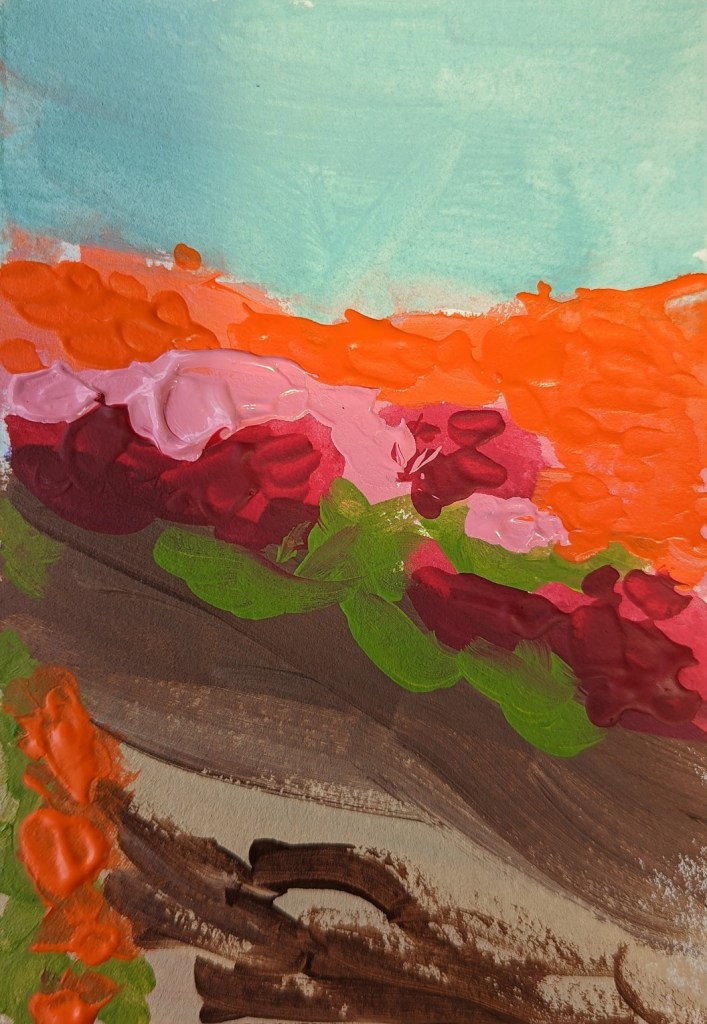
I tried out the different colors — except for black and white — on a 6×6 canvas panel. Further below, I did an abstract of azaleas on 4×6 watercolor paper.
The next-up item in the Marla Baggetta Adventures in Acrylic course was these red poppies. She suggested we use fluorescent orange spray paint for our background; instead, I used my perinone orange paint by Chroma Atelier Interactive, which I find wildly fluorescent!
Using the reference photo, I drew the poppies in pencil over the painted canvas, and then watched her video, closed up my laptop, and did my best from-memory version. At the very end, you use a white gel pen to outline as you see fit; here, I reviewed the image of her final work, and then just winged it.
This was fun!

 BetterLateThanNeverArt