Espresso Study

Today I painted my espresso cup.

What I like is my color choices: I think they closely resemble the cup in “life”. I’m especially happy with the crema color(s). I’m somewhat pleased with the actual drawing of the cup. I am least pleased with my mark-making, especially with regard to the crema. Perhaps I would be better off using NuPastels or even pastel pencils to render the detail more finely.

Or, be more impressionistic in my painting, and use blurry strokes instead of trying to match the reference so closely.

Playing with Color — Apple

I don’t recall what pastel paper I used; the pastels here are mostly Blick Artist’s Soft Pastels (half sticks) that are, obviously, brand-new. I had a lot of difficulty laying down color in the way I wanted!

Afterwards, on one of Marla Baggetta’s YouTube demos in which she uses Rembrandt pastels, she mentions that the pastels are new, and she gently abraded them against the sanded paper she was using.

I have some Rembrandt half-stick pastels as well as Blick Artists pastels; they seem similar in look and feel to me. So, I used some scraps of fine sandpaper to abrade some of my Blick pastels. I hope that will help in my next painting!

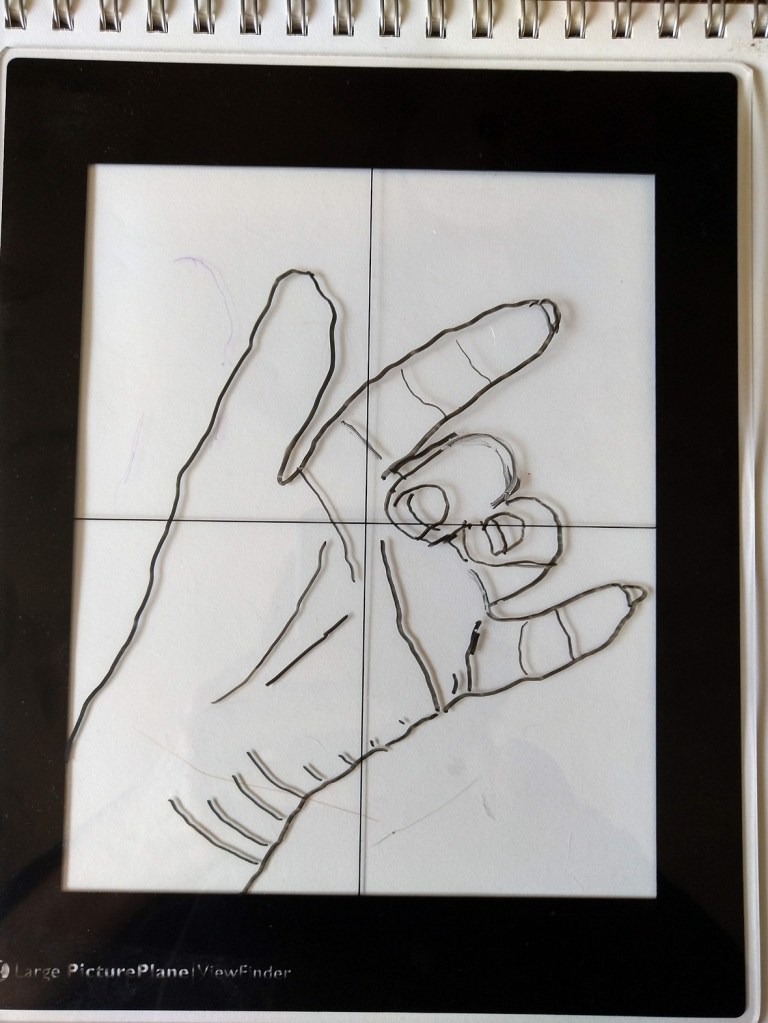
Foreshortened Hands: Sketches on a Picture Plane

These drawings are from an exercise found in Chapter 6 of Drawing on the Right Side of the Brain (4th ed.) by Betty Edwards. Essentially, you “copy” or “trace” your non-dominant hand (which is holding the plastic picture plane) using a dry-erasable marker. You are to include the major lines in your hand, including wrinkles.

The lines are fairly sloppy because the marker actually didn’t work that well on the plastic, and there’s a grey shadowy line along the drawn line, due to the overhead light being on when I took the photos of the drawings (which are now wiped clean off the plastic picture plane).

After a number of practice drawings, the next step of this exercise is to use the picture plane drawing as a model while you draw the pose on paper.


What did I learn today?

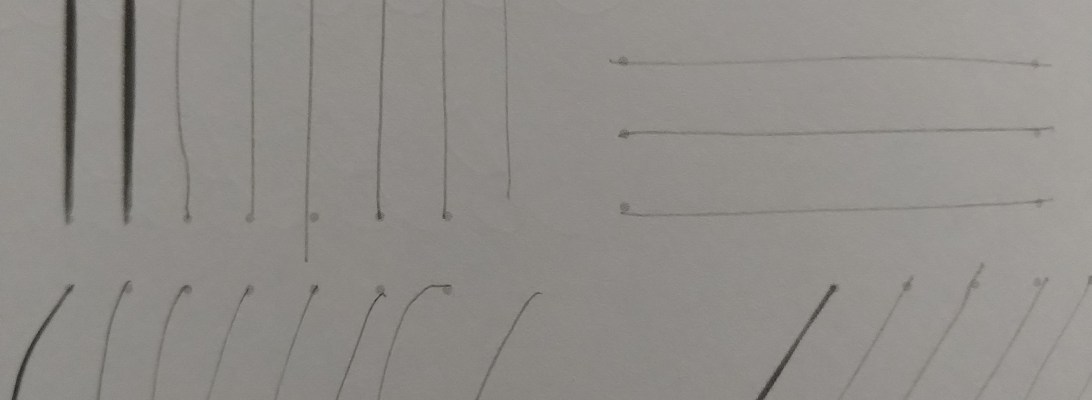
Drawing lines is harder than I thought – at least when I overthink them.  I was using my brand-new book Beginning Drawing Atelier: An Instructional Sketchbook by Juliette Aristides, which I bought on Amazon.  An “atelier” is an artist or designer’s studio – something I did not know.  Anyway, the author does not stand on ceremony – you draw right in the hardbound book, and using an HB pencil (that’s the standard #2 pencil we’re familiar with from school).  In the first chapter, she has you to practice vertical lines, horizontal lines and semi-circular lines, from one point to another point.

My vertical lines, especially when I was drawing down from point “A” to point “B” (as opposed to up from “B” to “A”), tend to wobble and waver.  Until I started pretending I was once more a 5 year old – as a child, I drew my lines exultantly. 

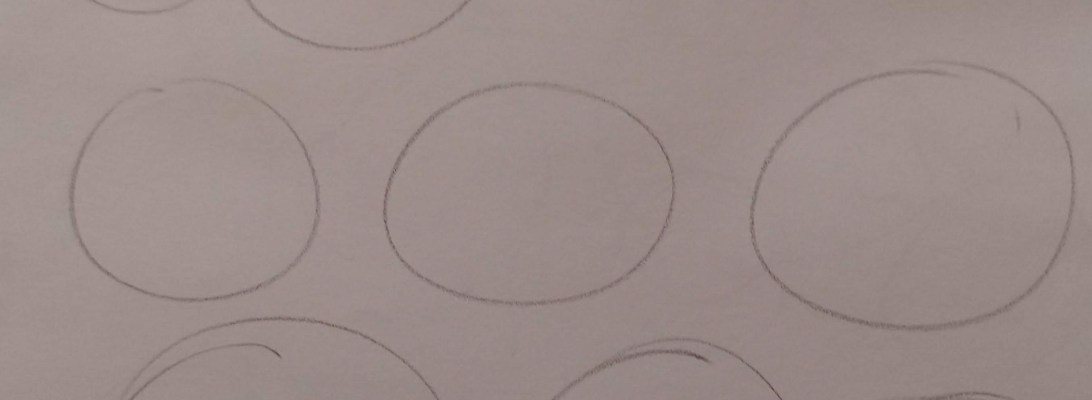
The circular lines, too, wavered and squished a bit.  It all seems harder than it looks – but I suspect that’s due to my adult doubts and lack of confidence.

Drawing Circles

I read a tip, via browsing on Amazon, from Carole Massey’s Drawing for the Absolute Beginner, in which she refers to Picasso having instructed young artists to draw a perfect circle.  And that it’s more effective to move your arm, in drawing the circle, from your elbow or shoulder rather than your wrist.   So, I was practicing those today.  My circles are still fairly elliptical, and I was drawing them way too fast, anyway.  I also tried drawing them with my left hand, and seemed to be more accurate with my left rather than my right hand.  

But I was also working somewhat quickly as a form of confidence – doubting my ability to create a circular line could potentially mess up my circle.