Portrait Practice — Painting the Asaro (Variant) Head

My last few works — a portrait and a “portrait” of the Asaro head — have been in the cartoon realm, so I’m skipping posting those for now!

Instead, I found a video on YouTube that walks you through drawing the “Loomis Head” and converting it (for lack of a better term) to a planar head (what the artist calls the “memorized Asaro head”). After watching that, I drew the planar head on my 8×10 canvas with willow charcoal.

What I discovered in my failed attempt at painting the Asaro head is that the color Ivory Black is fairly transparent, and doesn’t cover well. I ended up going to Michael’s and bought some Mars Black from Liquitex Basics. It’s student grade compared to the artist grade Ivory Black, but wow, what a difference!
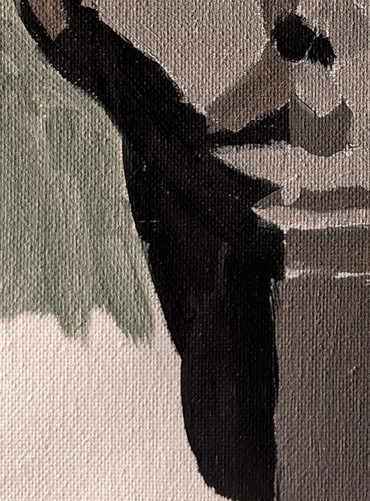
Anyway, here’s the Asaro head done; sage green for the background.

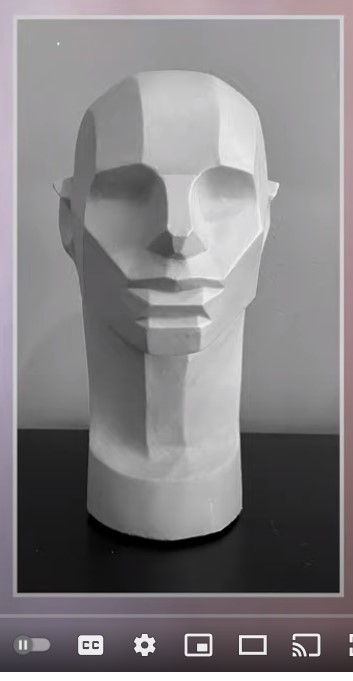
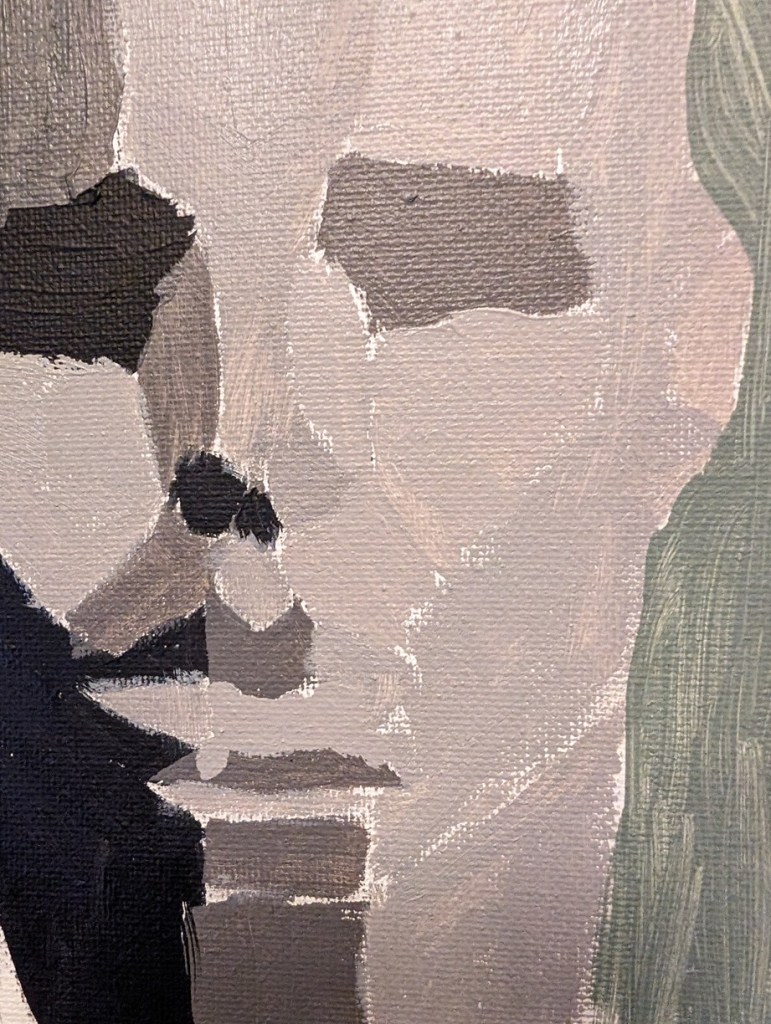
Below is a copy of the reference photo I used to paint, as well as a close-up of my value changes. In some cases like the upper lip, the value change is too abrupt, while in other cases there’s not enough of a value change. I’ll have to keep practicing.
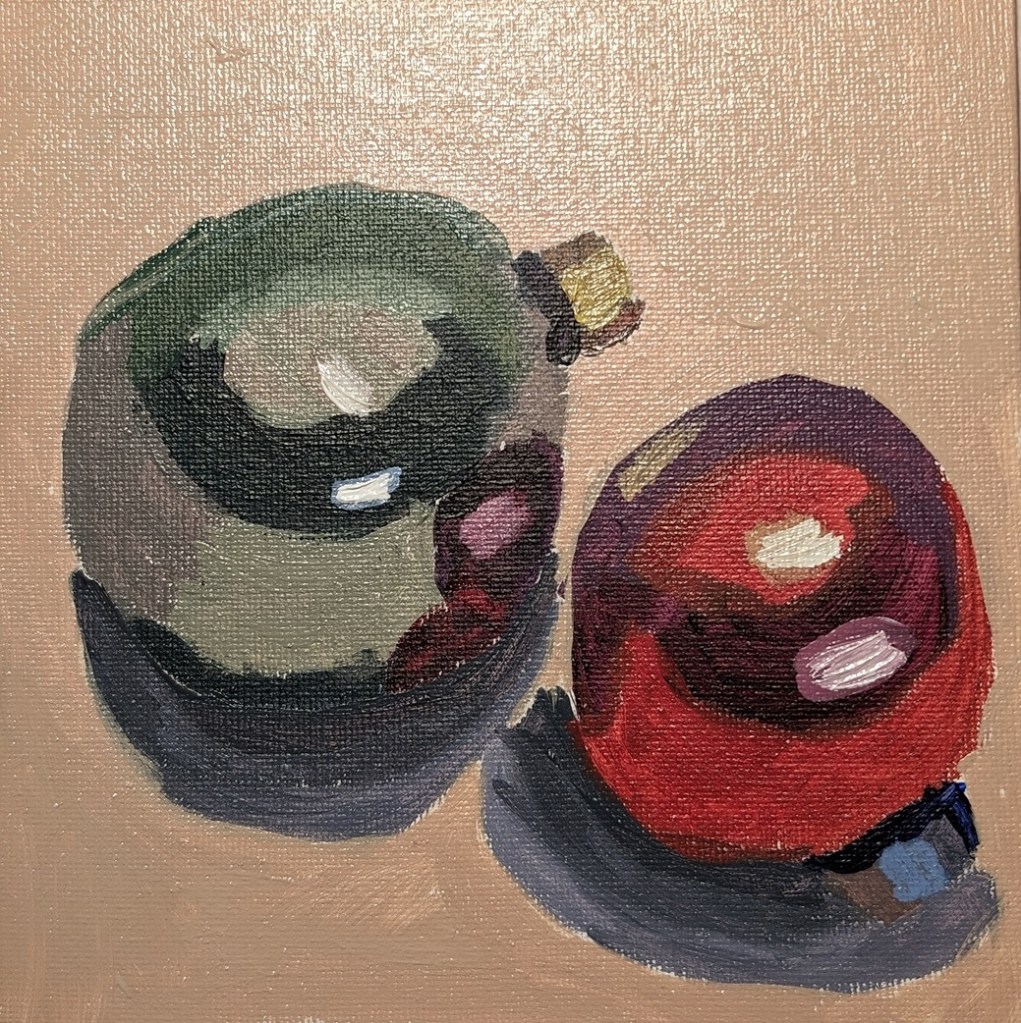
Christmas Ornaments.. an Online Tutorial from Paintcoach

I did this work in acrylic on a 6×6 canvas board that I added a layer of acrylic gesso to before I started.

In doing this “still life” (for lack of a better term) today, I scored a victory of sorts. I only used the 3 primaries (lemon yellow, alizarin crimson, and ultramarine blue) plus titanium white. And I got all those different colors! I’m finally moving forward on the journey of intuitively mixing colors! Cheers!

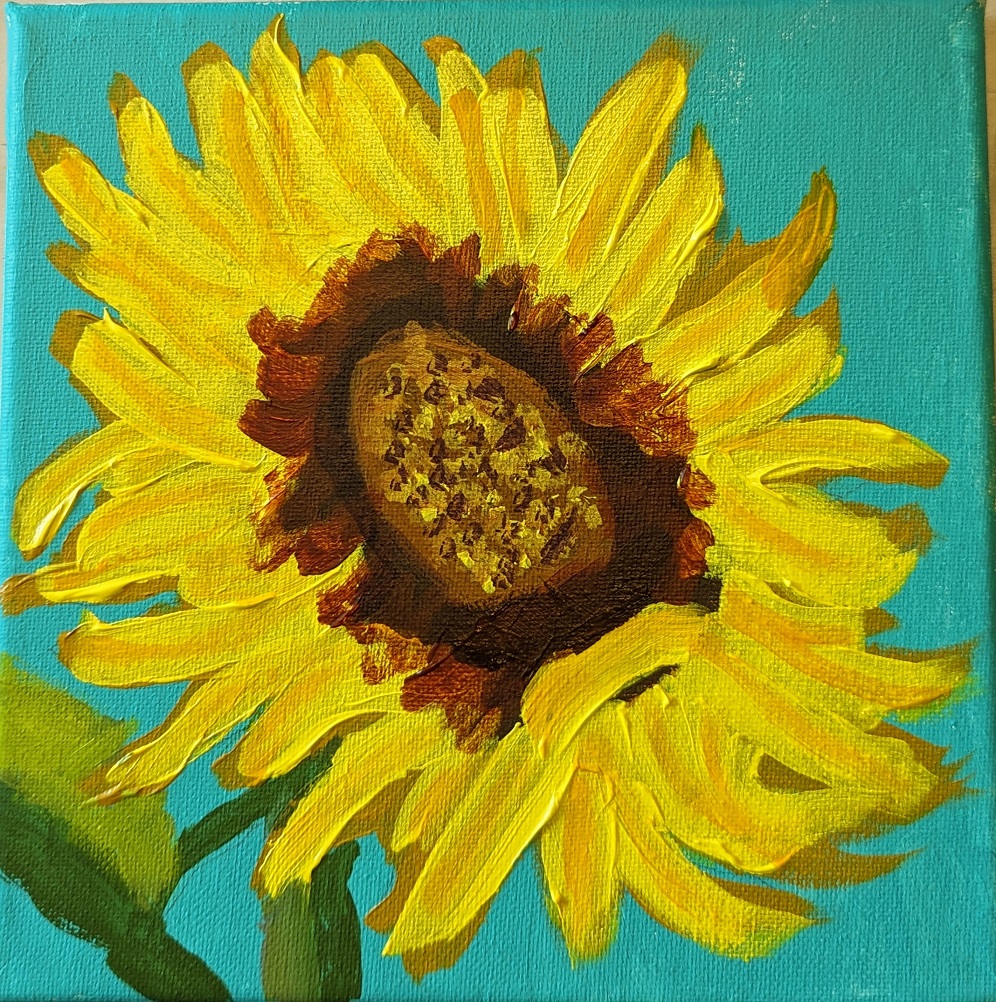
Sunflower 10: Playing with Yellows

Some time back I had painted this 6×6 canvas panel with cerulean blue, so today I used that for my sunflower. The petals are layered with cadmium-free orange as the base (although it looks like yellow ochre now that it’s painted on the blue). Then I mixed azo yellow with some yellow ochre. Finally, the top layer is cadmium-free yellow. The center is burnt umber light, with some yellow ochre, and then purple and yellow denoting the seeds.

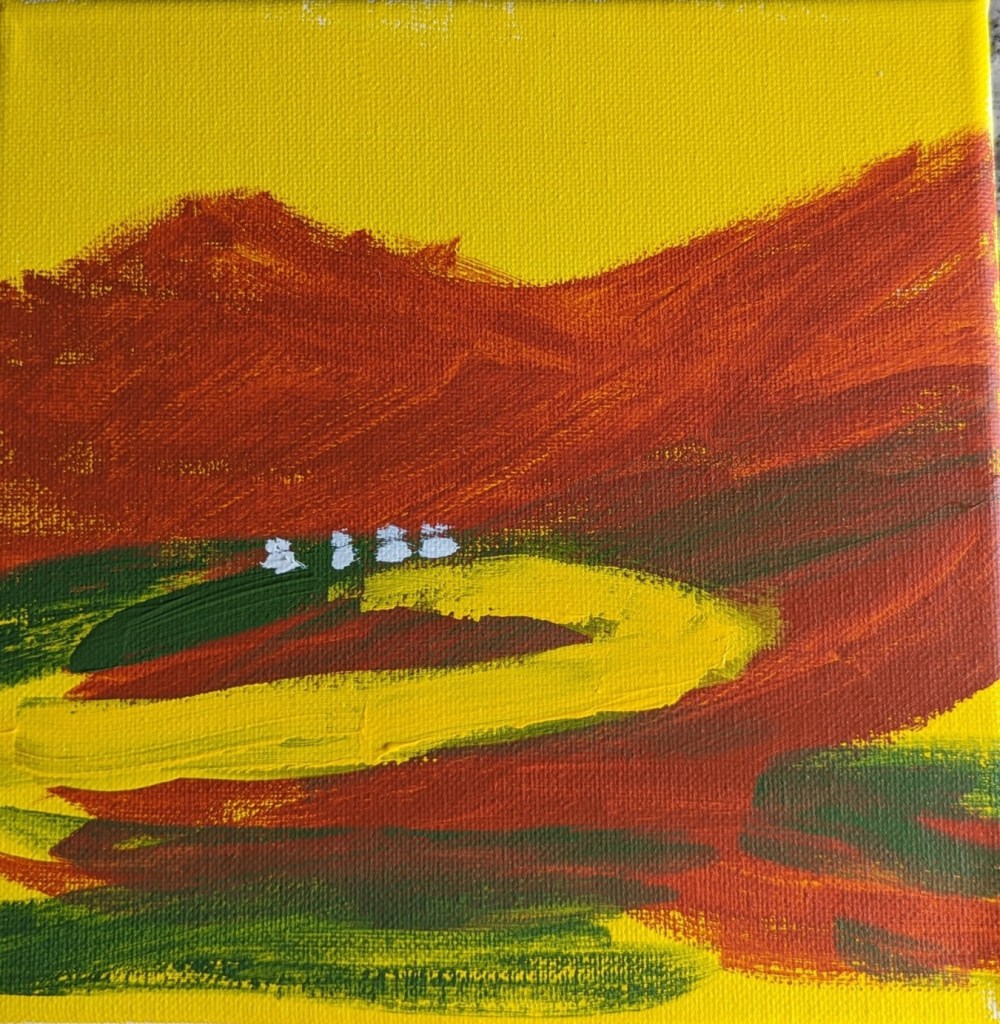
Abstract: “New Mexico”

I haven’t painted (or drawn) for weeks, so today I was just playing with paint without any ideas in my head of what to paint. But after the red oxide paint dried, I rotated the 8×8 canvas, and it suddenly seemed to me like the Sangre de Christo mountains in New Mexico. To that end, I added the chromium green, the yellow “road” and the white dots (lights in houses along the road?)

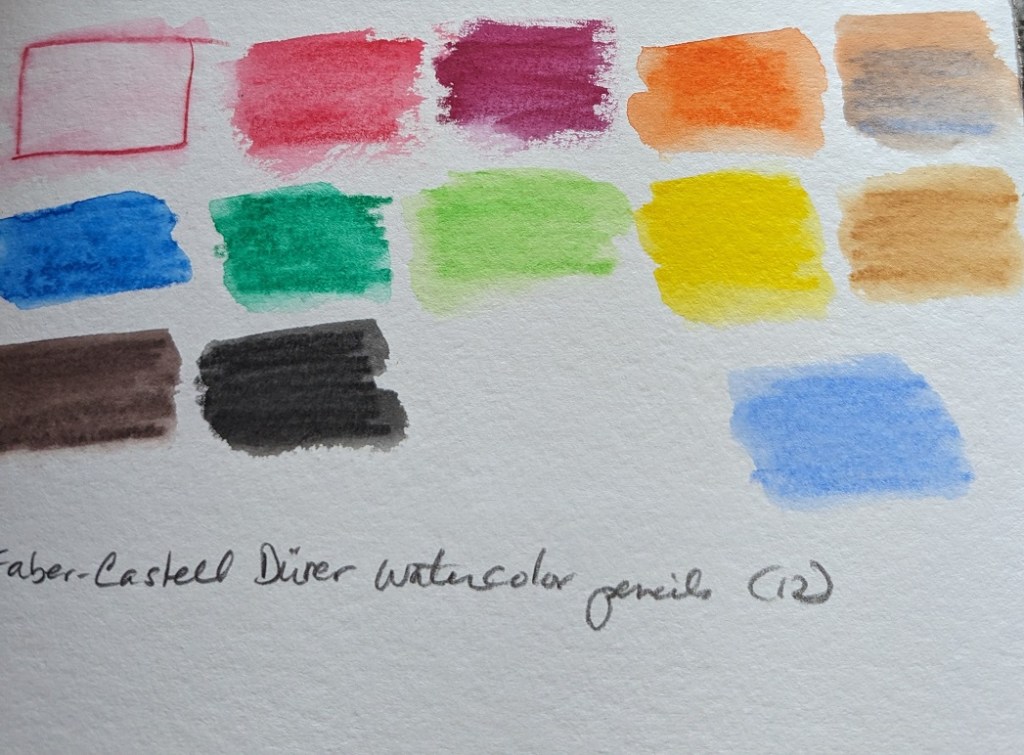
Testing Out My New Watercolor Pencils

I’ve been enjoying my graphite Aquarelle pencils so well that I bought some watercolor pencils to try them out.

I purchased 3 different sets of 12 pencils: Faber-Castell Albrecht Durer; Caran d’Ache Museum Aquarelle, and Derwent Inktense Pencil Set.

I used the pencils on my 300-lb watercolor paper, applying water afterwards. One thing I noticed is that each 12-pencil set has relatively similar colors. The Albrecht Durer set includes a white pencil which I don’t see a lot of use for — unless you’re using it on toned sketch paper? My initial thought is I was gypped, lol.

The Derwent Inktense pencils, once wetted, are clearly more intense than either the Faber-Castell or Caran d’Ache pencils. On the other hand, the Faber-Castells seem to wash more smoothly (for lack of a better term) in that my back-and-forth pencil lines are less obvious than the Caran d’Ache or the Inktense pencils.

Now I need to try them out on some drawings to see how I really like them.

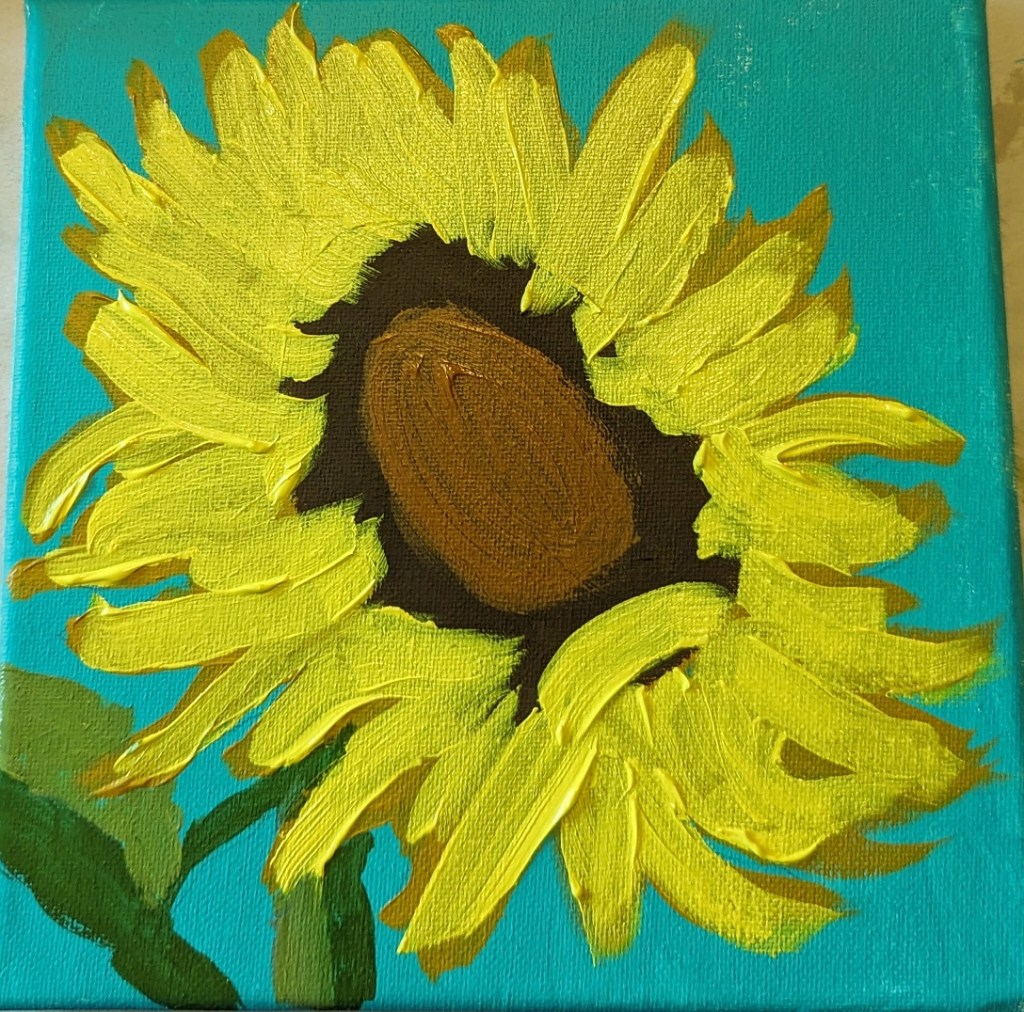
Sunflower #7 – On Watercolor Paper

This painting was done by “winging it” — meaning, no specific reference photo. I wanted to try building out my sunflower with a base of green petals. Below is the result. I’ve layered the petals with Liquitex cadmium-free lemon, and cadmium-free yellow medium, as well as yellow ochre and dioxazine purple.

I did this on a piece of 6×8 300-lb. watercolor paper.

Sunflower #6

I’ve been unsatisfied with my sunflower painting so the other day I googled “how to paint sunflowers in acrylics”. The search results were a bounty of different YouTube videos. Well, naturally, some sunflower paintings appealed to me more than others so I watched about half a dozen.

What I found was, naturally, everyone has their own way of painting sunflowers. Some start with the background, some start with the dark center of the flower. However, the colors they chose for painting the flower were largely in sync across the board — and with my own paintings: yellow, yellow ochre, burnt sienna, burnt umber, etc. etc.

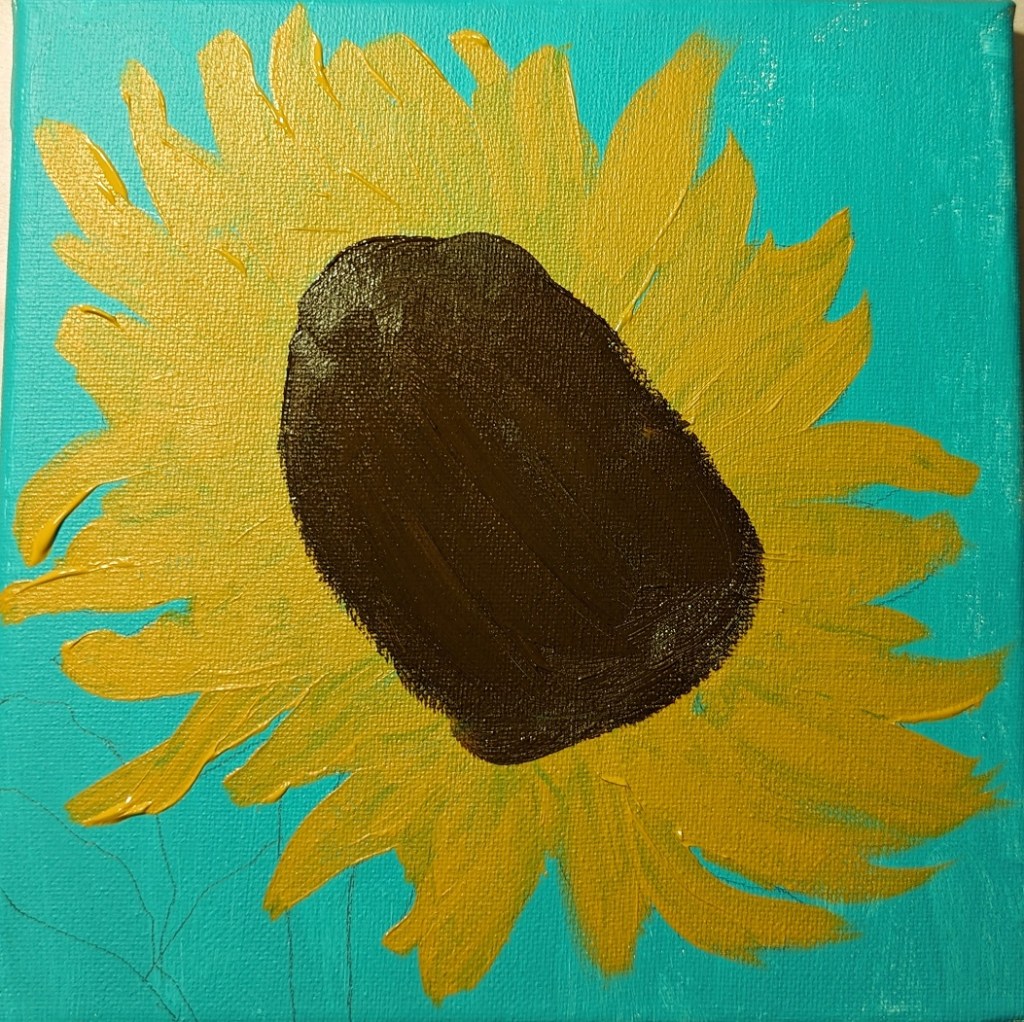
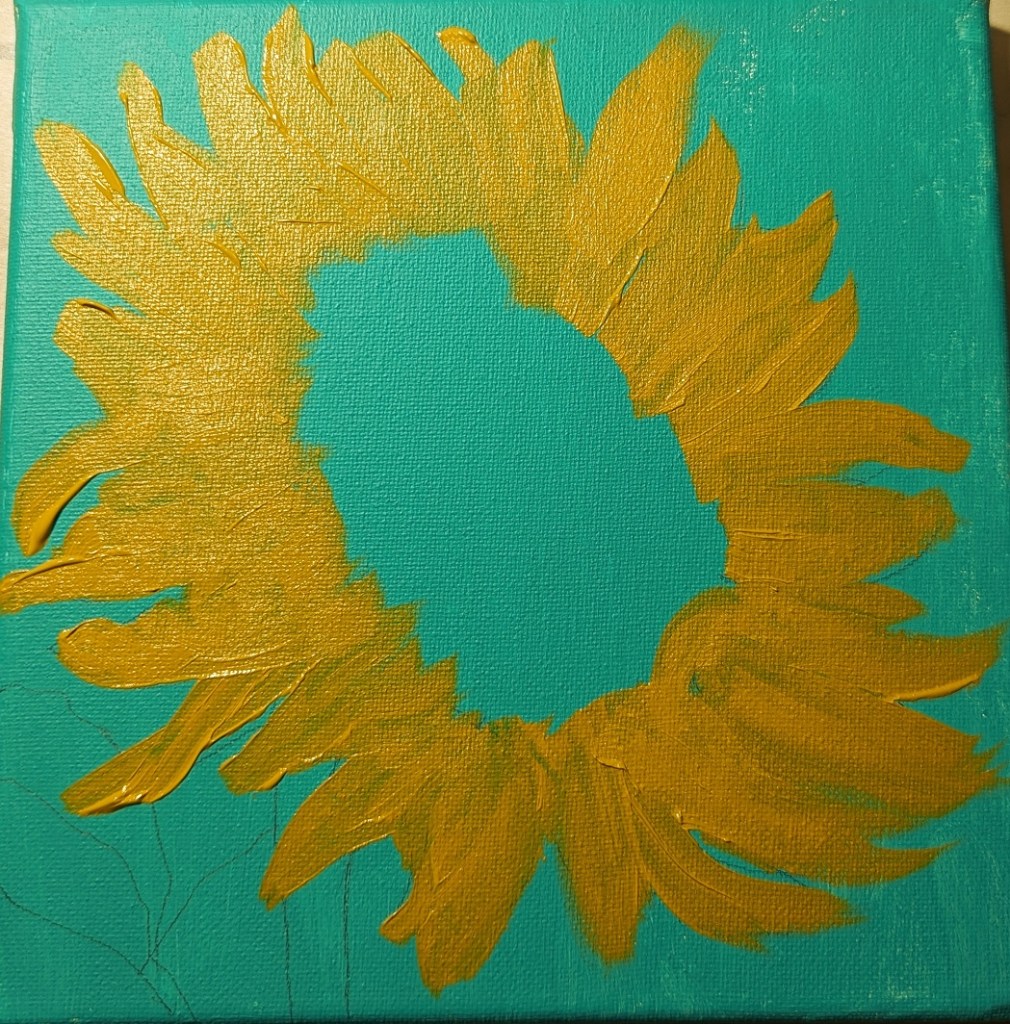
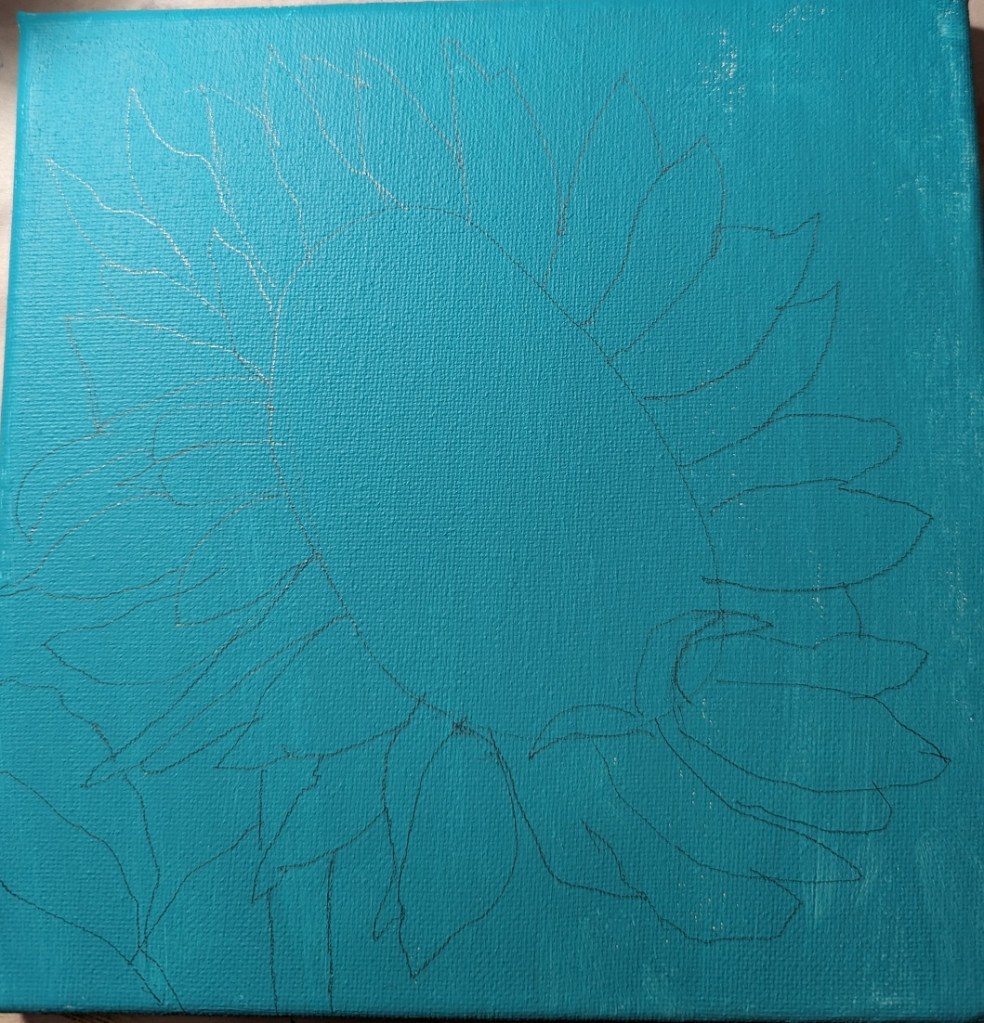
One process I decided to try, though, was to do more layering of the petals, and start with a round of yellow ochre first, applying the brighter yellow afterwards. This painting on an 8×8 canvas was just from my imagination, and the mix of all the sunflower pictures I’ve been looking at lately.