The Fisher 400 paper was one of the sheets in my sanded paper sampler. For the heck of it, I was laying down thick color using my 10-piece basic assortment of Rembrandt pastels. I love the look! Appears like deep rich paint… Luscious!
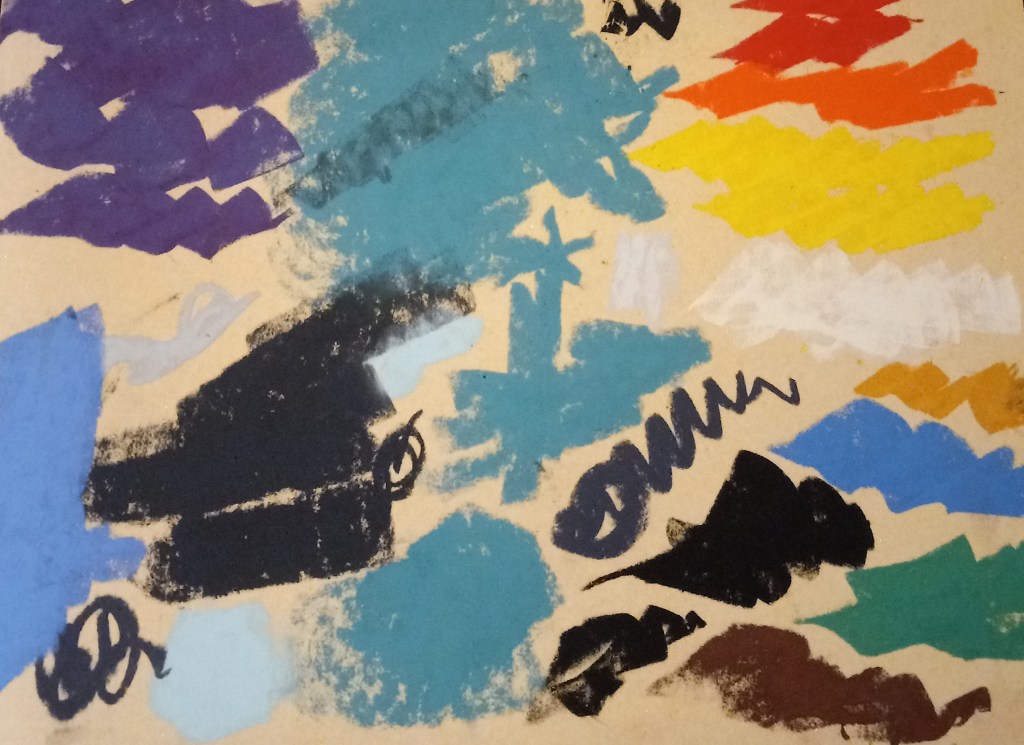

The Fisher 400 paper was one of the sheets in my sanded paper sampler. For the heck of it, I was laying down thick color using my 10-piece basic assortment of Rembrandt pastels. I love the look! Appears like deep rich paint… Luscious!
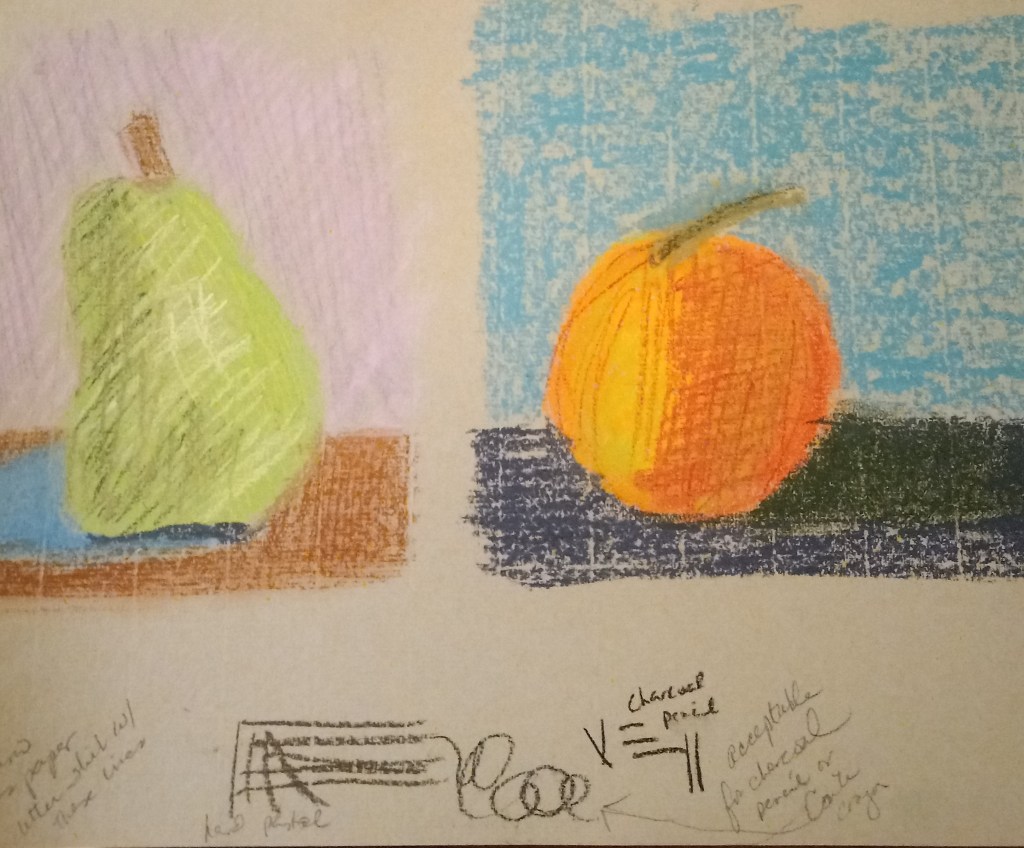
This study was done on Canson Mi-Tientes Touch paper, one from my Jackson’s Art sampler.
I like the contrast of the blue background with the orangey-yellow highlighted side of the pear. I don’t particularly care for the way the pastel doesn’t “fill in” the paper.
And since I did this study, I’ve learned that the pros often do underpainting for numerous reasons, one of which is coverage and a unified tone. I had thought that using toned paper in itself might be enough. It’s okay but it looks more like a drawing than a painting.

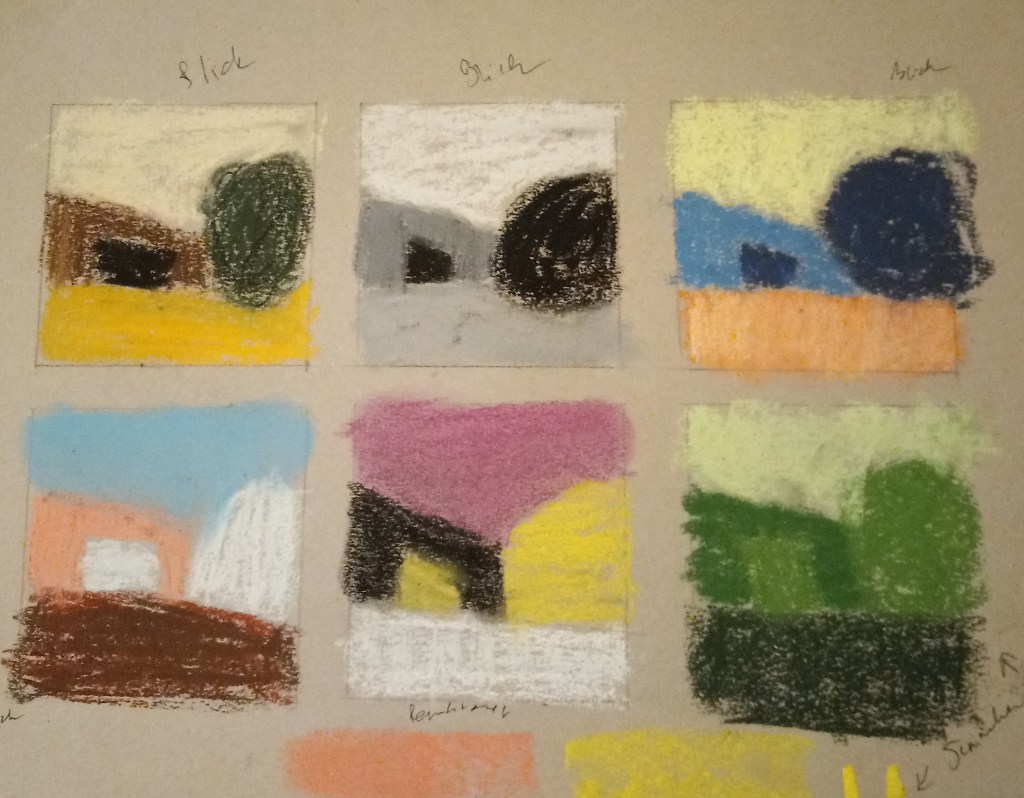
This exercise in values is from the online workshop for beginning pastel painters.
This fruit study was my take on an exercise from Marla Baggetta’s “Making Your Mark” online workshop.
I used Fabriano Ingres pastel paper — one of the papers in the sampler I bought from Jackson’s Art — and am dissatisfied with the vertical lines in the paper.
Today I painted my espresso cup.
What I like is my color choices: I think they closely resemble the cup in “life”. I’m especially happy with the crema color(s). I’m somewhat pleased with the actual drawing of the cup. I am least pleased with my mark-making, especially with regard to the crema. Perhaps I would be better off using NuPastels or even pastel pencils to render the detail more finely.
Or, be more impressionistic in my painting, and use blurry strokes instead of trying to match the reference so closely.


This study was done on Colorfix Smooth “Blue Haze” paper.

I don’t recall what pastel paper I used; the pastels here are mostly Blick Artist’s Soft Pastels (half sticks) that are, obviously, brand-new. I had a lot of difficulty laying down color in the way I wanted!
Afterwards, on one of Marla Baggetta’s YouTube demos in which she uses Rembrandt pastels, she mentions that the pastels are new, and she gently abraded them against the sanded paper she was using.
I have some Rembrandt half-stick pastels as well as Blick Artists pastels; they seem similar in look and feel to me. So, I used some scraps of fine sandpaper to abrade some of my Blick pastels. I hope that will help in my next painting!

Today I signed up for Marla Baggetta’s “Pastels for the Serious Beginner” online, work-at-your-own-pace class. I’m definitely a beginner, and I’m serious to finally get busy using some of the pastels I have, in addition to my daily drawing.
While my ultimate goal is to paint portraits and human figures, I like Marla’s work, and have watched a few of her demos on YouTube.
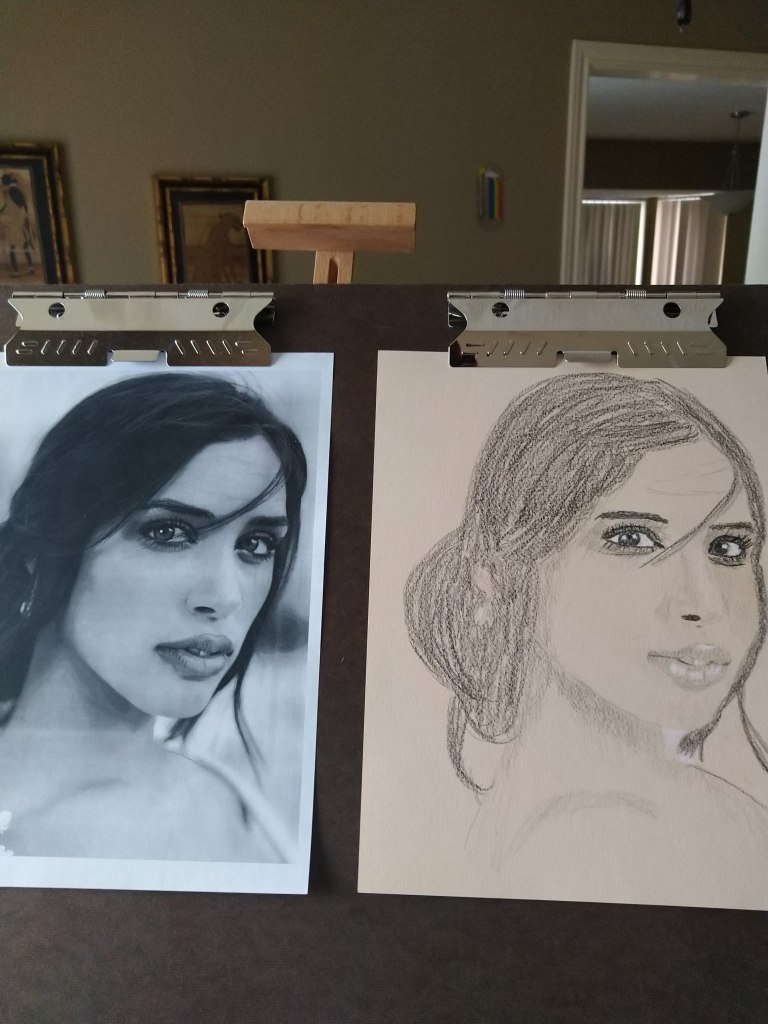
Here’s another portrait study from an Unsplash photo. Again, shading is a major issue. I also don’t have the shape of the subject’s chin and cheeks quite correct. The mouth is fairly decent, but not shaded dark enough.
 BetterLateThanNeverArt