Figure Drawing

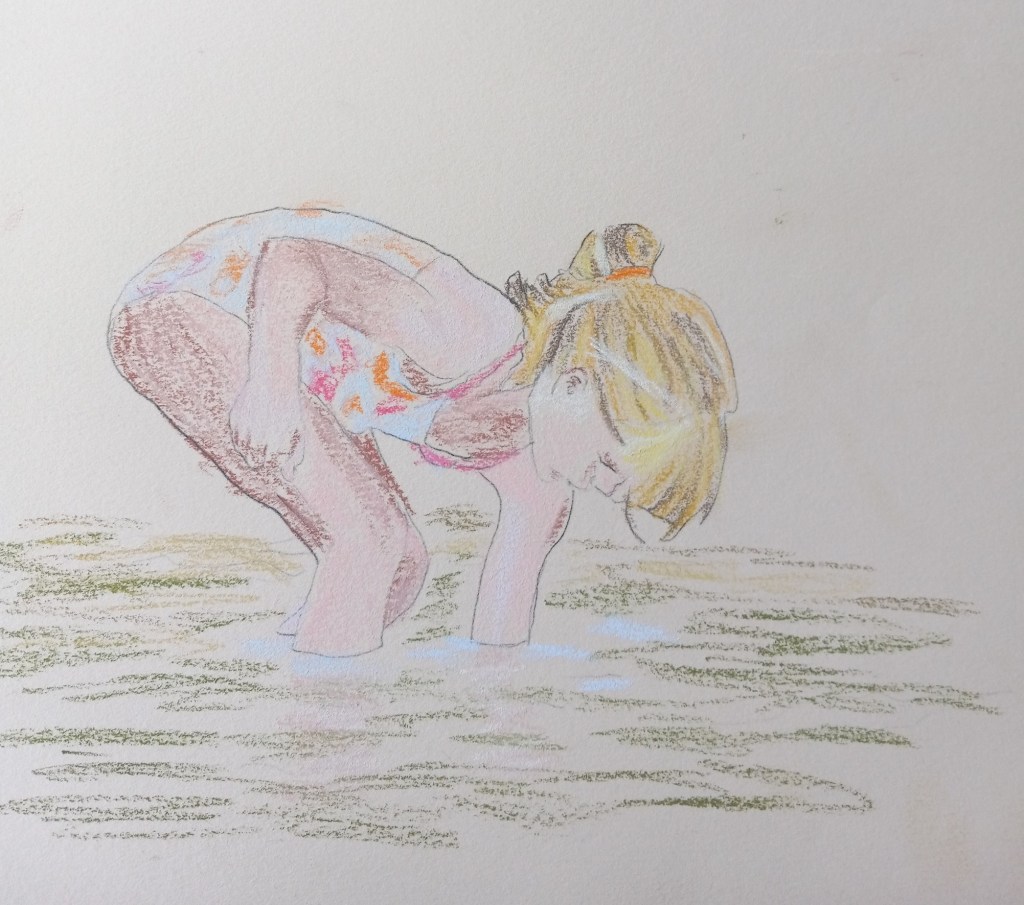
I was reading Mary Whyte’s book Painting Portraits and Figures in Watercolor (pub. 2011 by Watson-Guptill) and in it she talks about how imperative it is to watercolor painting to have good drawing skills, particularly if you are painting portraits or human figures. I suppose the same is true for other media, like pastel or oils. So, to that end, I did some drawing today.

From The Complete Book of Poses, page 149

Based on Pixabay photo by Roy Clarke

Based on Pixabay photo by Sasin Tipchai

My First Landscape

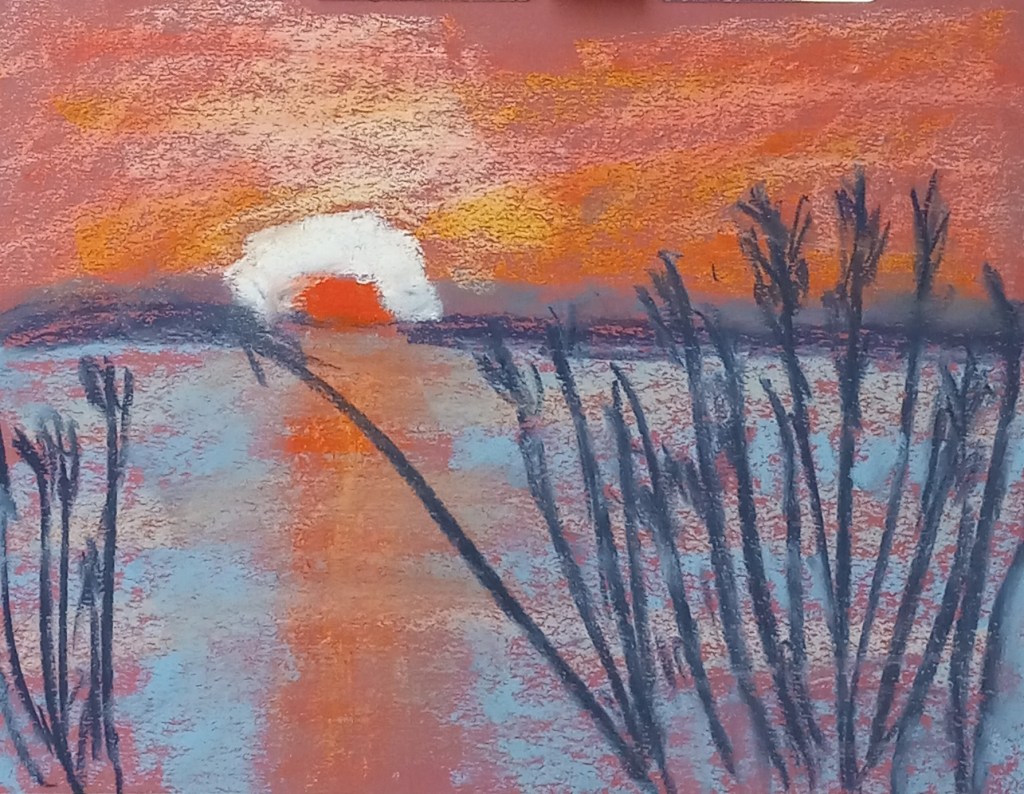
Today I did my own landscape painting based on a photo of a sunrise I took several years ago in our backyard.

I used Clairefontaine Ingres paper, which is unsanded, and not too bad. It was a pale tan color (and part of my unsanded paper sample I purchased from Jackson’s Art a year ago.) The initial drawing was done in vine charcoal. And I kept the size to 8×6.

Follow-Along: Karen Margulis Landscape

Today I watched a YouTube video (click here) by Karen Margulis about successful strategies for a daily painting habit. She demonstrated painting a landscape in pastel in 20 minutes and after I watched it once I decided to follow-along and try my hand at her style.

Below are step-by-step pictures of my attempt. I used a portion of my Canson Touch board in Twilight color. Karen’s painting is much superior to mine, but this was actually fun! It really did take 20 minutes. AND I feel ready to give a shot to doing a painting using one of my own photos.

The big tree really only looks like a tree from a distance, so I included a distant shot. I don’t yet have the skill Margulis has so I would want to draw out my trees a bit more. I can’t quite make the connection from abstract value shape to something I view as a tree after painting.

“Confident Color” Arrived today!

A week or so ago I was reading a posts about color palettes on Karen Margulis’ blog. She referred to 2 books on color by Nita Leland: Confident Color and Exploring Color Workshop (30th anniversary edition). I have Leland’s Creative Collage Techniques book so I was familiar with her name. So I decided to buy Confident Color used from a seller on Amazon because I could view more pages from it than the color workshop book.

My tastes, in general, run to what Leland calls “Bright Earth” and “Opaque Earth”, both more muted palettes than bright bold ones. (I also like those, but they can be so bright and so bold it’s like a punch in the face.)

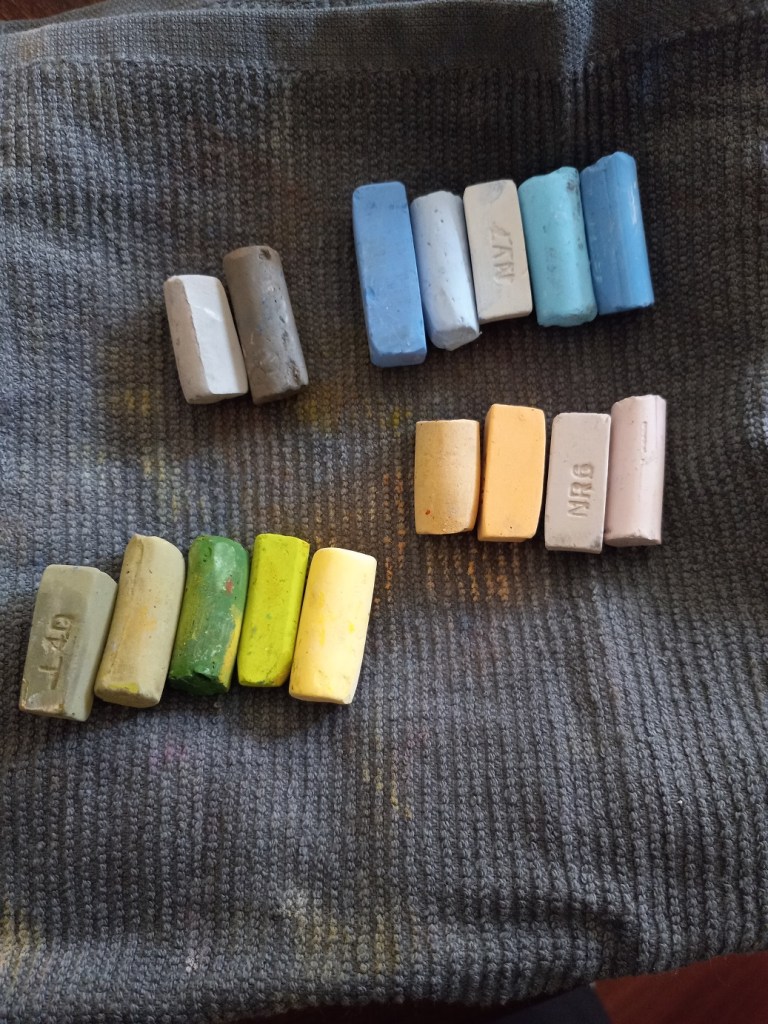
In any case, it was fun to try matching pastels I already have to the references in the book, as seen in the photos below.

Follow-Along: Gail Sibley’s Red Bowl

Gail Sibley has a video on YouTube wherein she uses white pastel paper, and a set of Terry Ludwig’s “Best Loved Basics” to paint a red-orange bowl with a fork balanced on it.

I decided to try my own hand at painting the red bowl. The paper I used was a gray-toned Canson Mi Teintes, and, since I don’t have Terry Ludwig pastels, I used a random set of 8 pastels (only 7 shown), making my best guess as to a close match to what Gail was using. I used vine charcoal to sketch the bowl on the pastel paper, and 2B charcoal pencil in the preliminary planning sketch.

I also created a grayscale version of the photo of the bowl, and the values are skewed. The background should not be darker than the cast shadow. Ditto for the shadow in the middle of the bowl, appearing like a gray stripe. It should not have been darker than the cast shadow.

I may tweak this painting tomorrow, if the paper can hold any more pastel.

More Studies: Using Canson Mi-Teintes

Today I used some of my pieces of Canson Mi-Teintes paper, after reading some of Karen Margulis’ blog posts about loving the paper.

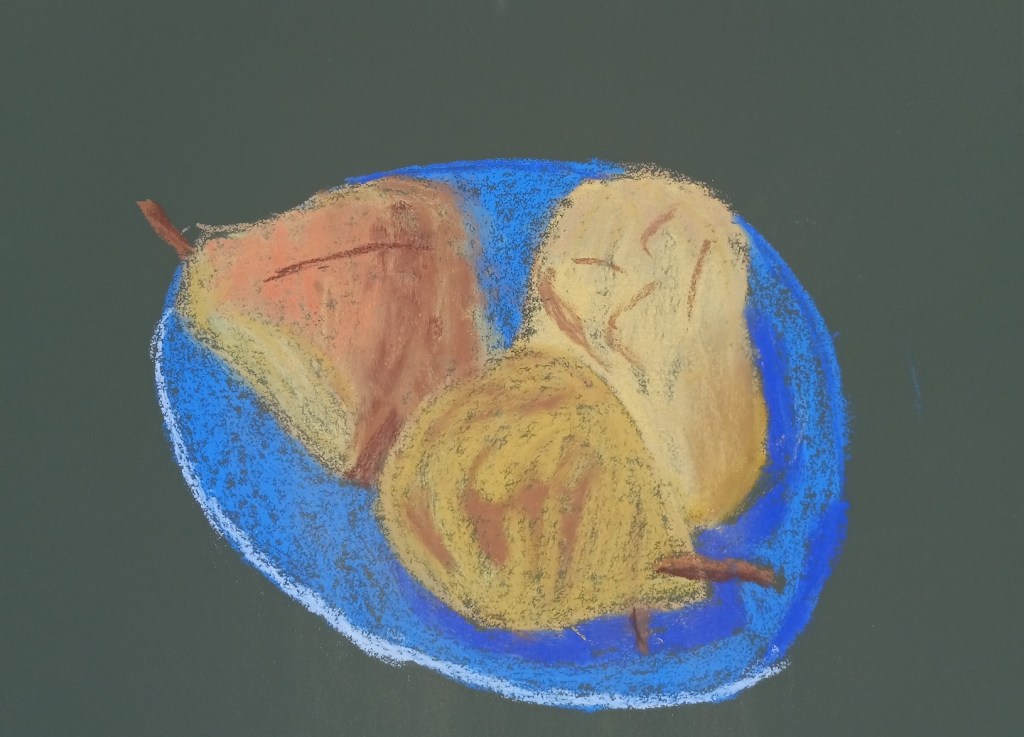
Since I’m still focused on pears and different mark-making styles, I decided to use stippling on a sheet of Terracotta tinted Mi-Teintes paper.

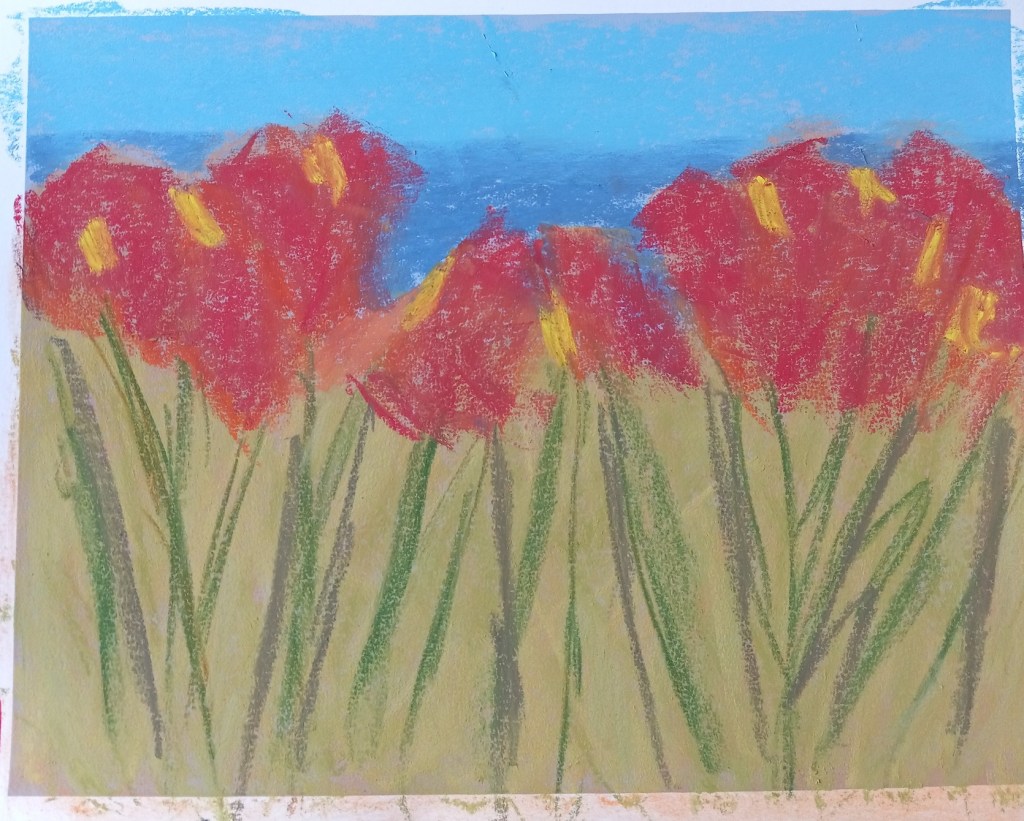
Then, after admiring the way Margulis makes her daisies, I attempted to copy her style (also on a piece of Mi-Teintes). I took Margulis’ advice to use a light touch, but I also did not do too much layering.

My experiment was largely to see which pastels work best on this paper. I noted the results at the bottom — Blue Earth and Richeson Hand-Rolled covered the paper much better than Unison or Blick Artists’ Soft Pastels. (Of course, that may also be the function of my skill level.)