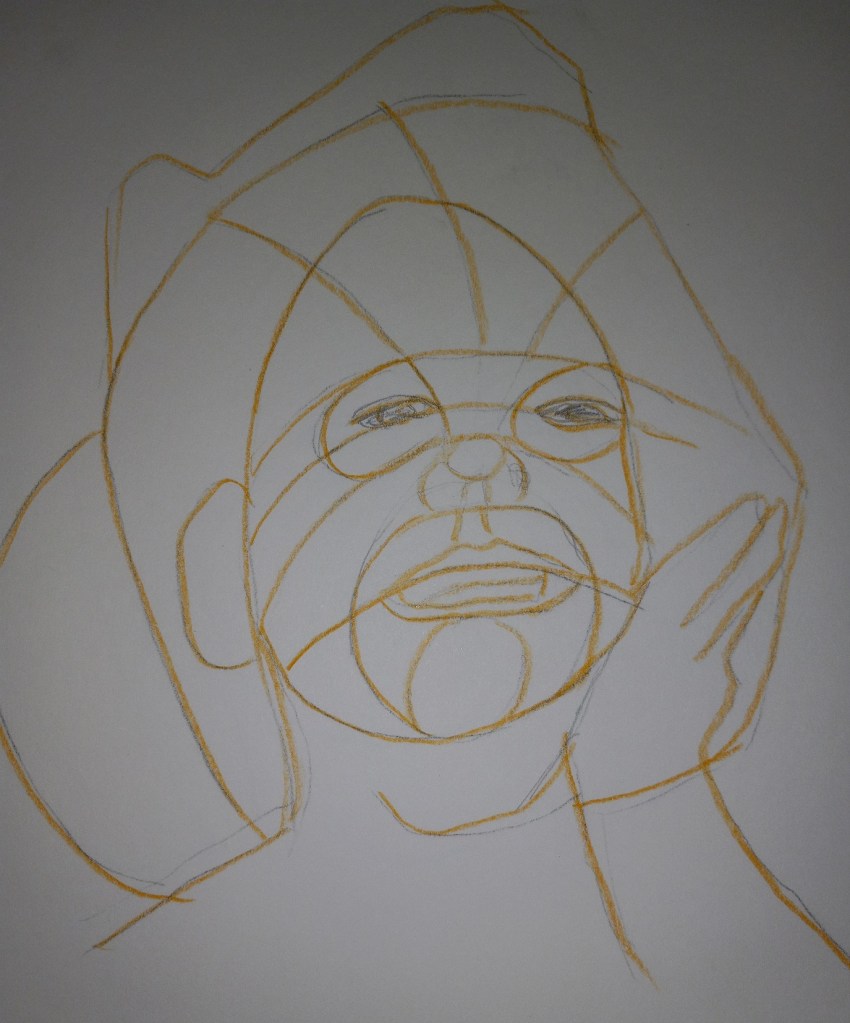
This is the first round — no detail, no shading — of a head based on the Reilly method, and as homework for the charcoal portraits online class I’m taking.
Image by Anastasia Gepp from Pixabay

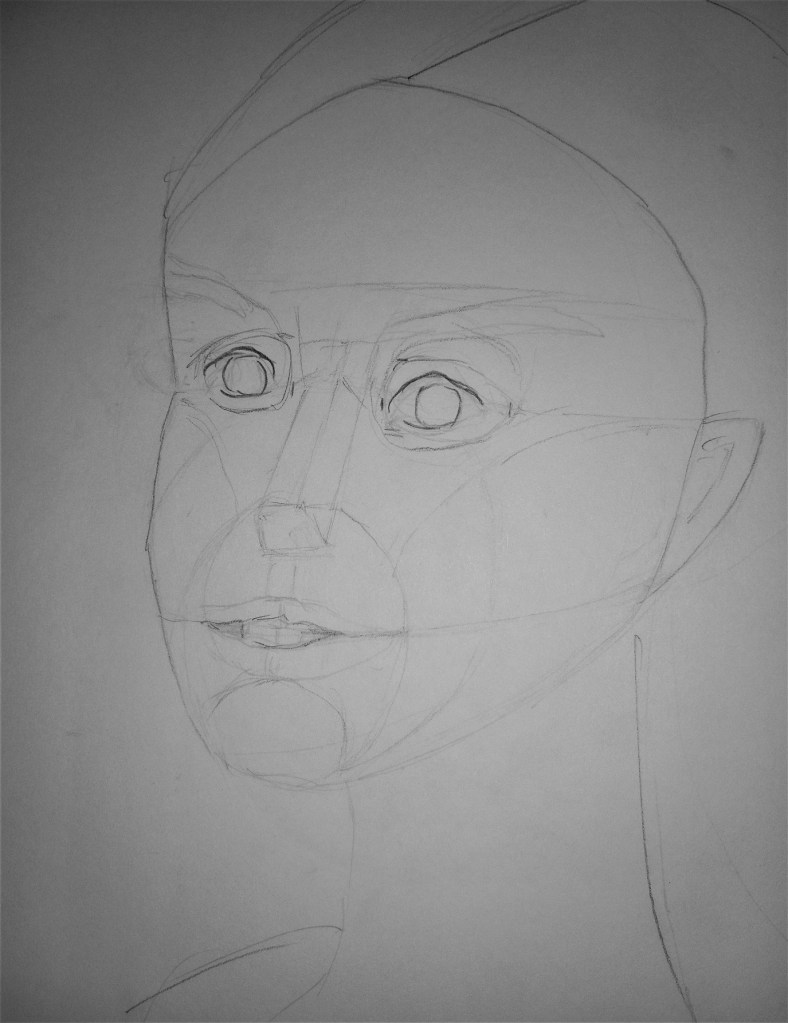

This is the first round — no detail, no shading — of a head based on the Reilly method, and as homework for the charcoal portraits online class I’m taking.
Image by Anastasia Gepp from Pixabay
This sketch is of a relative.

I recently purchased Nathan Fowkes‘ How to Draw Portraits in Charcoal, and I also just signed up for his online course at Schoolism. It’s a 9-week course, and the idea in the first week is to get busy practicing drawing heads.
I had never heard of the Frank Reilly Method, but what I understand now is that it can assist you in thinking about the 3-dimensional form of the head, and how light and shadow can define the planes of the head.
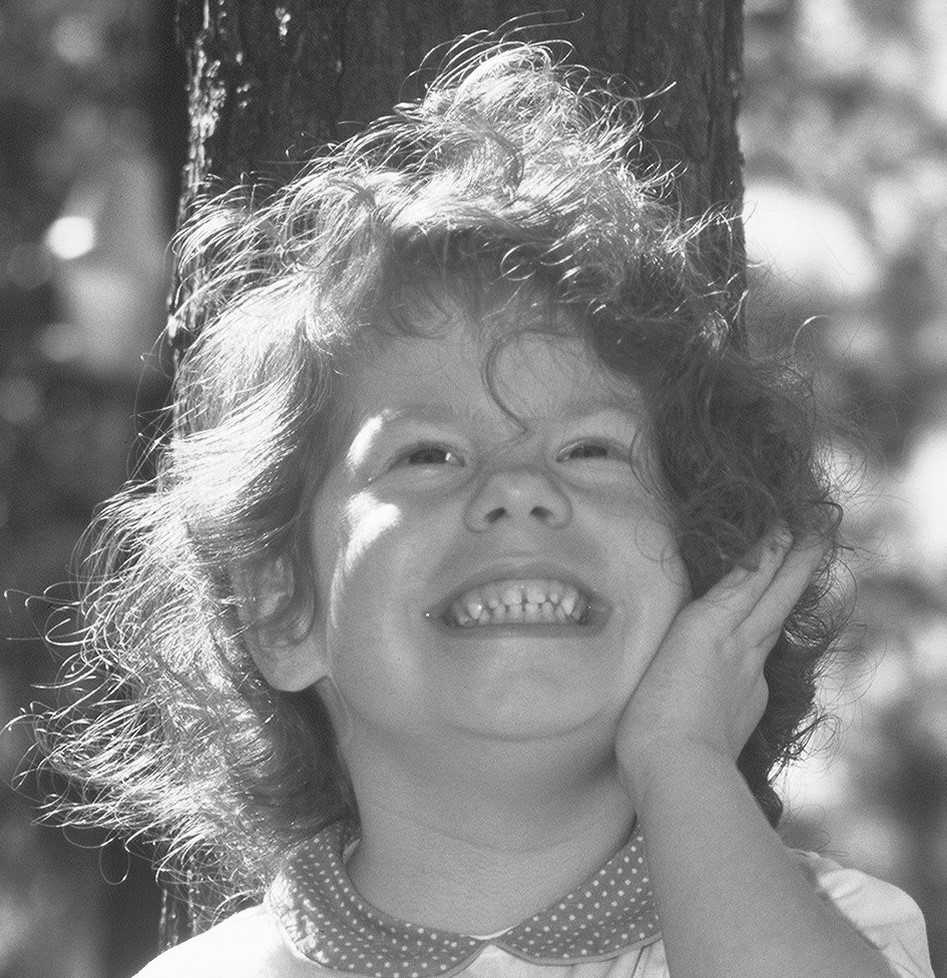
An example is below — the light lands on the little girl’s face by her right eye in the photo, and in the Reilly drawing, the horizontal lines by the girl’s right eye indicate the planes of her face that would cause the light to land there, and not above or below.
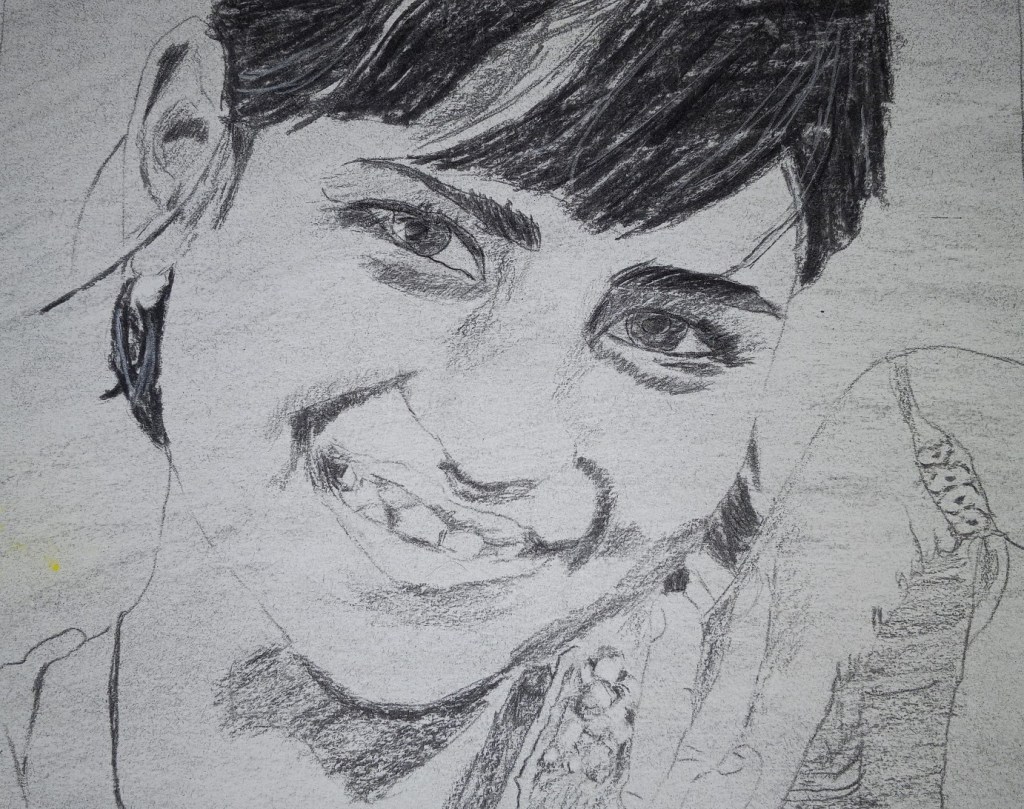
This work is based off an image by Sonam Prajapati from Pixabay. It was done in graphite, willow charcoal, and white charcoal. I used white paper, and toned it first.
This work was done in graphite and NuPastel. It’s based on a photo from PxHere.

This work was done in 2B graphite and willow charcoal, based off a photo by Grâce Goubo on Unsplash.
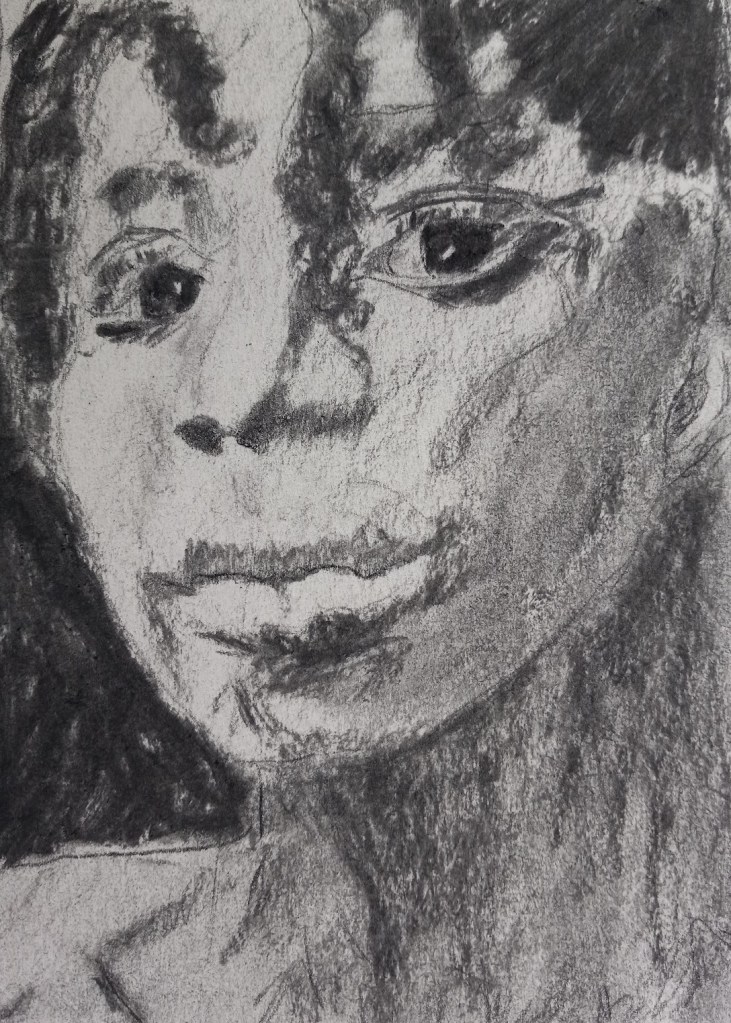
This quick portrait was done in graphite and willow charcoal, based off a reference photo from one of my ArtTutor.com classes (unfortunately, I don’t remember which one).
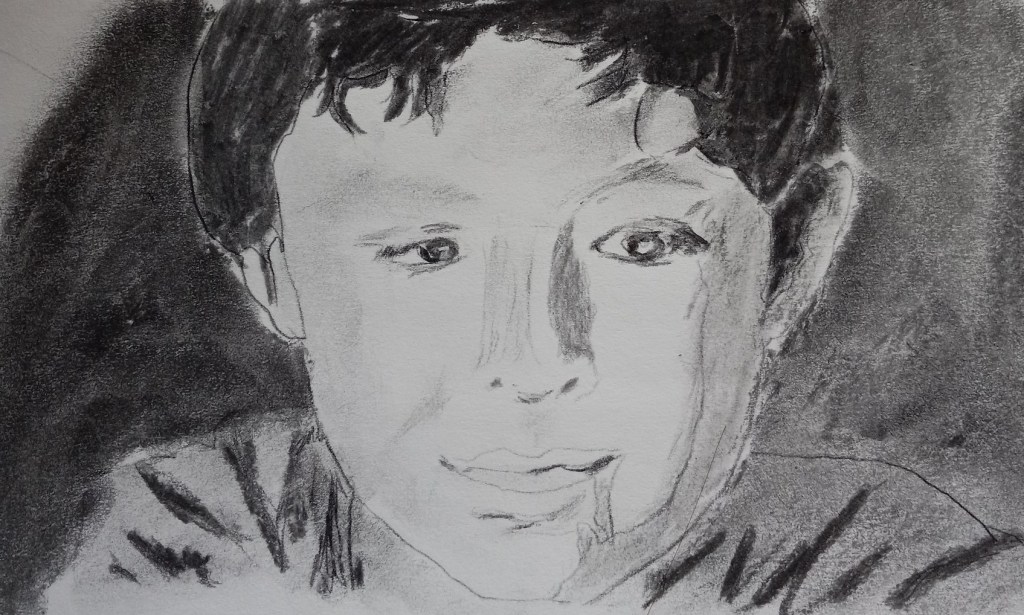
This drawing is based on a photo by Clem Onojeghuo on Unsplash which was used in the ArtTutor.com “How to Draw Portraits (in Graphite) by Phil Davies.
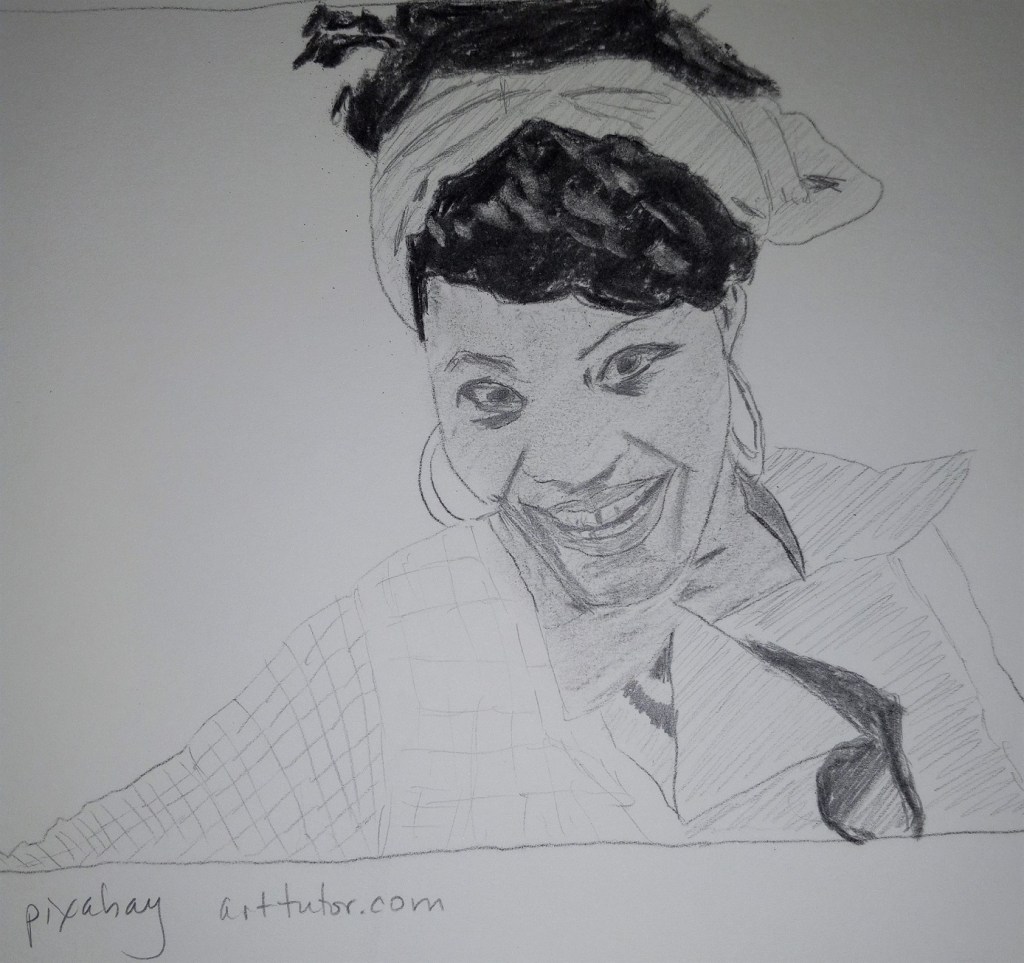
I did this portrait using charcoal and graphite.
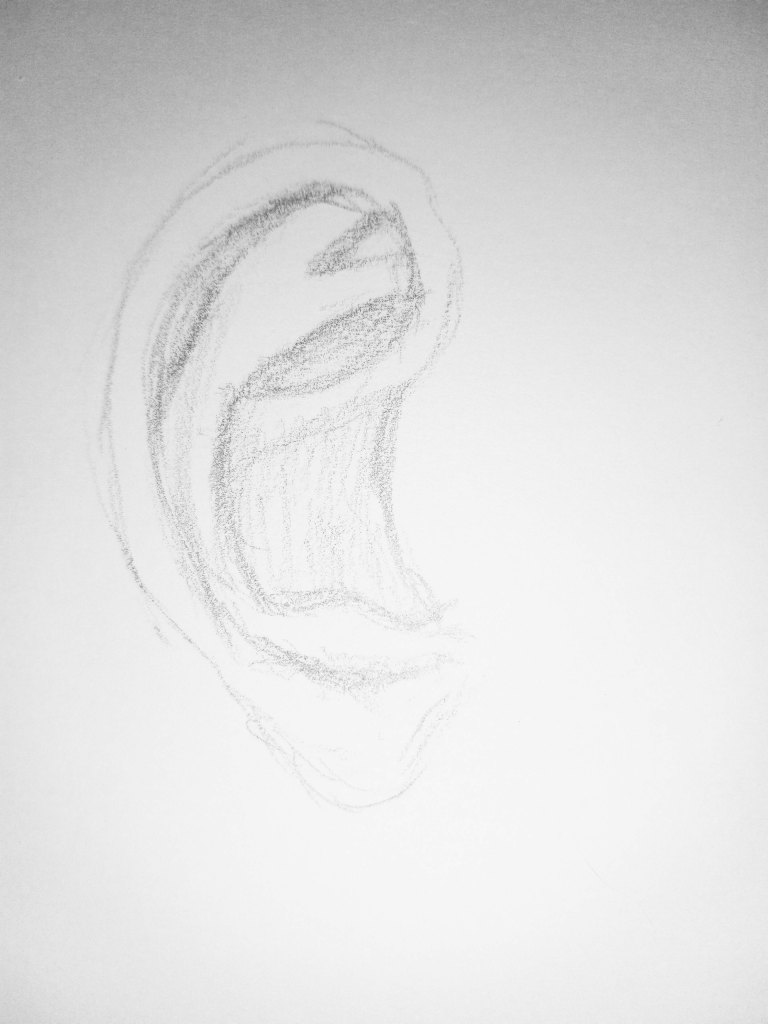
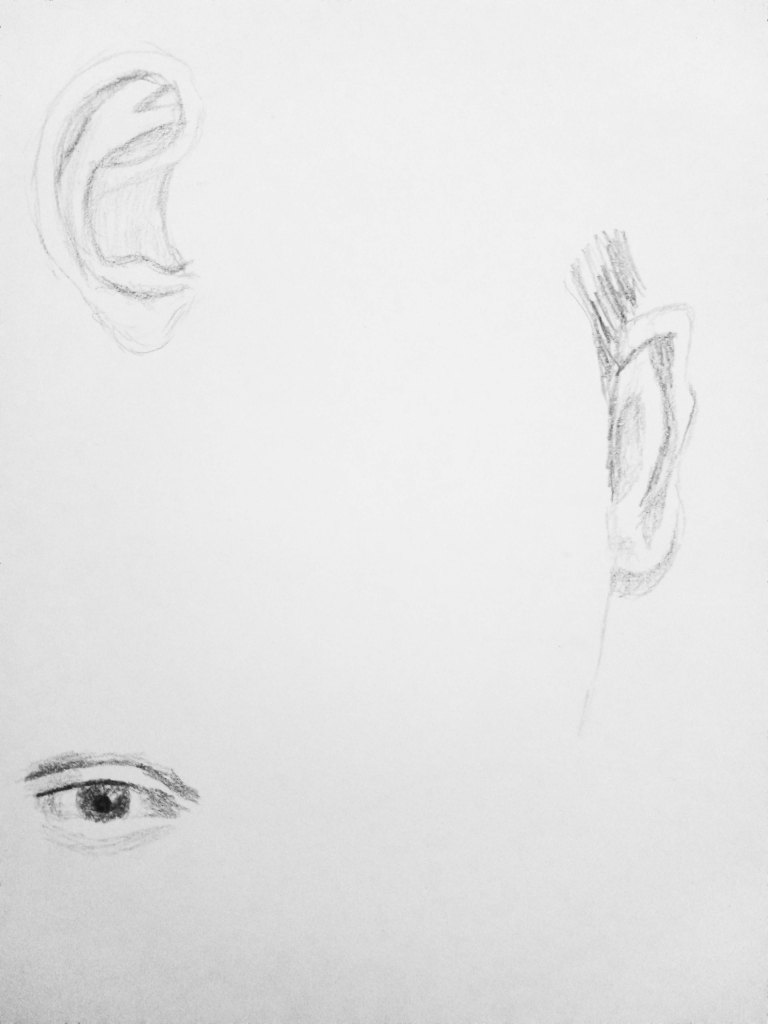
Ears are something I need to practice as well, mostly because I want to get the inner shapes right on a profile-view.