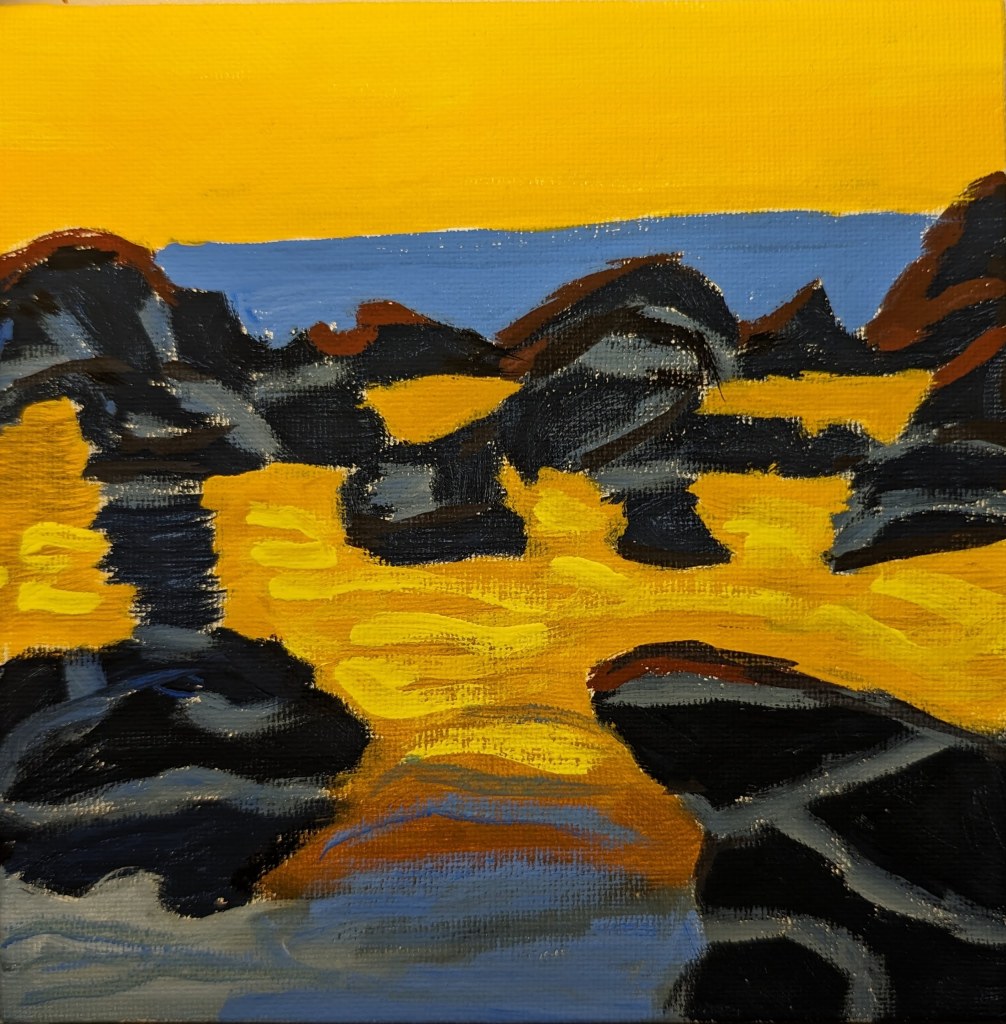
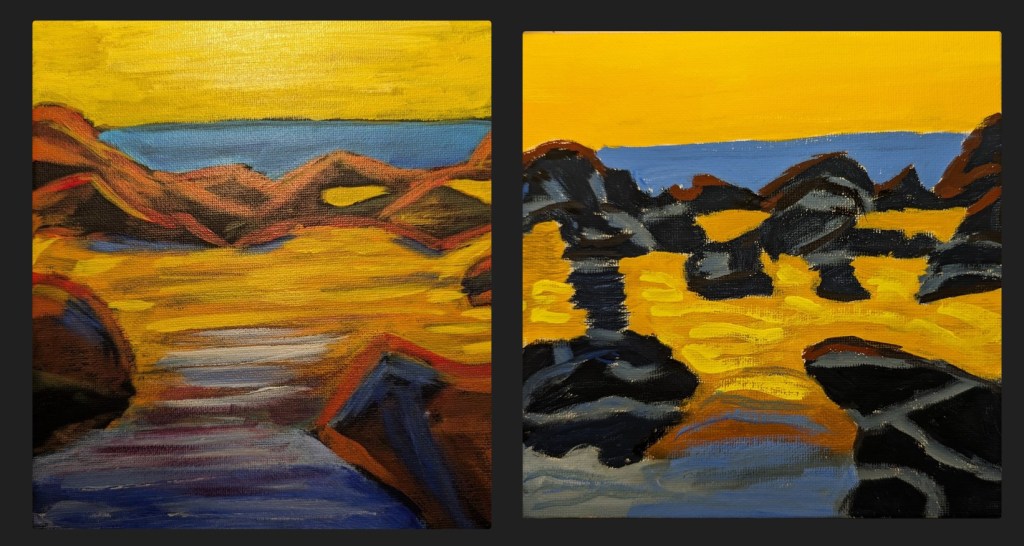
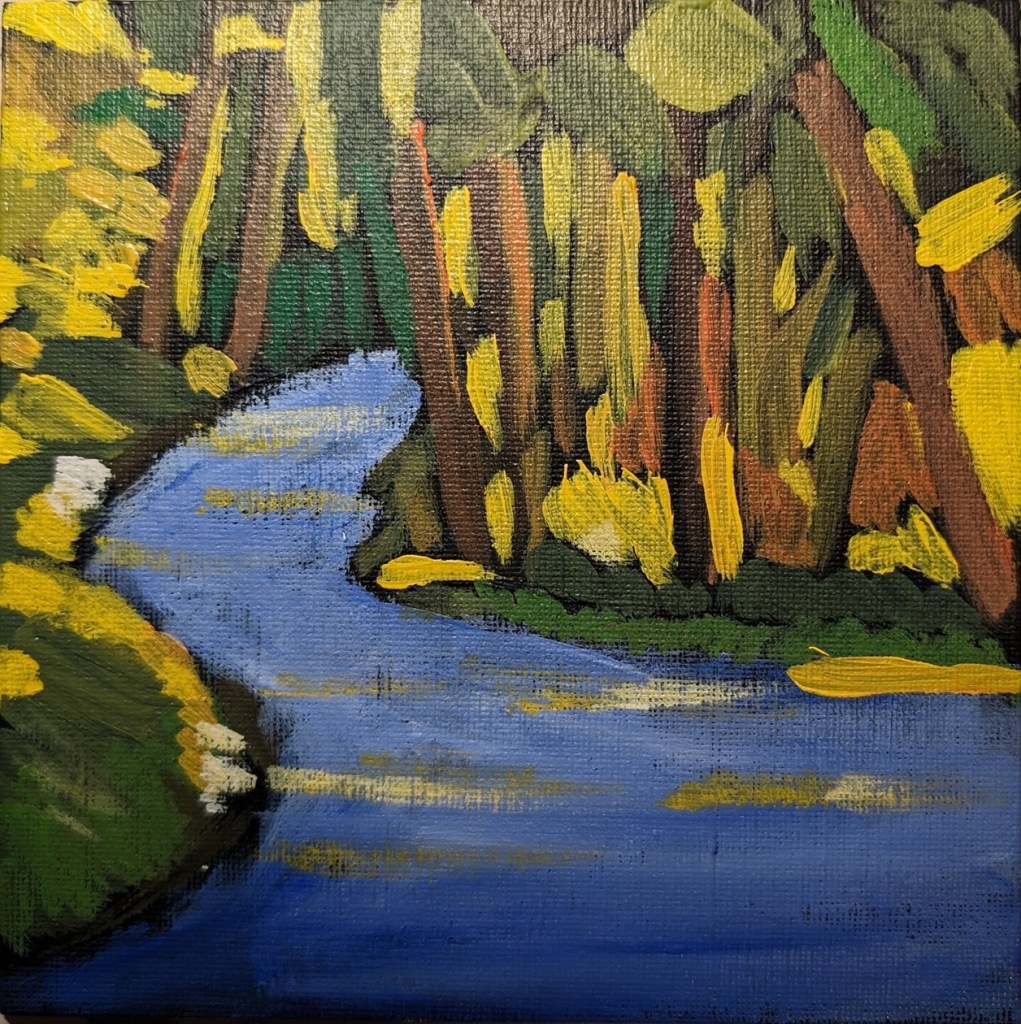
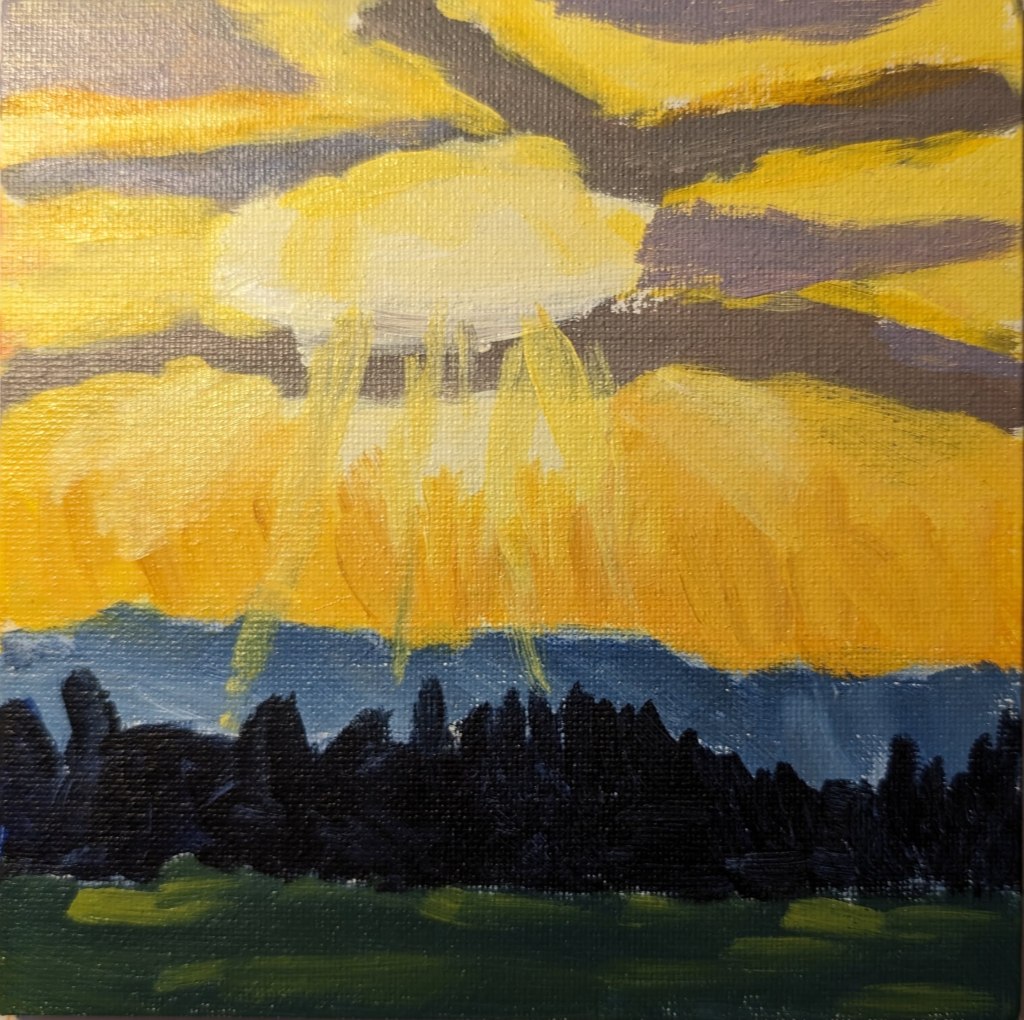
These paintings are from Part 2 of an color-study exercise I’m doing on the Acrylic University site. The class is taught by Jed Dorsey; it is his reference photo and his follow-along painting vids I am using for my own studies below.
Part 2 features different versions of the primary hues; I am using Liquitex Cad-Free Yellow Light (cool), Ultramarine Blue (warm), and Anthraquinone Red (cool).
These paintings are from Part 1 of an color-study exercise I’m doing on the Acrylic University site. The class is taught by Jed Dorsey; it is his reference photo and his follow-along painting vids I am using for my own studies below.
Part 1 focuses on a warm yellow (I used Liquitex Cad-Free Yellow Medium), a cool blue (Phthalo) and a warm red (I used Pyrrole Red).
Part 2 will feature different versions of the primary hues; I’ll be using Liquitex Cad-Free Yellow Light (cool), Ultramarine Blue (warm), and Anthraquinone Red (cool).
I used an old Ampersand Gessobord panel which I re-gessoed numerous times to reduce the slickness. Unfortunately, that left brushstroke grooves, which are particularly obvious in the reflection of the trees.
Last year I signed up and paid for Let’s Face It 2023, a 52-week series of portrait lessons which you can either follow along with or use as inspiration for your own fully original art, but I never did a single exercise. This year I signed up for the 2024 version, and just completed the first week’s portrait. Week One was taught by Kara Bullock.
This is an exercise from one of the foundational courses (Acrylics 101) at Acrylic University wherein you do a value map of your painting using black, white and gray, and then applying color on top of the different value areas, using care to make sure your values — post-color — remain. It’s a more detailed version of the quickie free course I mentioned here.
Here’s my original painting done in grayscale, done as part of the Acrylics 101 online class, using their reference photo.
I did a value check on my primary colors and mixed secondaries.
The next task was to choose colors that aligned to the value map/painting I already did. This was my first effort. The abstract trees were a bit too dark, compared to my original (above), pretty much the same as the (abstract) forest.
The class covers basic suggested supplies, brushstrokes, values, the grayscale, color mixing, and 3 small paintings.
The first two paintings from the class are below. You paint the moon scene in grayscale first, and then paint color over it, keeping with the value map. The last photo is of the color painting, but in black & white to validate the value map.
The second set of paintings is a sunset, and the last one (not yet completed) will be roses.