Today I used some of my pieces of Canson Mi-Teintes paper, after reading some of Karen Margulis’ blog posts about loving the paper.
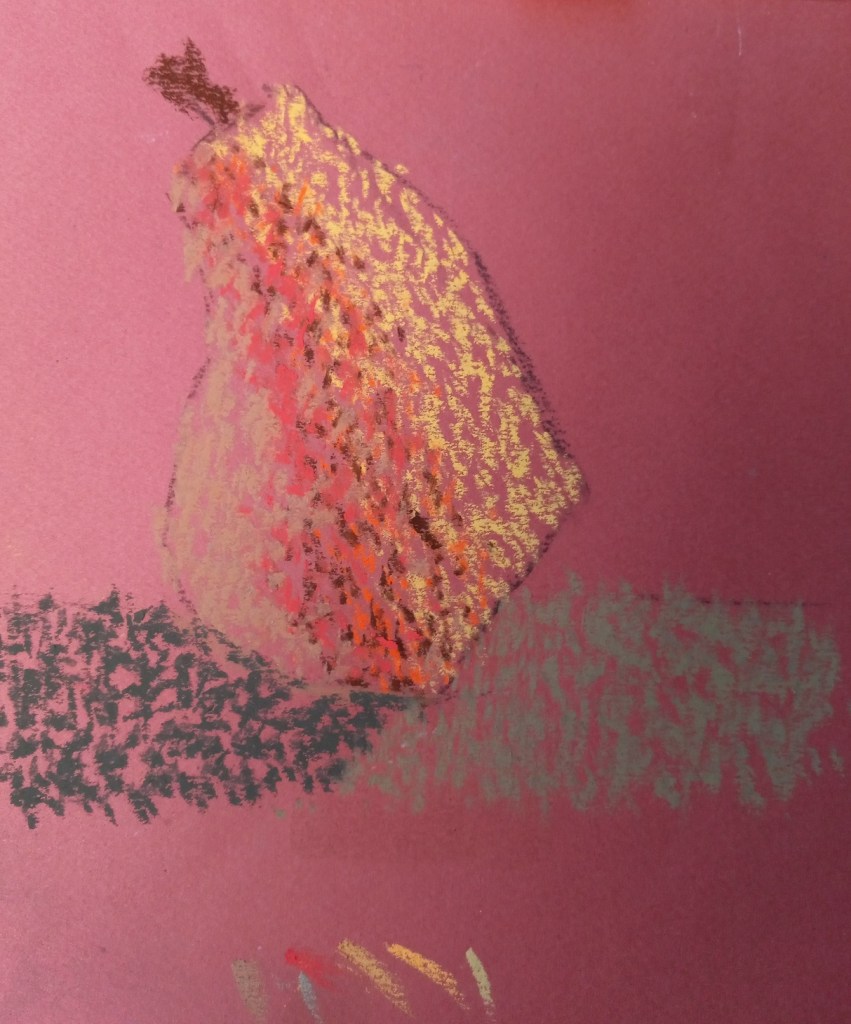
Since I’m still focused on pears and different mark-making styles, I decided to use stippling on a sheet of Terracotta tinted Mi-Teintes paper.
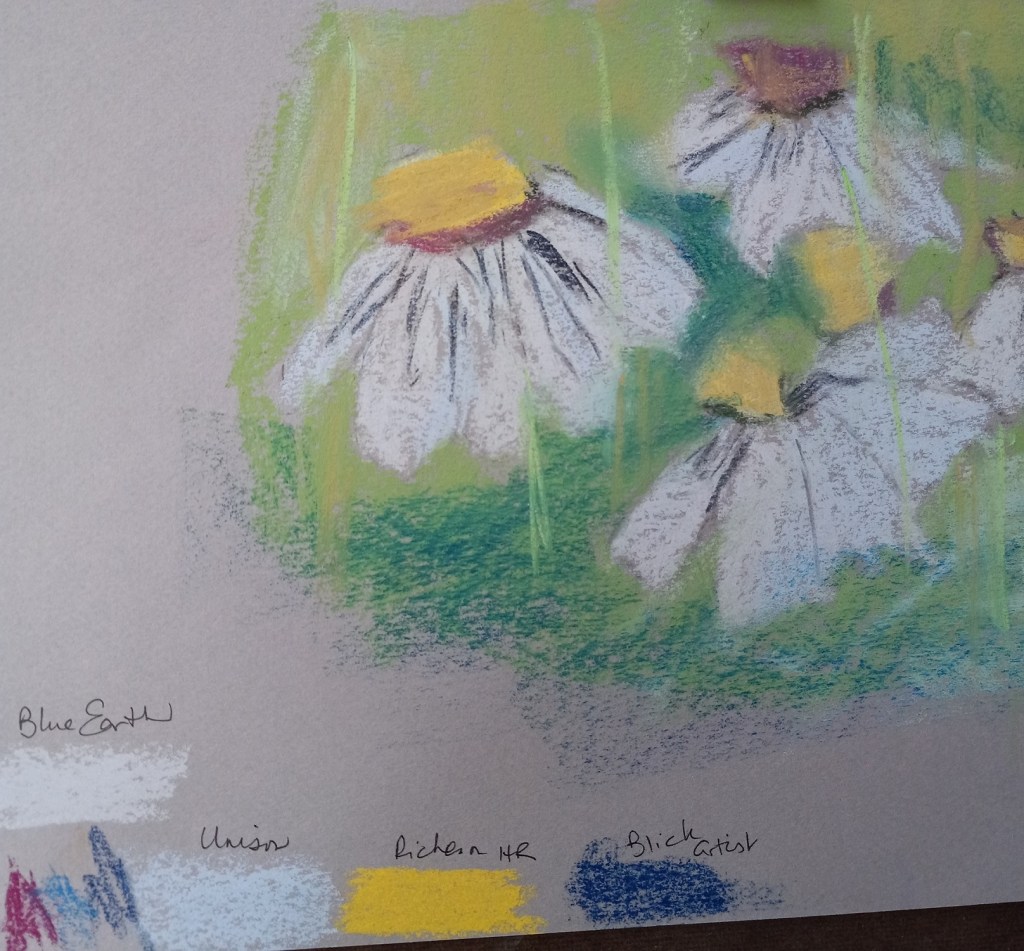
Then, after admiring the way Margulis makes her daisies, I attempted to copy her style (also on a piece of Mi-Teintes). I took Margulis’ advice to use a light touch, but I also did not do too much layering.
My experiment was largely to see which pastels work best on this paper. I noted the results at the bottom — Blue Earth and Richeson Hand-Rolled covered the paper much better than Unison or Blick Artists’ Soft Pastels. (Of course, that may also be the function of my skill level.)
I decided not to entirely give up on the Canson Touch paper — after all, I have 9 more 20×30 sheets of it! I need to learn how best to use it.!
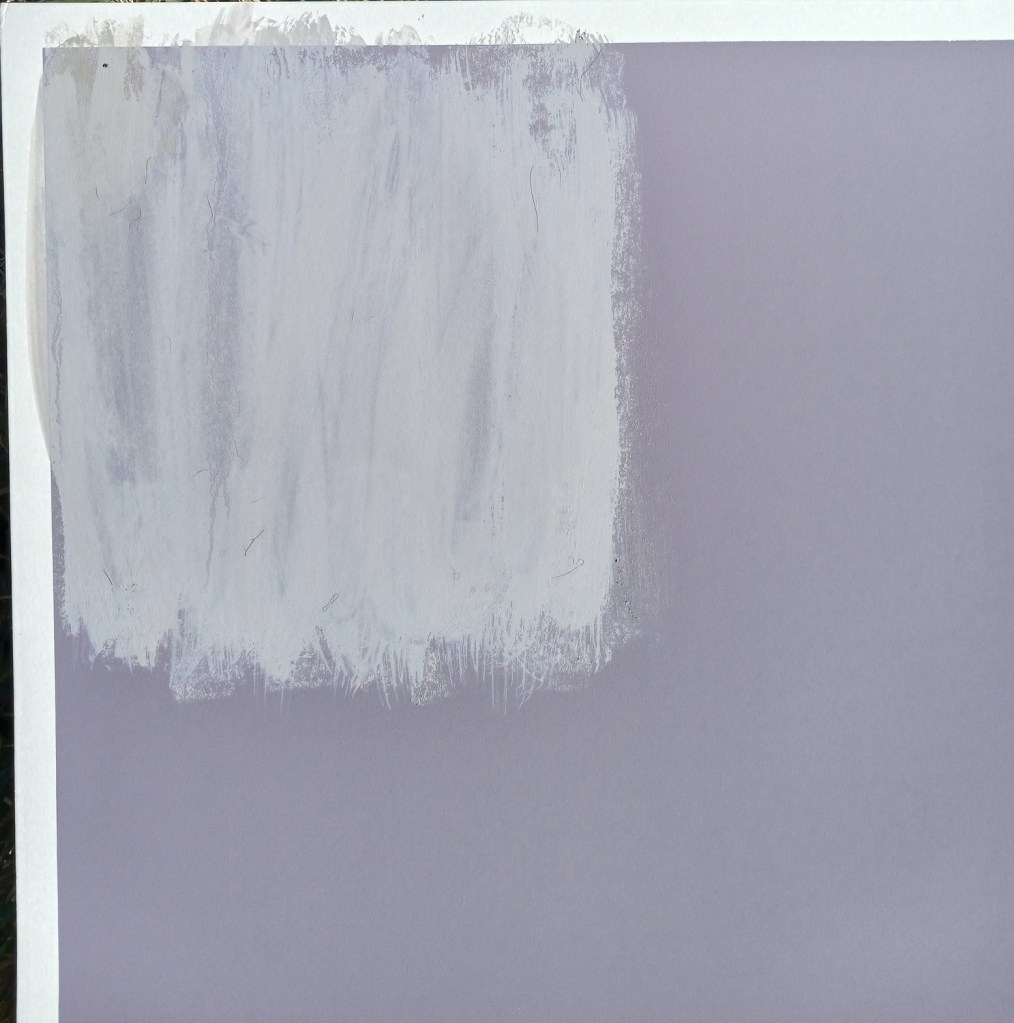
After reading more blog posts by Karen Margulis, and the online workshop PDFs by Marla Baggetta, I decided to try using water on the pastel. I laid down some gray pastel, and then used an older watercolor brush to lightly wet down the pastel and mix it into the paper.
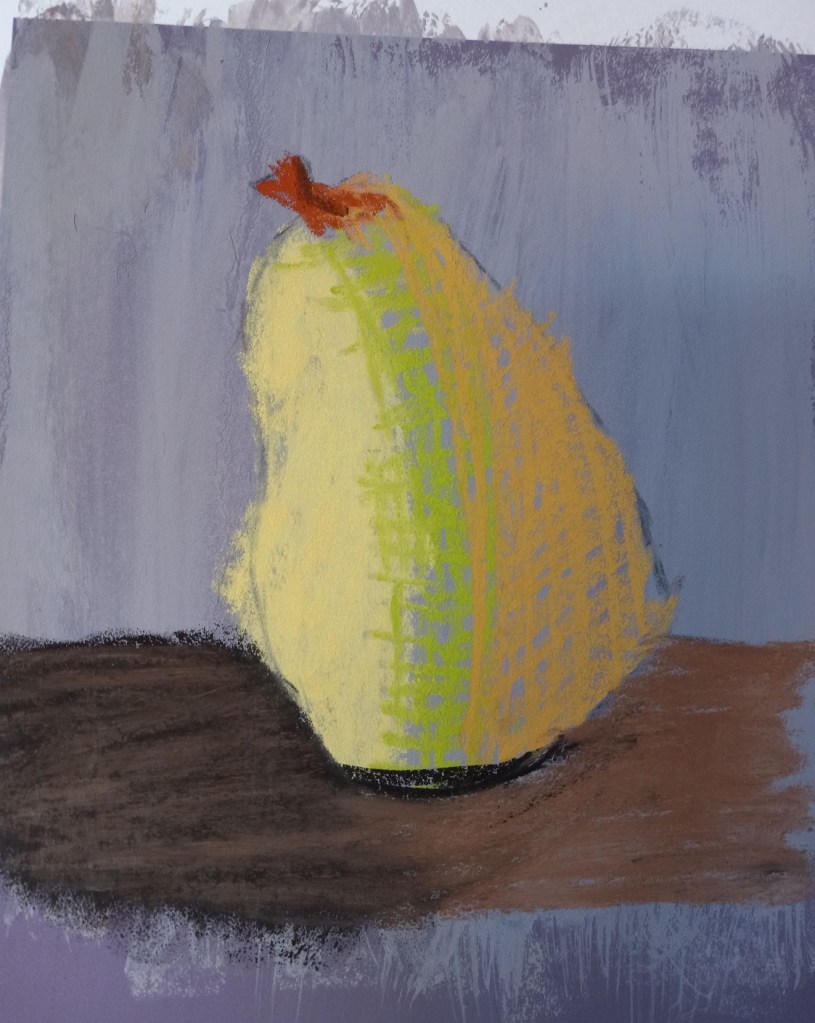
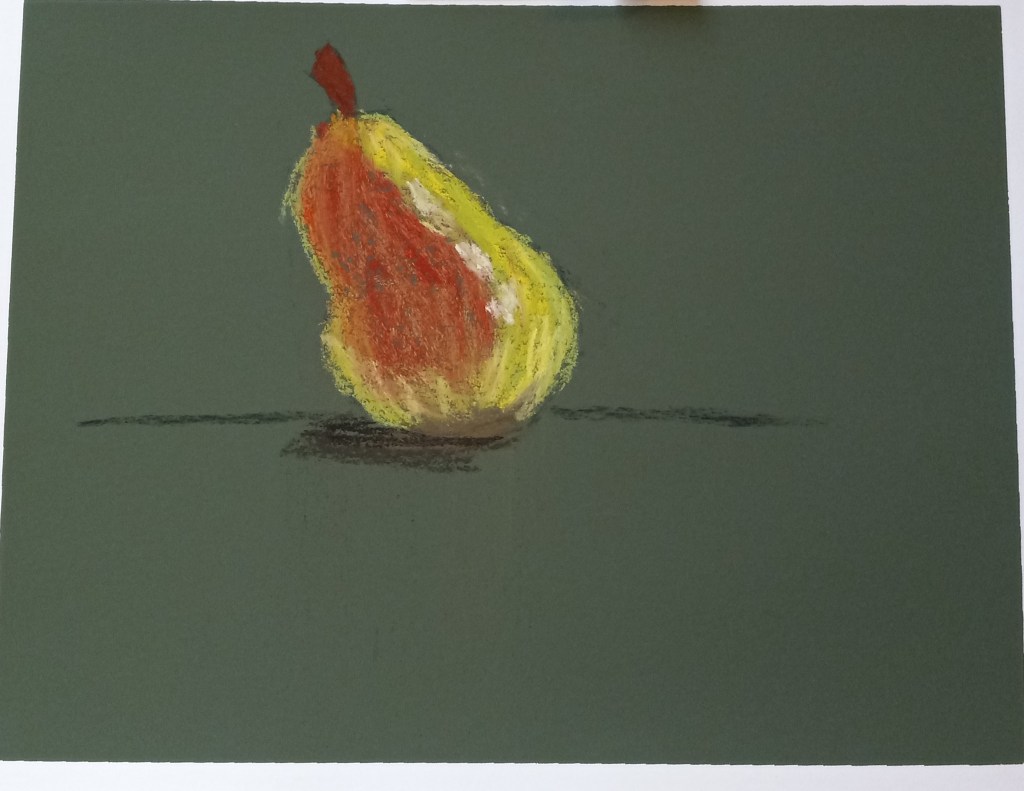
After letting it fully dry — which was at least 30 minutes — I painted the pear below. The dark brown cast shadow is from a Blue Earth pastel; the lighter brown is a NuPastel, the yellow and the orange are Richeson Hand-rolled pastels. I’m delighted with how the color laid down on the modified surface of the Canson Touch paper.
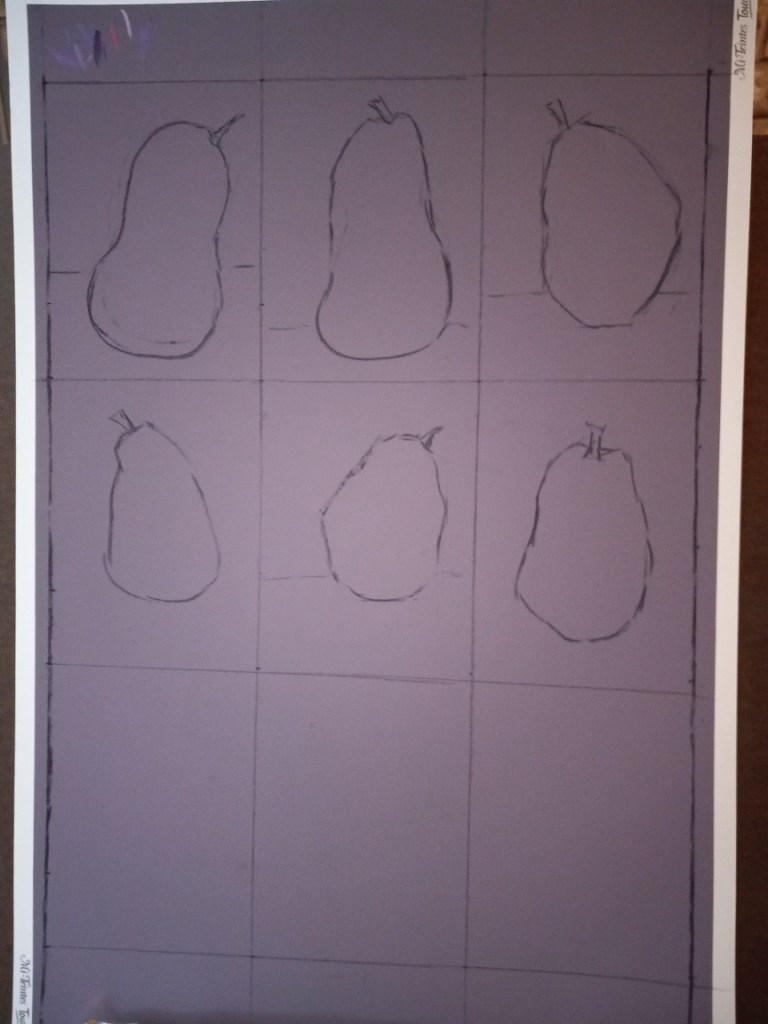
I spent some time today prepping for the first of two 9 pear studies (from Marla Baggetta’s “Making Your Mark” online workshop).
I’m using Canson Mi-Teintes Touch board in the Twilight color, and each pear study will be 8″ x 6″. I’m drawing the outlines in vine charcoal, and may make further adjustments as some of these pears look more like butternut squashes.
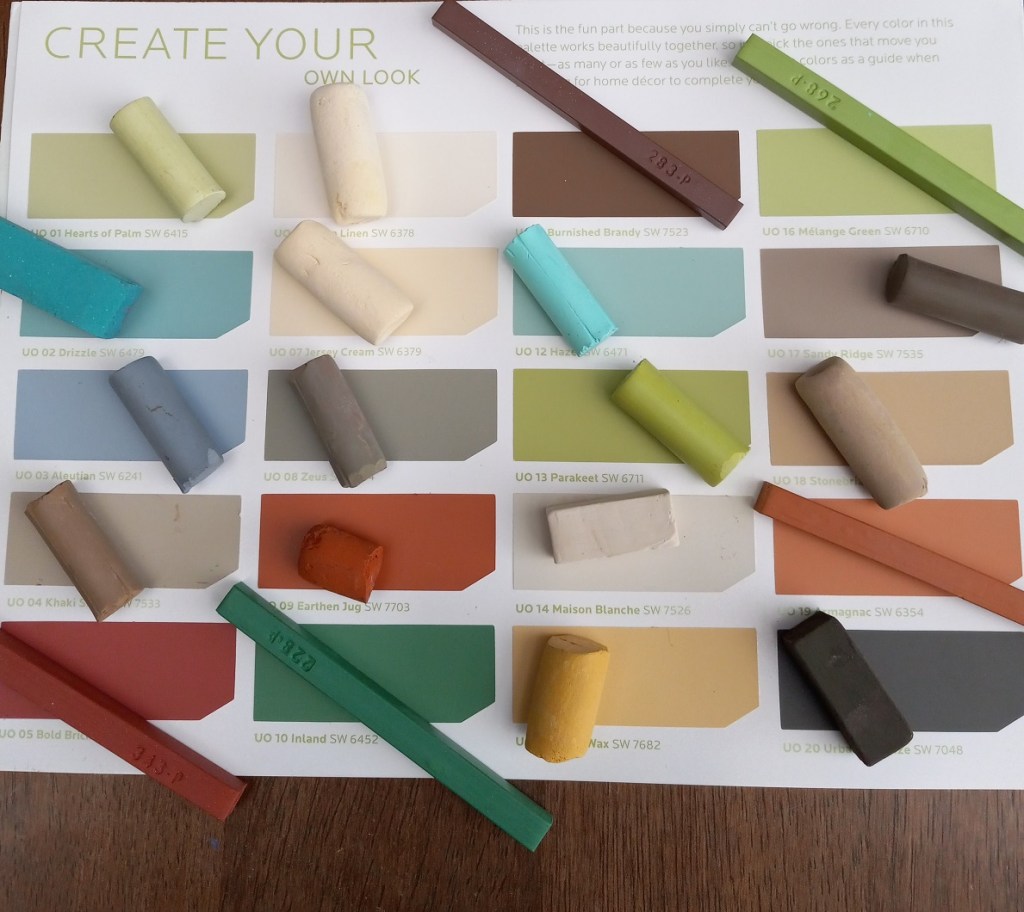
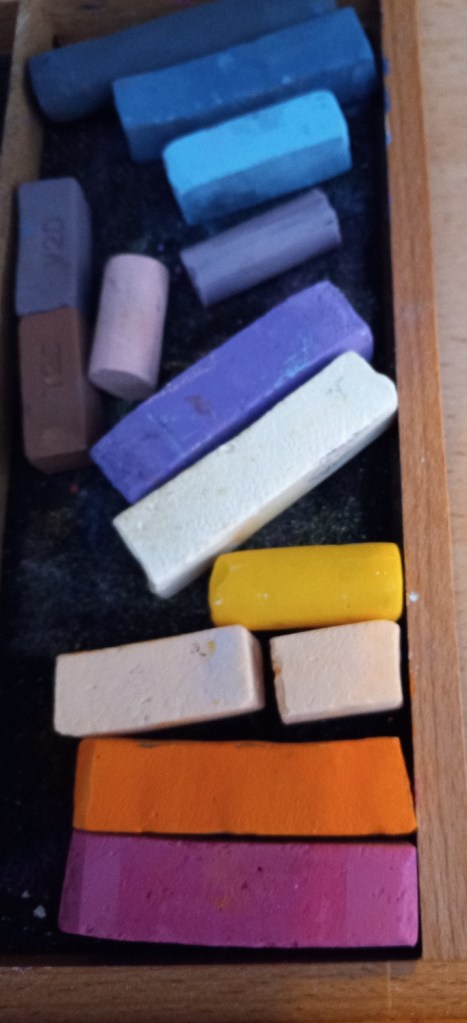
I also chose my palette, based on the “Urban Organic” palette from Sherwin-Williams HGTV back in 2012 (also the palette for the rooms in my house). It looked great as far as matching pastels — although I have nothing particularly close to the green blues — but when I put the pastels in their case, I realized there are too many that are too similar.
So I made adjustments, swapping out some of the creams and browns for magenta and purple. Looking forward to getting started tomorrow!
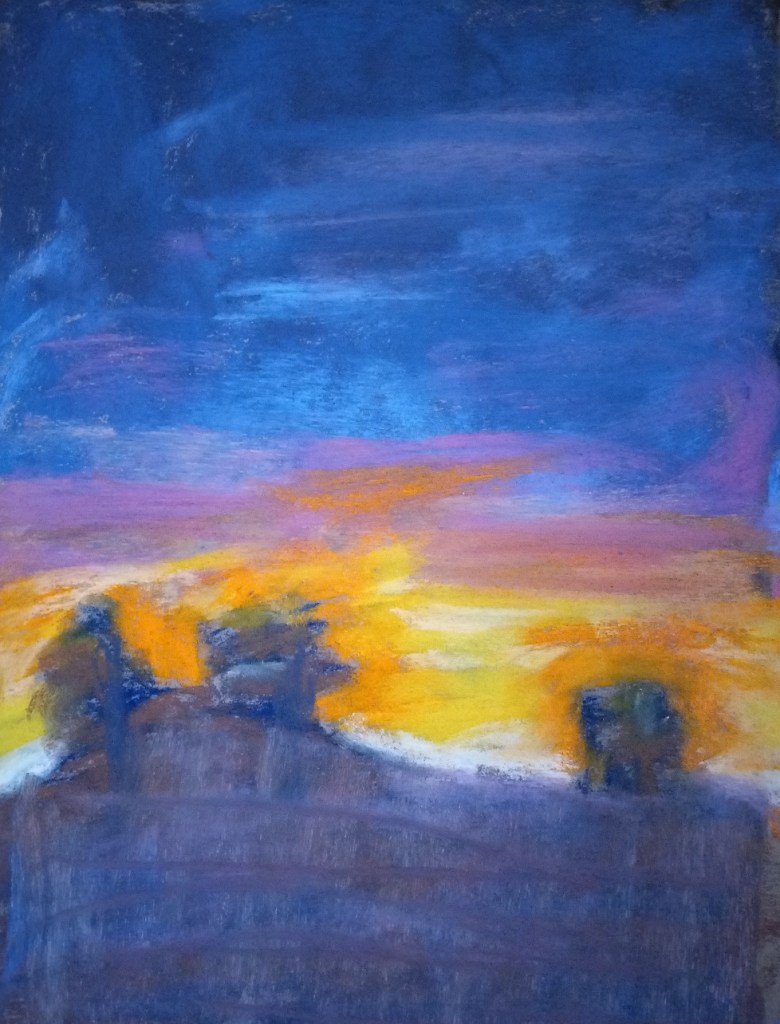
Today’s painting is my own version of a “Desert Glow” sunset after I followed along in Assignment #1 of Marla Baggetta’s “Sunsets in Pastel” online workshop. (I’ve now signed up for 3 of her workshops — and then, with the Black Friday sales still on until this Friday, also signed up for a subscription to her monthly pastel workshops).
The first thing I did was to draw some thumbnails, using my Vincent Van Gogh brand of hard pastels, and vine charcoal. I decided to go with the vertical thumbnail on the bottom left as the reference for the sunset picture.
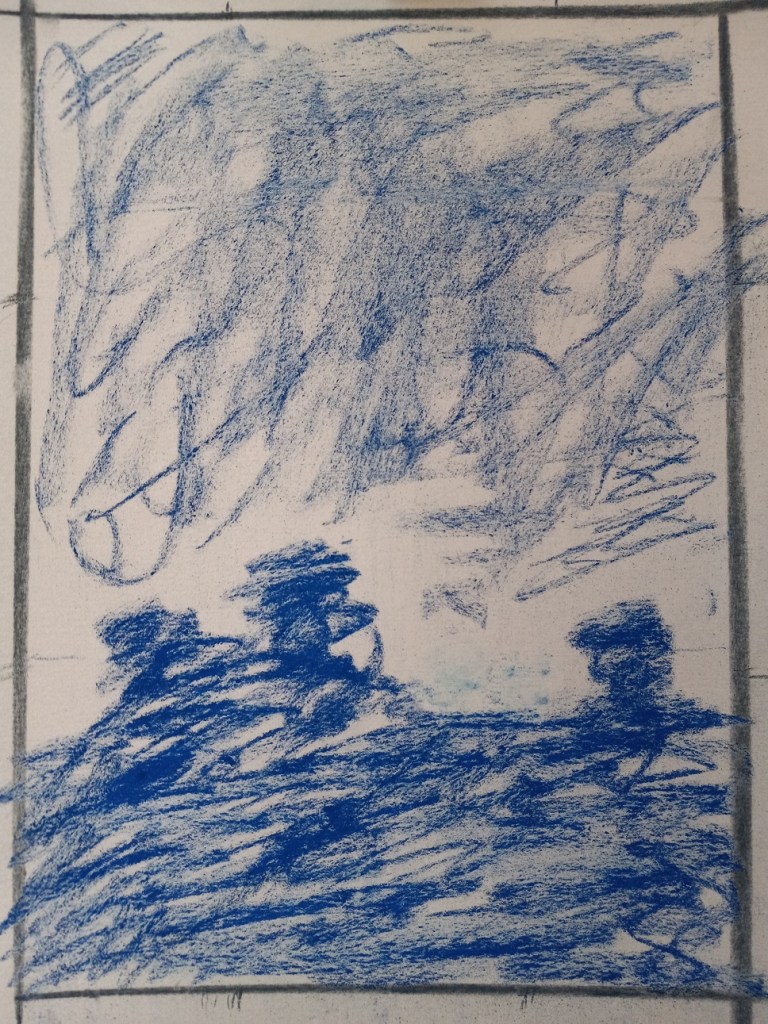
The next step was to proportionately size up the thumbnail sketch to the paper being used (Pastel Premier in Clay) and do the value sketch/underpainting. My thumbnail was, luckily, 2-1/2″ x 3-1/2″ so my picture was sized up to 7-1/2″ x 10-1/2″. I used Indigo Blue NuPastel for this part.
Next step was the fun part — choosing the colors!!
Gorgeous colors! These are almost all Great American, with some Blue Earth, a Terry Ludwig (light blue), and Mount Vision (darkest blue), and Dick Blick Artists’ Soft Pastels. The yellow is one of my Richeson Hand-Rolled yellows.
Here’s the completed study.
The first thing I have to say is that the photo — taken from my Samsung phone — does not sufficiently pick up the magenta, which is a bummer. It also picks up too much blue from the ground, which may (?) be due to the indigo blue underpainting (and of course the use of some darker blues in the ground area.)
Self-critiquing — I could go on and on. Marla Baggetta has a whole list of questions for us to ask ourselves, the first one being “Were you the director? Or did the piece direct you?” I got carried away laying down color, that’s for sure. It was a blast to use all those bright colors! I completely forgot about my thumbnail, and the idea of putting in a striated sky. And I got “lost” in the ground area, not having planned anything out (a structure like a house? Some telephone poles? Some greenery?) So the foreground is a poorly-thought-out mess.
What was good about this? I loved, loved, loved this paper texture! Totally fun to work with. AND I loved all the pastels I used.
For next time:
better planning for the foreground
More sky, less earth.
Underpainting — use the NuPastels again. but experiment with different colors.
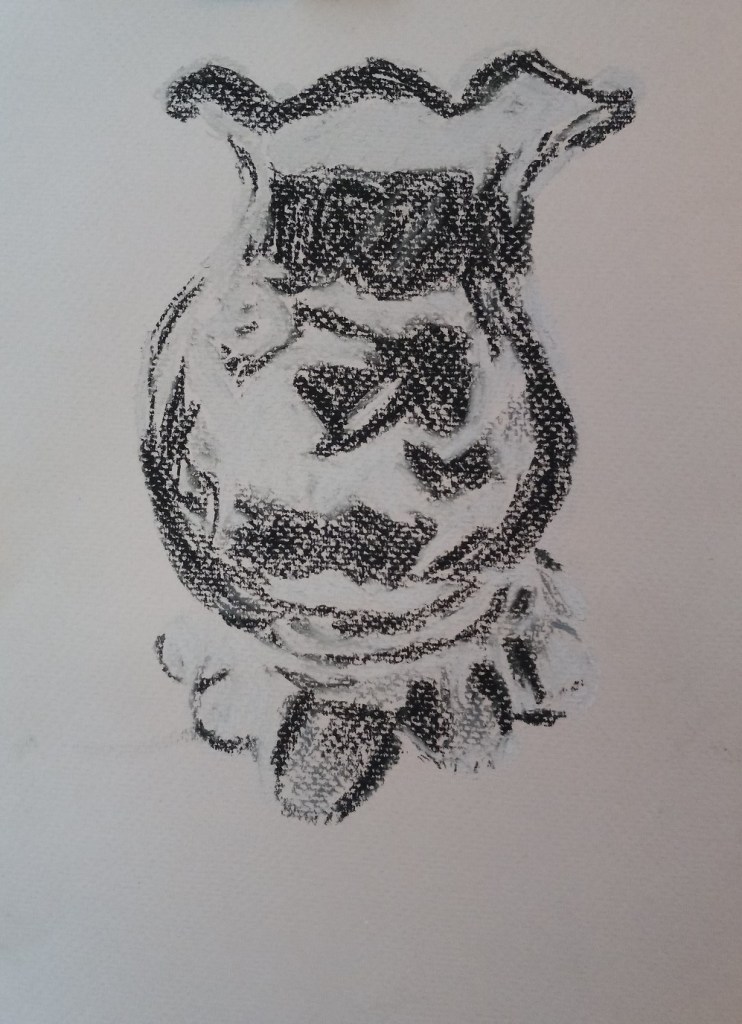
Today’s pastel painting was done on Rembrandt pastel paper, using 3 NuPastels: Warm Deep Gray, Warm Very Light Gray, and touches of Warm Medium Gray. This was a value study in preparation of a color piece which I’ll be doing on a sample scrap of Sennelier Pastel Card (bought last year as a part of a sampler from Jackson’s Art).
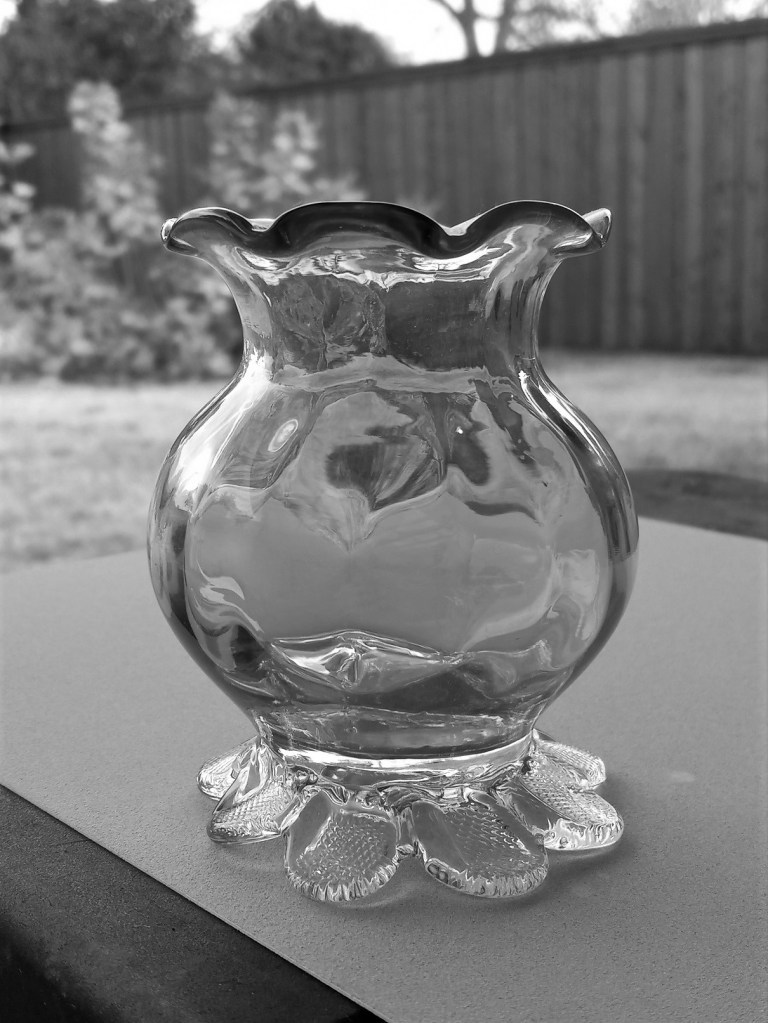
The original picture in color is below. I also downloaded the Android app Color Grab, and played a bit with color choices. While that was fun, I quickly became overwhelmed at the thought of using so many colors for the vase!
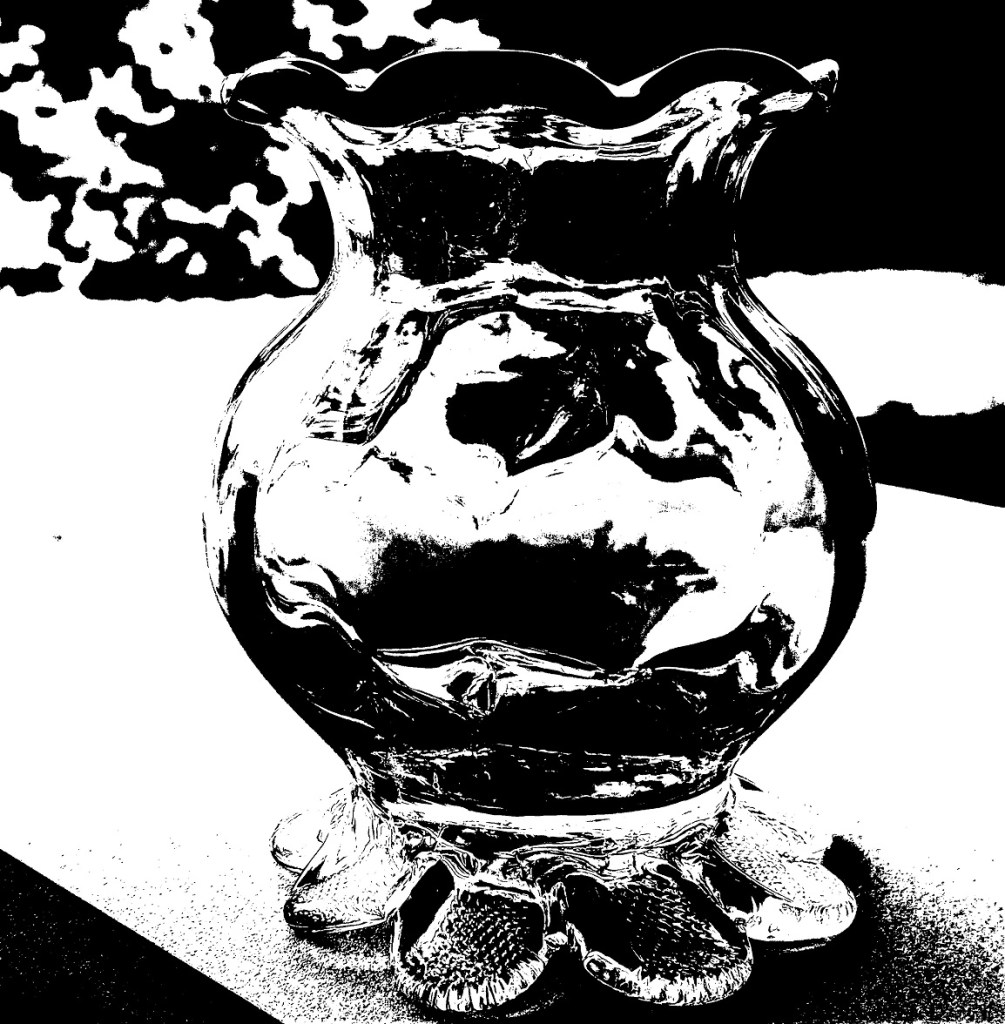
I decided to simplify to an extreme by editing my photo to be grayscale, and then using Adobe Photoshop Elements to posterize the grayscale photo to get the two extremes of values. The posterized version was the reference for my pastel.
I am underwhelmed by the texture of the Rembrandt pastel paper; I do not care for the honeycomb look at all.
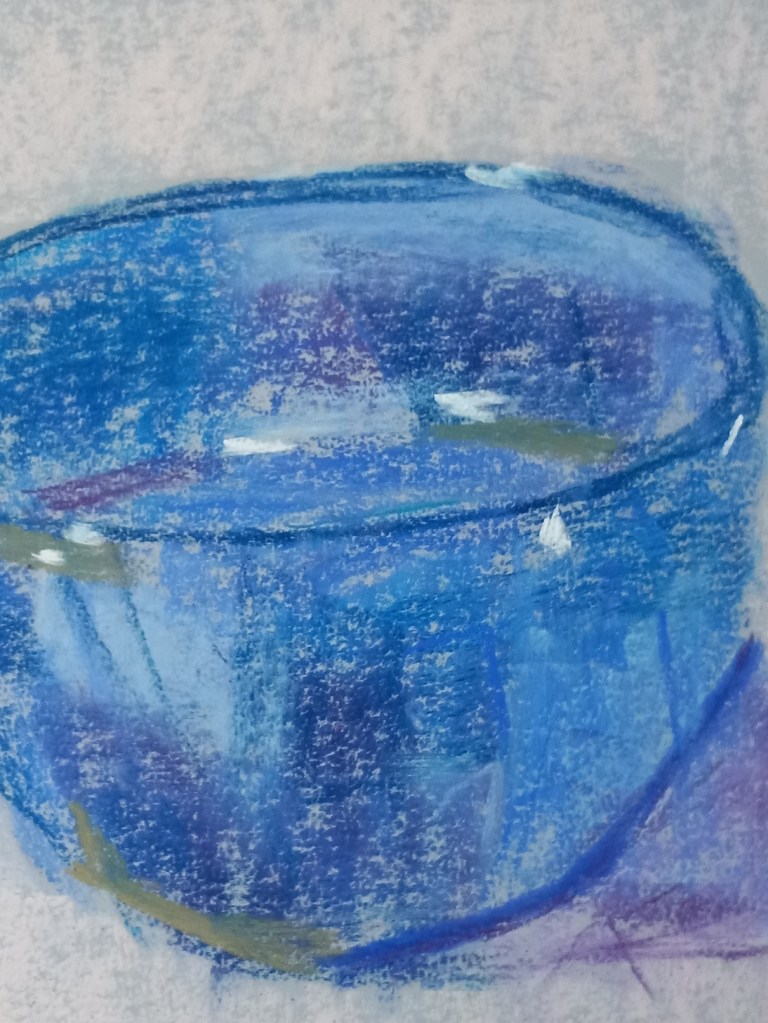
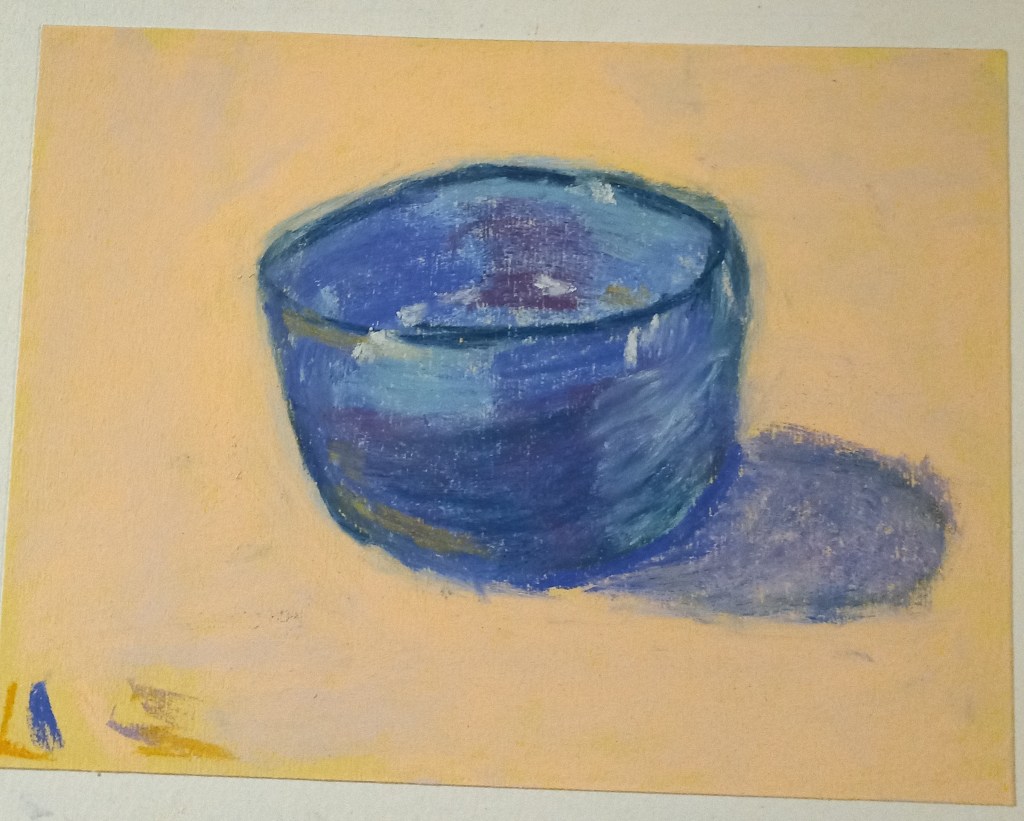
I watched Marla Baggetta‘s video of her painting a blue glass bowl and made my own attempt. I imitated Marla in using the “Blue Spruce” NuPastel to sketch the bowl, but that’s not something I would do again — my own preference would be to sketch in a much lighter color pastel.
I think the pastels are quite “muddy”, and I had an Aha moment later when I realized I lay down the color with a heavy hand. I think I filled up the tooth of the paper.
I also had a difficult time imitating Marla’s strokes; although I used the side of the pastel, either the pastel was too “slippery” or the paper not toothy enough. It felt to me the pastel was “skipping”.
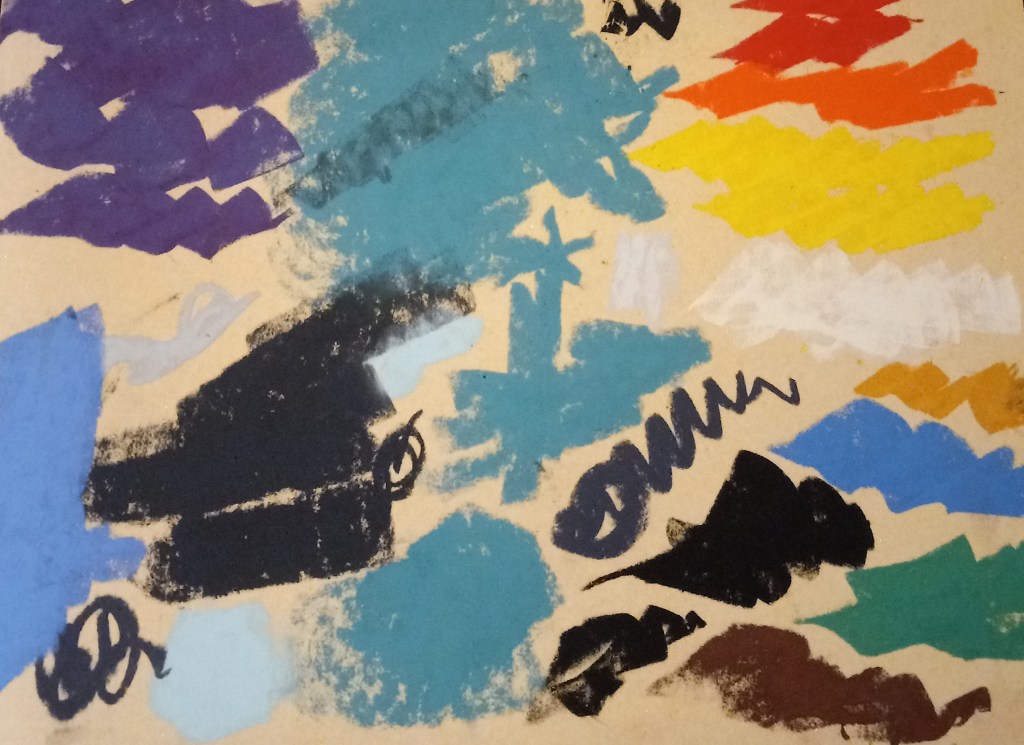
The Fisher 400 paper was one of the sheets in my sanded paper sampler. For the heck of it, I was laying down thick color using my 10-piece basic assortment of Rembrandt pastels. I love the look! Appears like deep rich paint… Luscious!






 BetterLateThanNeverArt