This is an exercise from one of the foundational courses (Acrylics 101) at Acrylic University wherein you do a value map of your painting using black, white and gray, and then applying color on top of the different value areas, using care to make sure your values — post-color — remain. It’s a more detailed version of the quickie free course I mentioned here.
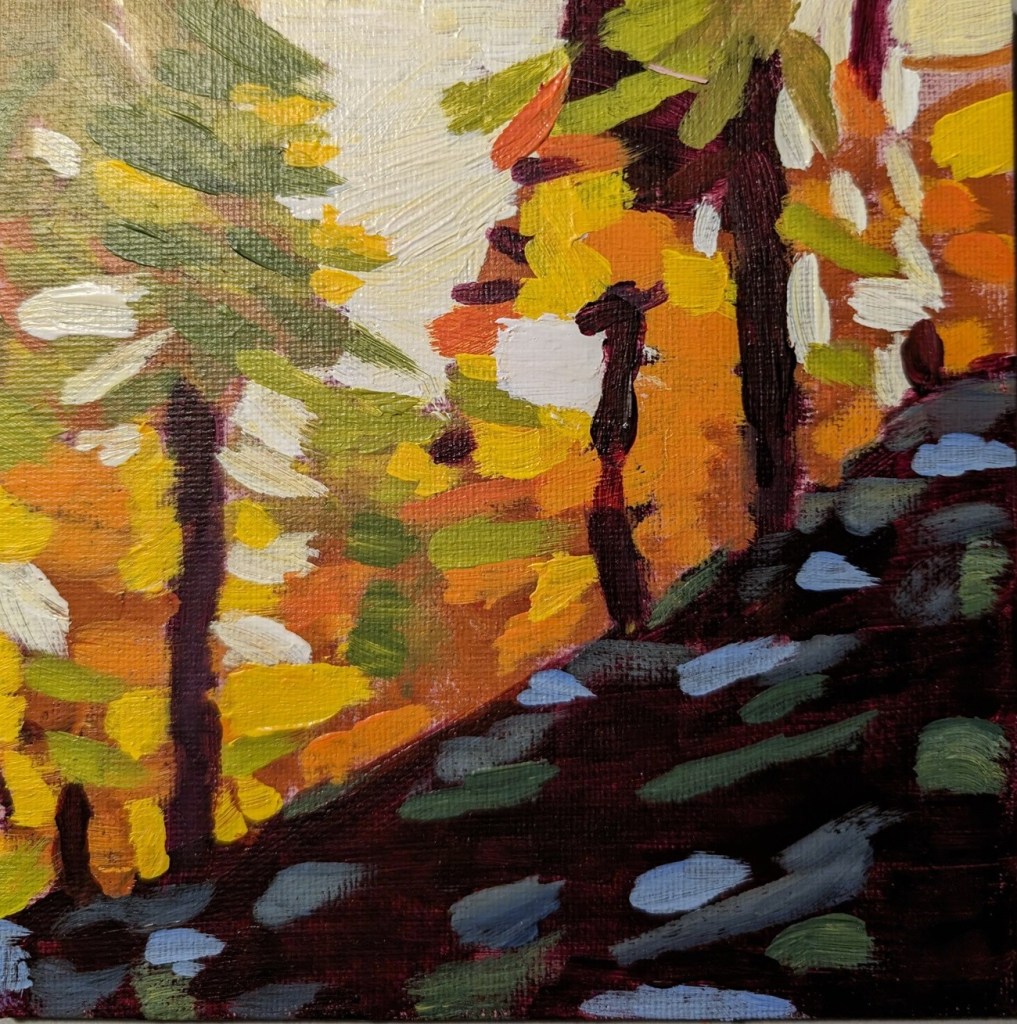
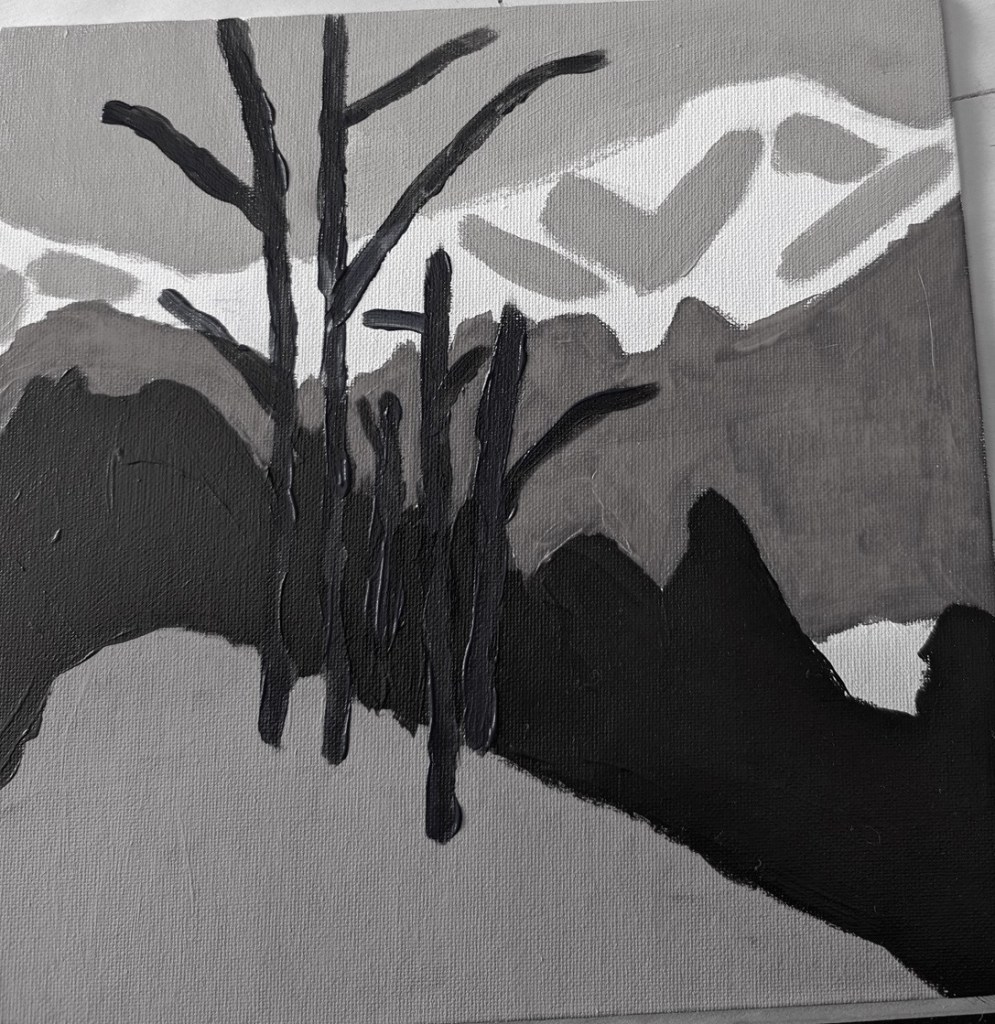
Here’s my original painting done in grayscale, done as part of the Acrylics 101 online class, using their reference photo.
I did a value check on my primary colors and mixed secondaries.
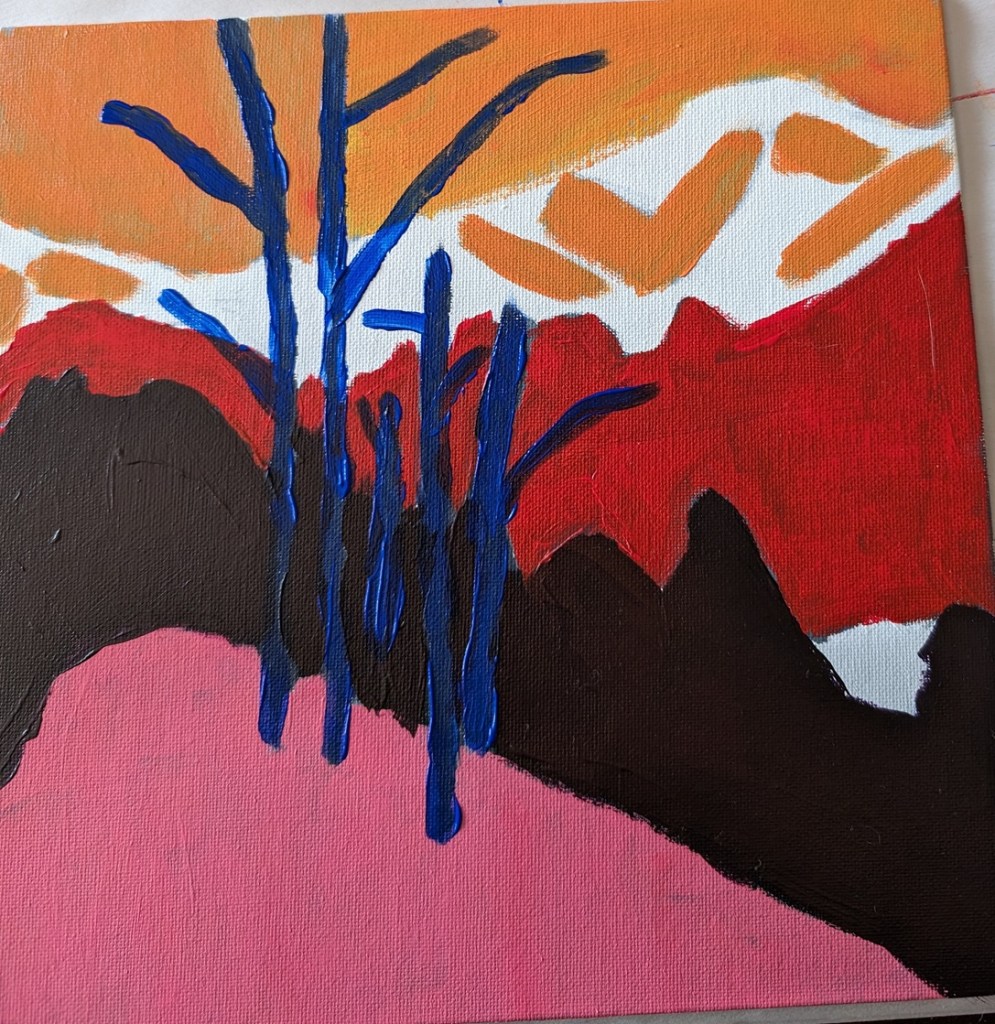
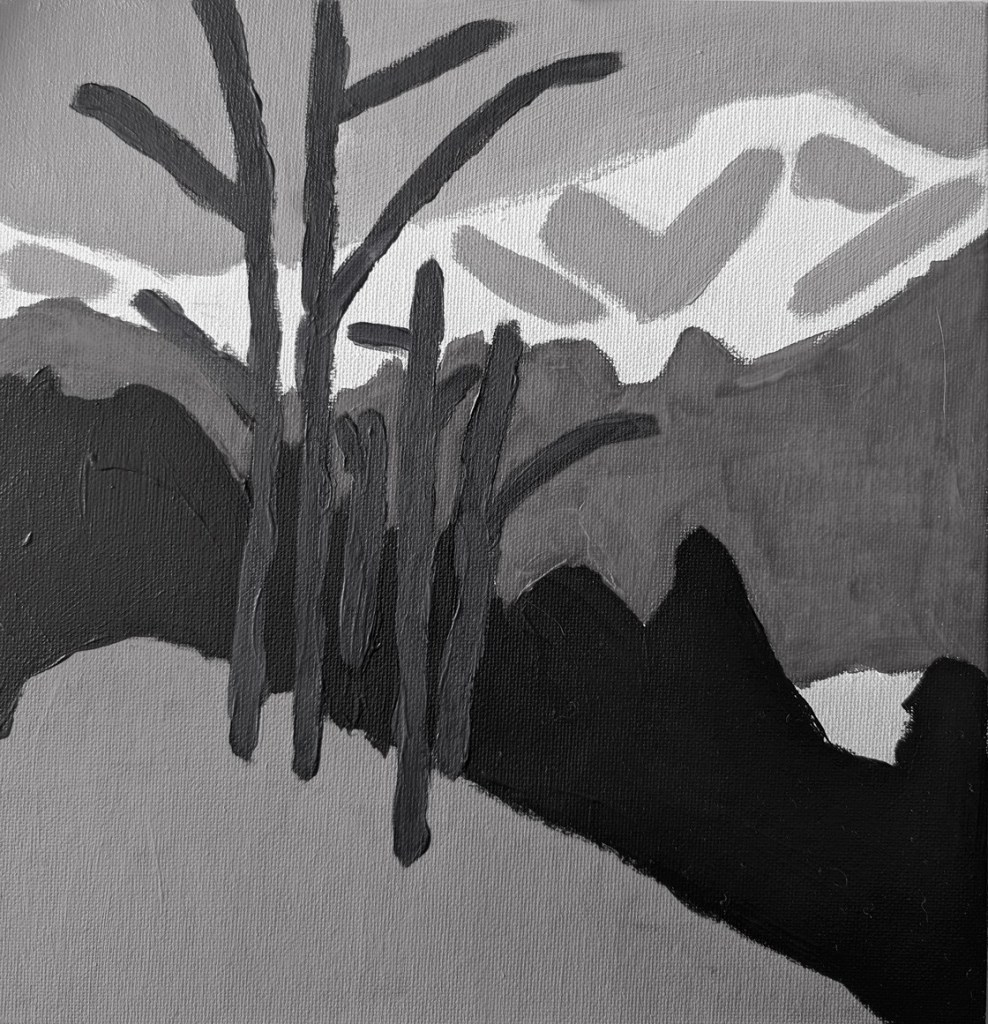
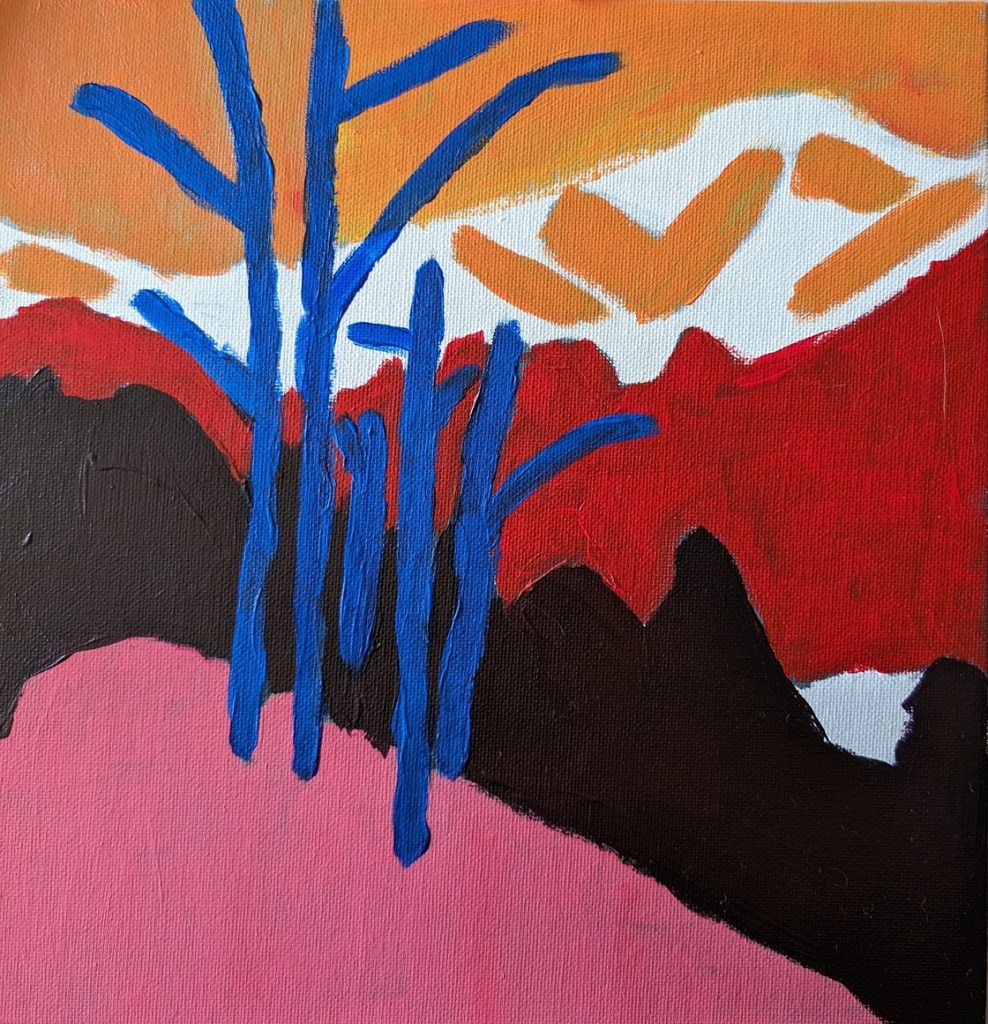
The next task was to choose colors that aligned to the value map/painting I already did. This was my first effort. The abstract trees were a bit too dark, compared to my original (above), pretty much the same as the (abstract) forest.
The class covers basic suggested supplies, brushstrokes, values, the grayscale, color mixing, and 3 small paintings.
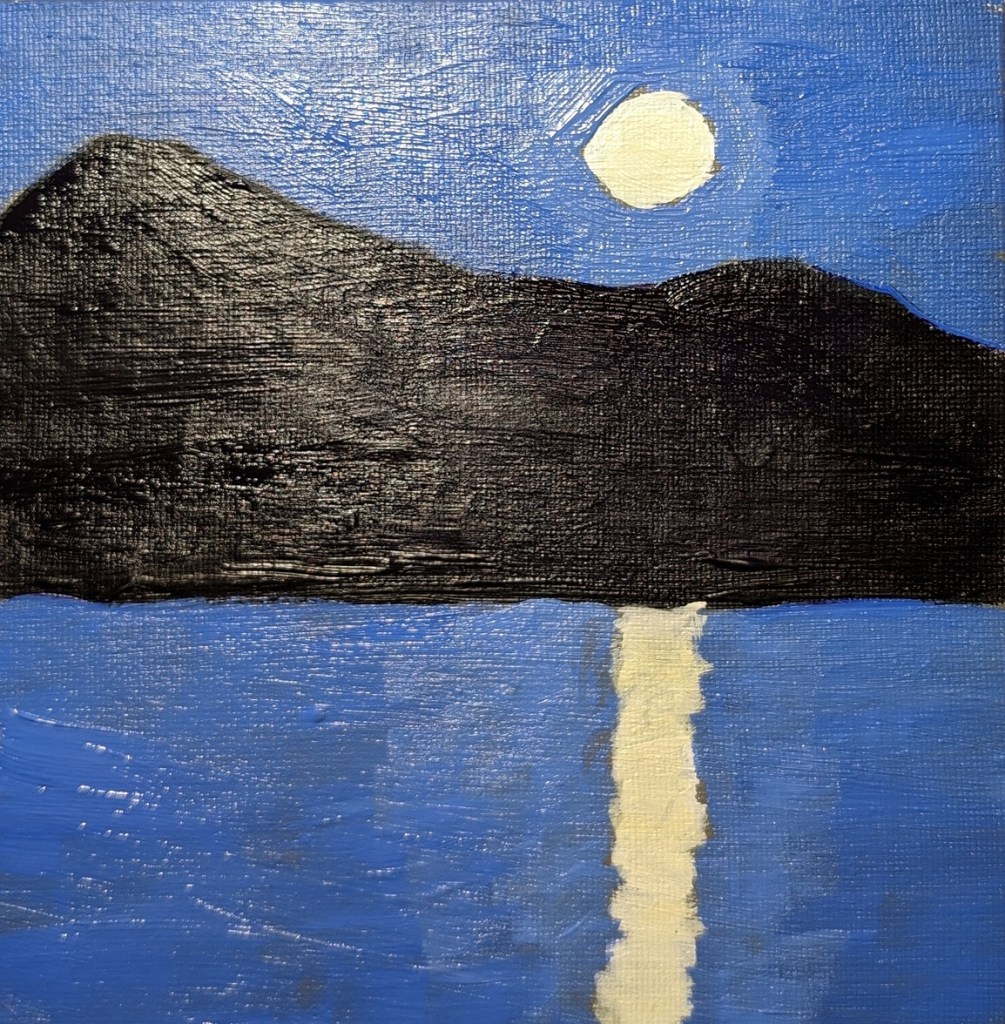
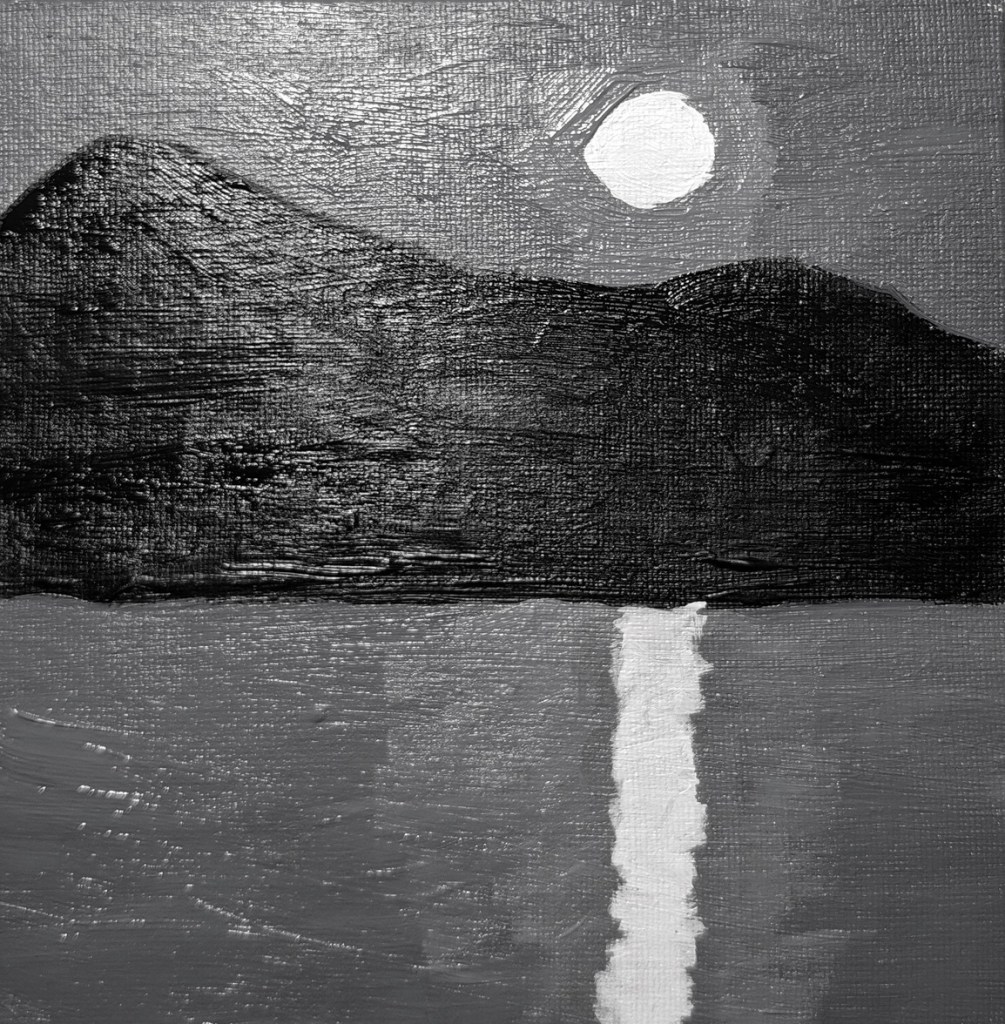
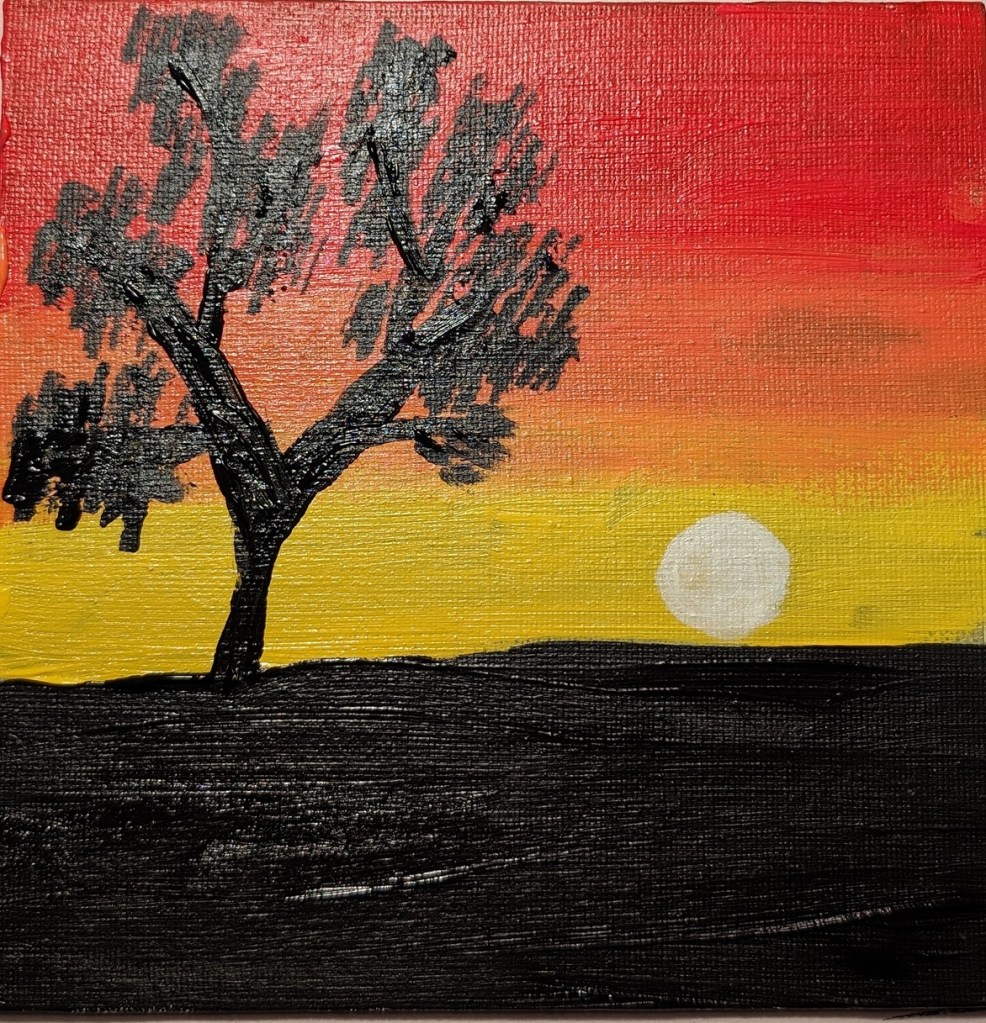
The first two paintings from the class are below. You paint the moon scene in grayscale first, and then paint color over it, keeping with the value map. The last photo is of the color painting, but in black & white to validate the value map.
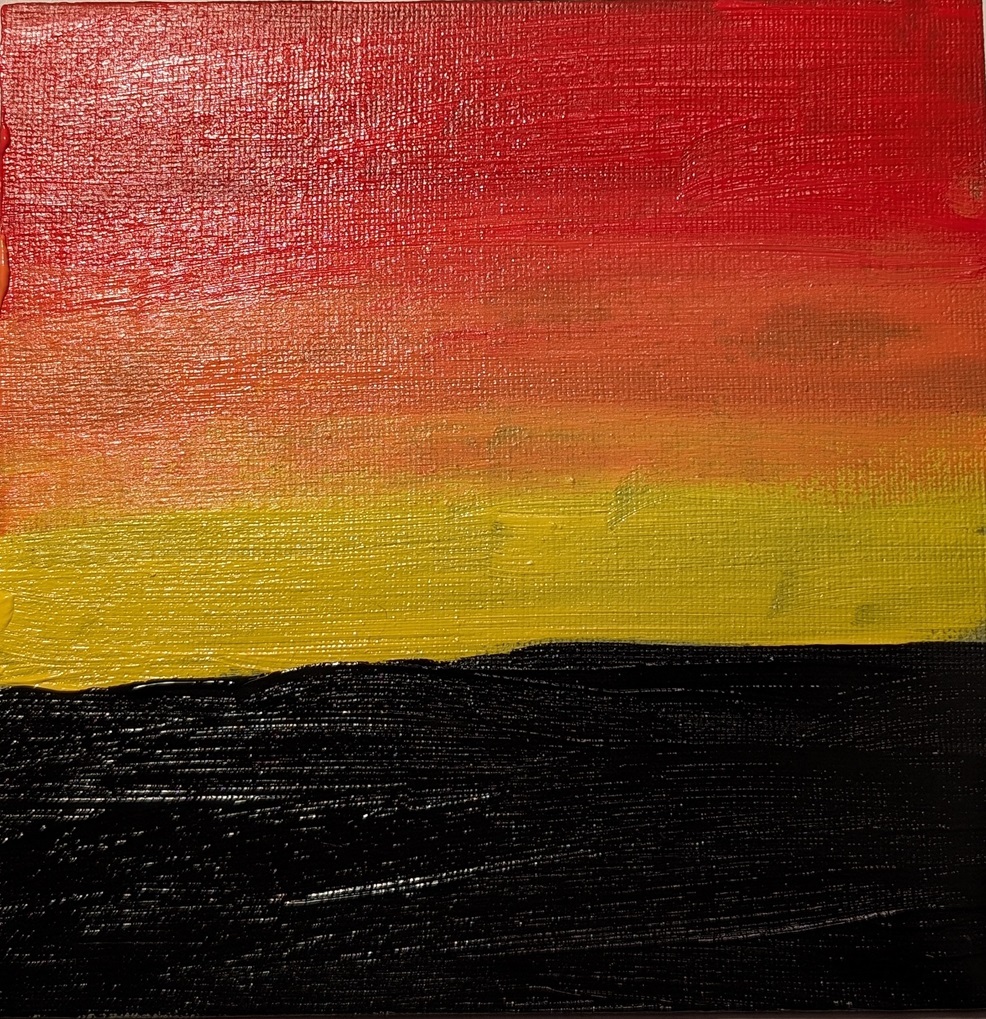
The second set of paintings is a sunset, and the last one (not yet completed) will be roses.
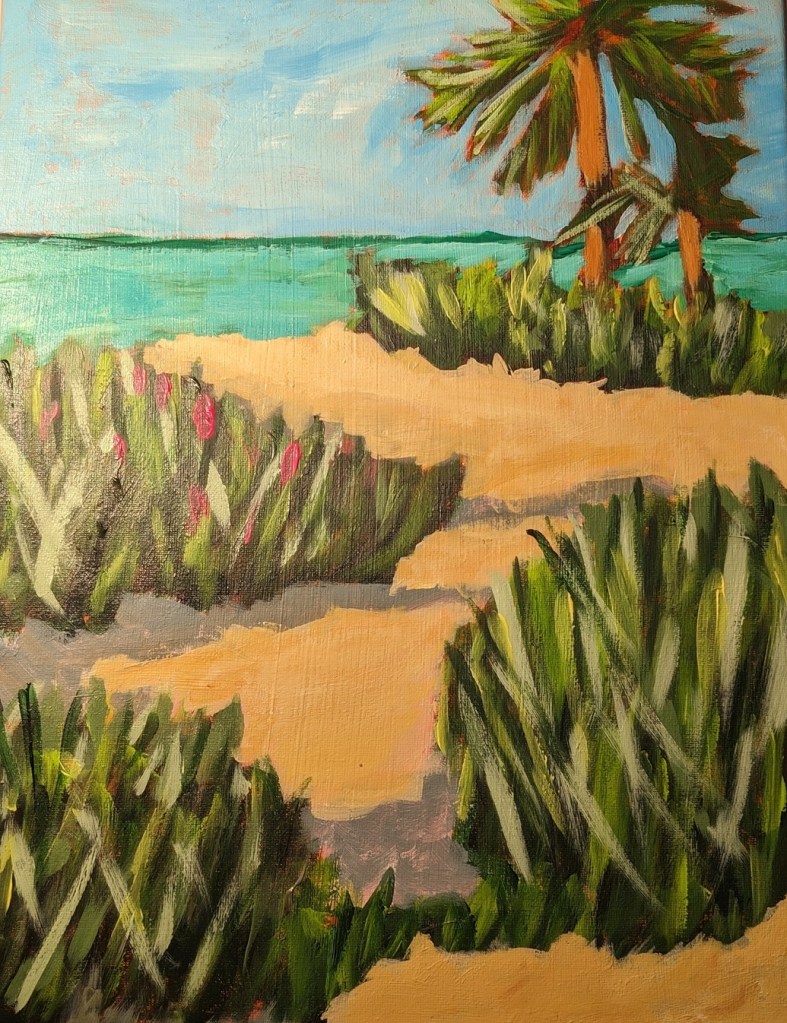
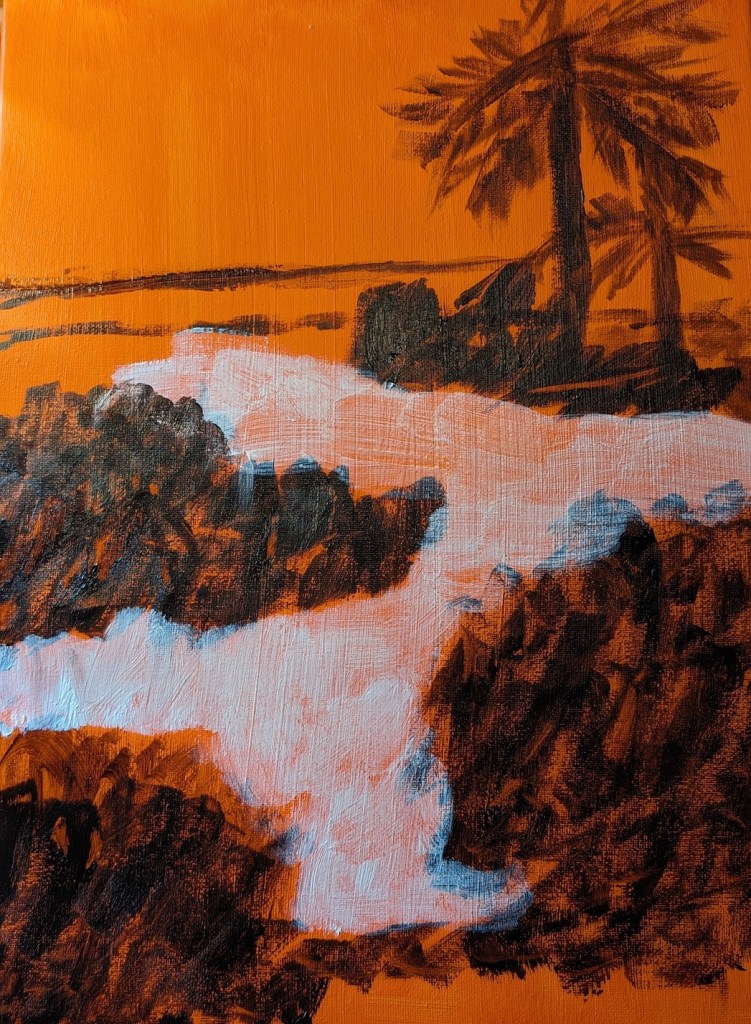
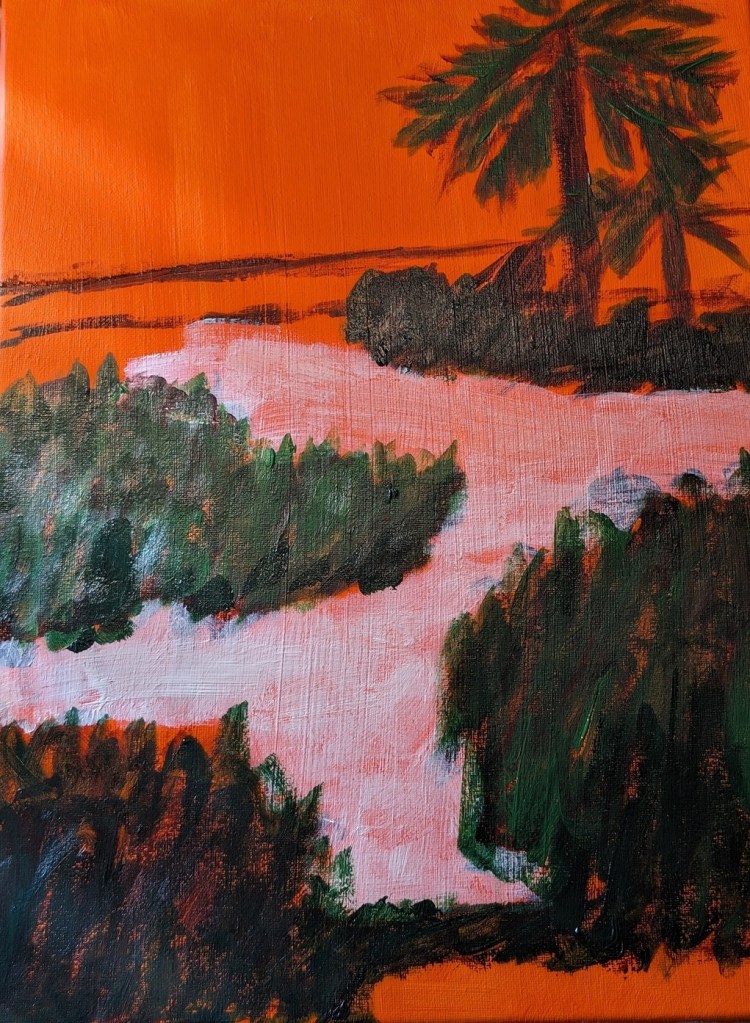
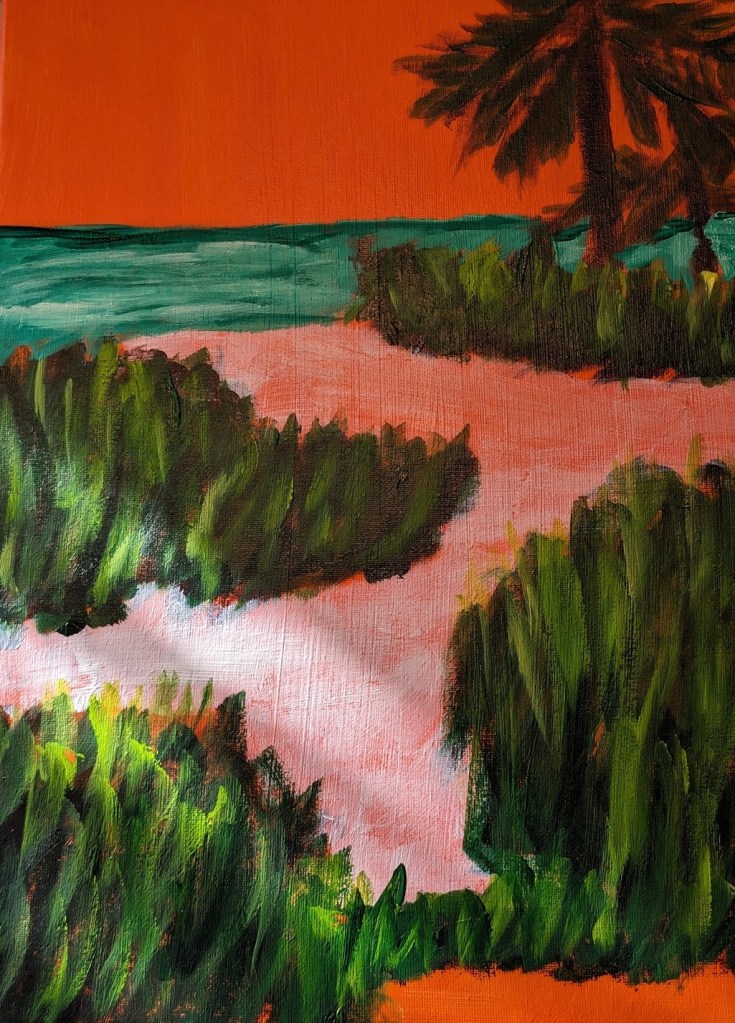
I used Transparent Orange (PO 73) by Chroma Atelier as a background, then Sap Green mixed with Carmine (Amsterdam Acrylic) for blocking out the greenery. For the grasses, I used the Amsterdam’s Sap Green and Yellow Green, as well as Winsor Galeria’s Sap Green (much lighter than Amsterdam’s Sap Green). The sky is Light Blue Permanent by Liquitex Basic; the ocean is Phthalo Green mixed with Titanium White.
The sand has been blocked out with transparent Zinc White. I still need to paint the sand and its shadow colors, and add some color (sunlight and shadows) to the bark of the palm trees.
But today I decided to use repurpose an old 12×12 canvas, and paint along with the video I watched last night. It was fun!
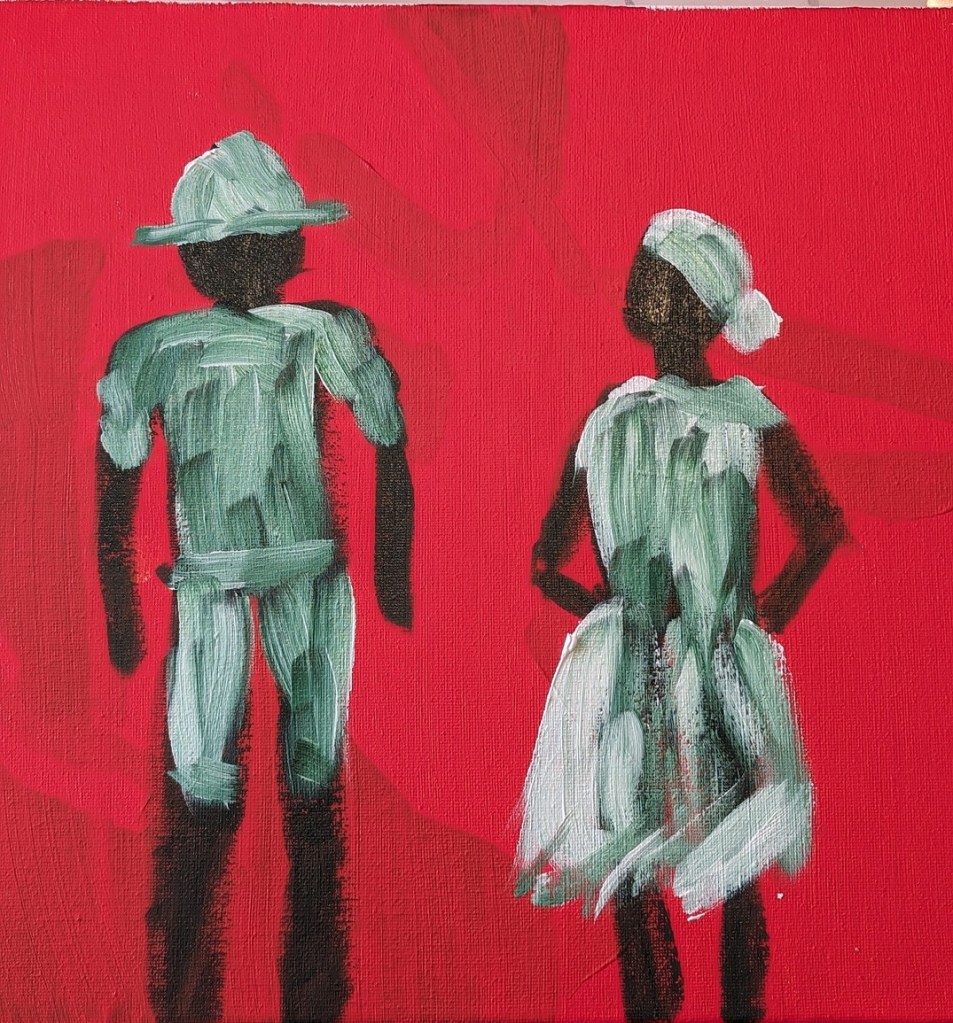
So, Slivka started out with an orangey underpainting, and then painted the forms in either Sap Green (which I used) or Hooker’s Green. For my background, I used Pyrrole Red (PR 254) mixed with Cadmium Yellow Hue (Liquitex Basics). (The blotchy look in the background is from my original unfinished painting.)
Then, while the figures were not yet dry, I followed along, painting their clothing in Titanium White, as Slivka did.
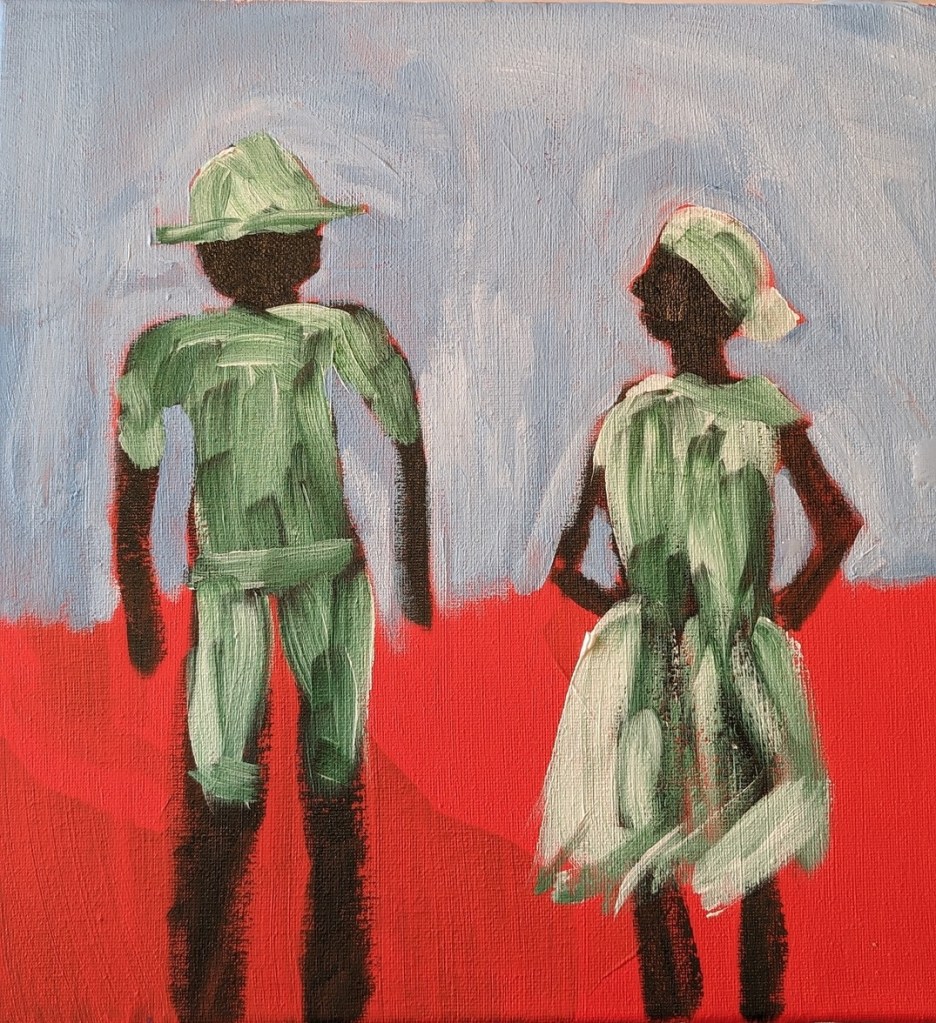
Painting the sky came next. I used Cerulean Blue (Utrecht Fluid brand) with some Titanium White.
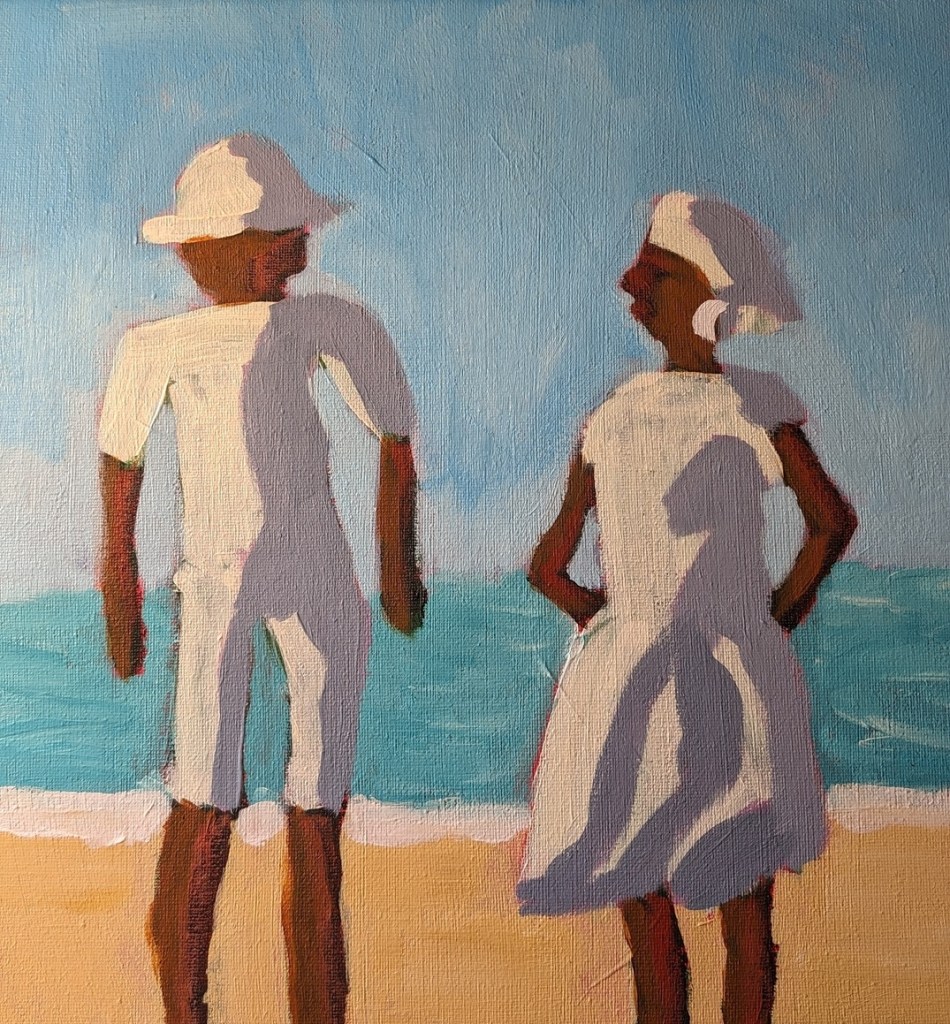
Next was the ocean and the sand. Slivka uses some aqua green and Naples Yellow, respectively. I used Liquitex Basics Turquoise Green and created a kind of “Naples Yellow” by mixing Yellow Ochre with Titanium White. The sun-bright clothing was Titanium White softened with Cadmium Yellow Light Hue.
Slivka used Raw Sienna and Cadmium Red for the skin; I used Raw Sienna and Red Oxide. For the clothing shadows, Slivka used a violet with white. I used Liquitex Basics Gray Blue with some white.
I repainted the sky from Cerulean to Light Blue Permanent (Liquitex brand) mixed with additional Titanium White. I may repaint the ocean, and get the horizon line straighter; regardless, this exercise was just a lot of fun!
The other day I was on Instagram, and something came up in my feed about Acrylic University, an art site I wasn’t aware of until that moment. I checked it out and signed up for an 8-week “Cloud Challenge” class taught by Dianna Shyne. This painting was done today in that class.
I had fun!
Clouds are more difficult to paint than they seem.
I really do not like phthalo blue as a color — it’s much too intense, and much too much of a greenish blue.
The “black” in this painting is a chromatic black — ultramarine blue, phthalo blue, Anthraquinone Red (marketed as alizarin crimson) and the merest touch of cad yellow hue.
Overall, I like the colors, but this looks more like a stained-glass abstract than puffy clouds.
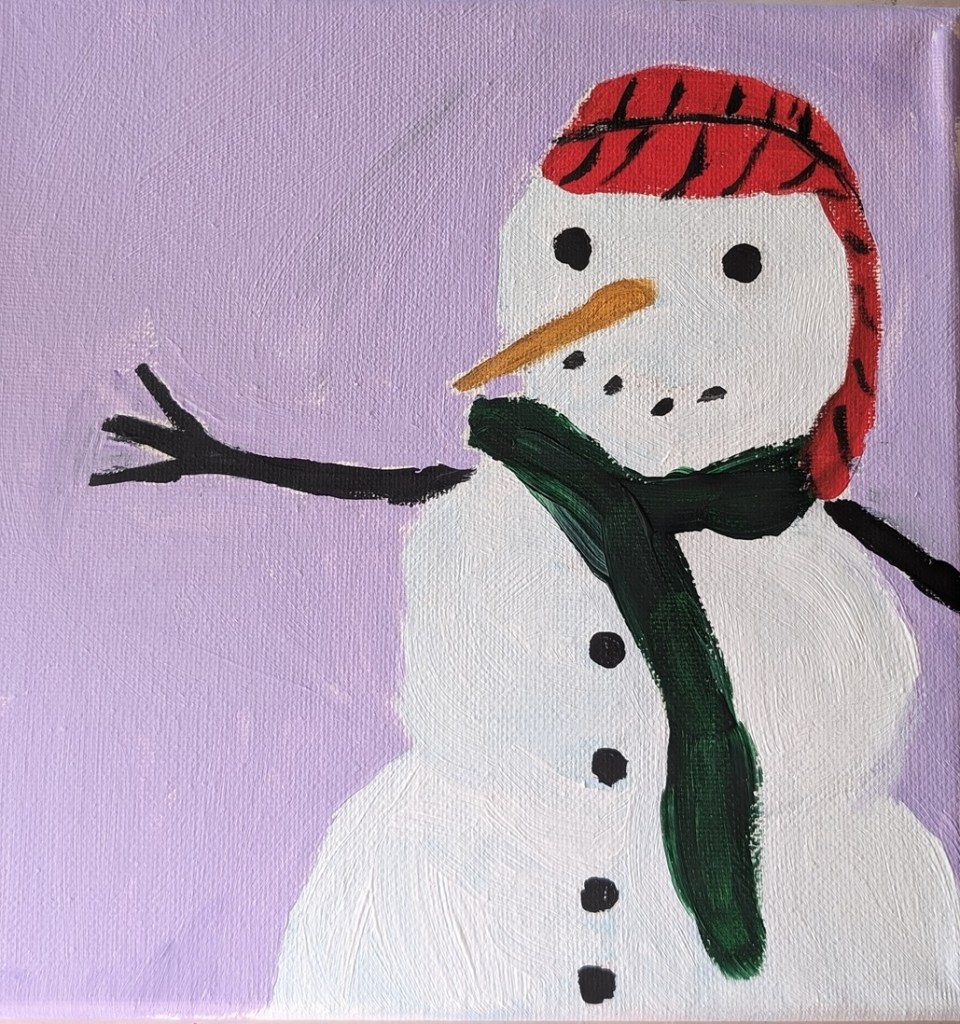
This snowman (painted on an 8×8 canvas) was inspired in part by snowmen done in pastel by Karen Margulis. It’s been warmer than normal here for December, but we might actually have a freeze tomorrow. No sign of snow, though. (Sigh.) So I thought painting a snowman would put me in a winter mood.
I’m not sure if you can tell, but the (viewer’s) right side of the snowman is a gray-white, while the (viewer’s) left side of the snowman is a sky blue-white mix.
The other colors are Pyrrole Red (straight from the tube), Yellow Ochre (mixed with the red for the carrot stick nose), Sap Green and Mars Black (straight from the tube) and the lavender background is a dash of Dioxazine Purple with Titanium White.









 BetterLateThanNeverArt