
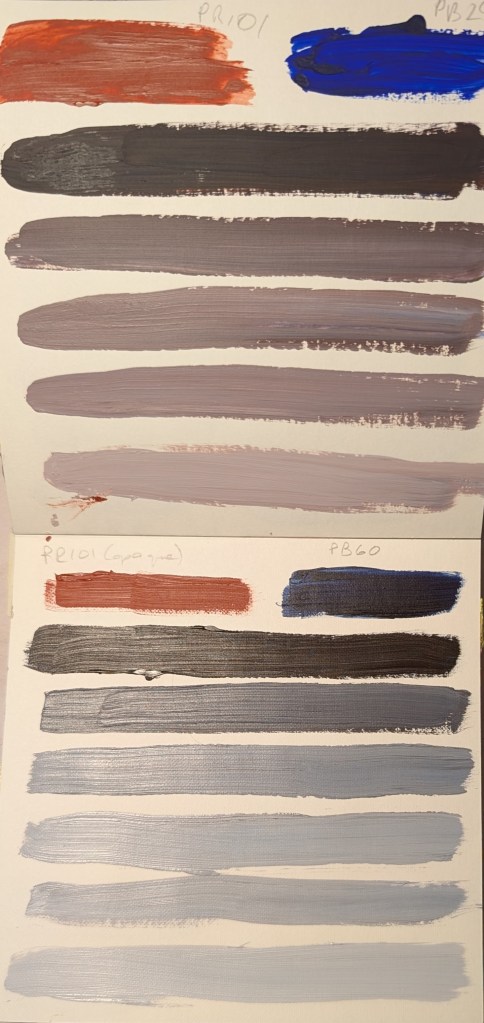
So, we know that mixing two complementary colors will get us a brown or black if we do it deliberately, and “mud” if we don’t. 🙂 You can see a Burnt Sienna (“orange”) and Ultramarine Blue chromatic black that I used here.
I mixed opaque Red Iron Oxide (PR 101) with both Ultramarine Blue (PB 29) and Anthraquinone Blue (PB 60). Both mixed to a nice dark black, but as I continued to add more white to that black, the PR 101 – PB 60 mix created a bluer gray.
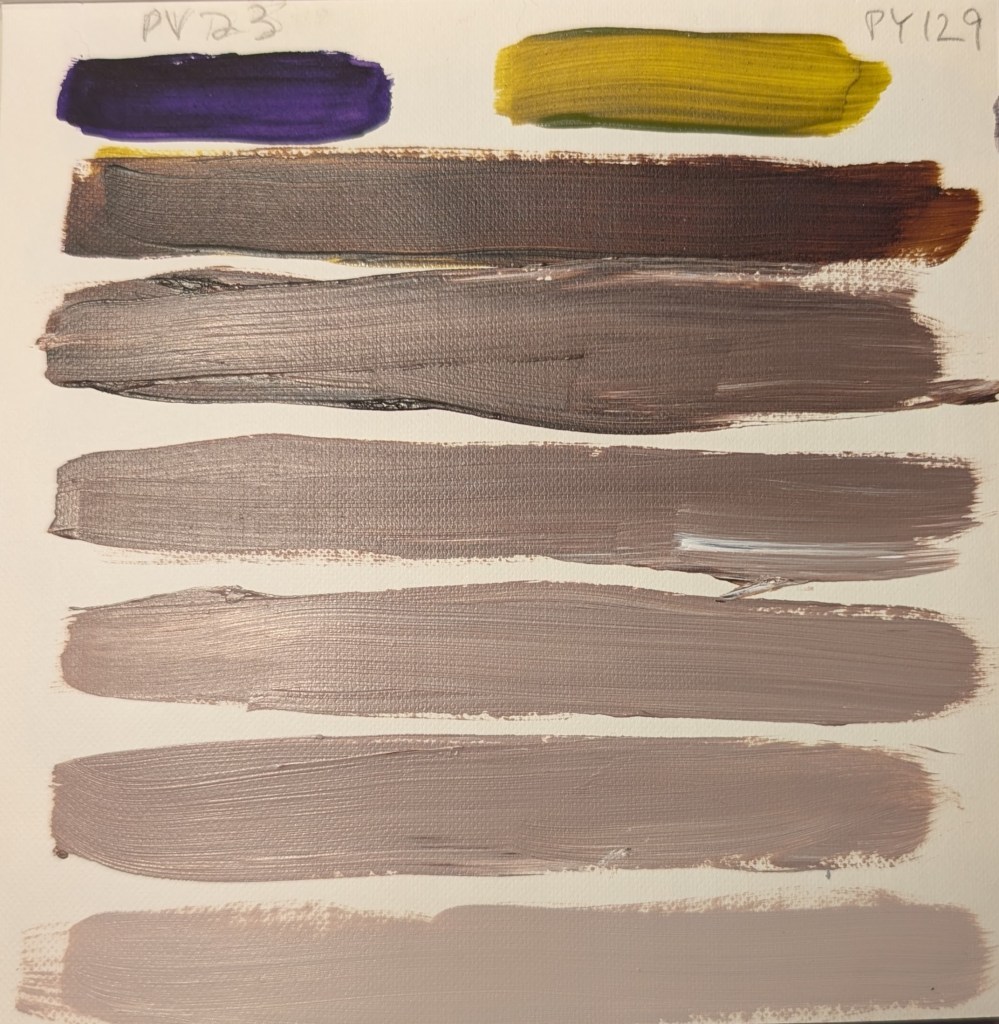
I also mixed Dioxazine Purple (PV 23) with Green Gold (PY 129) and got a dark brown rather than a black.
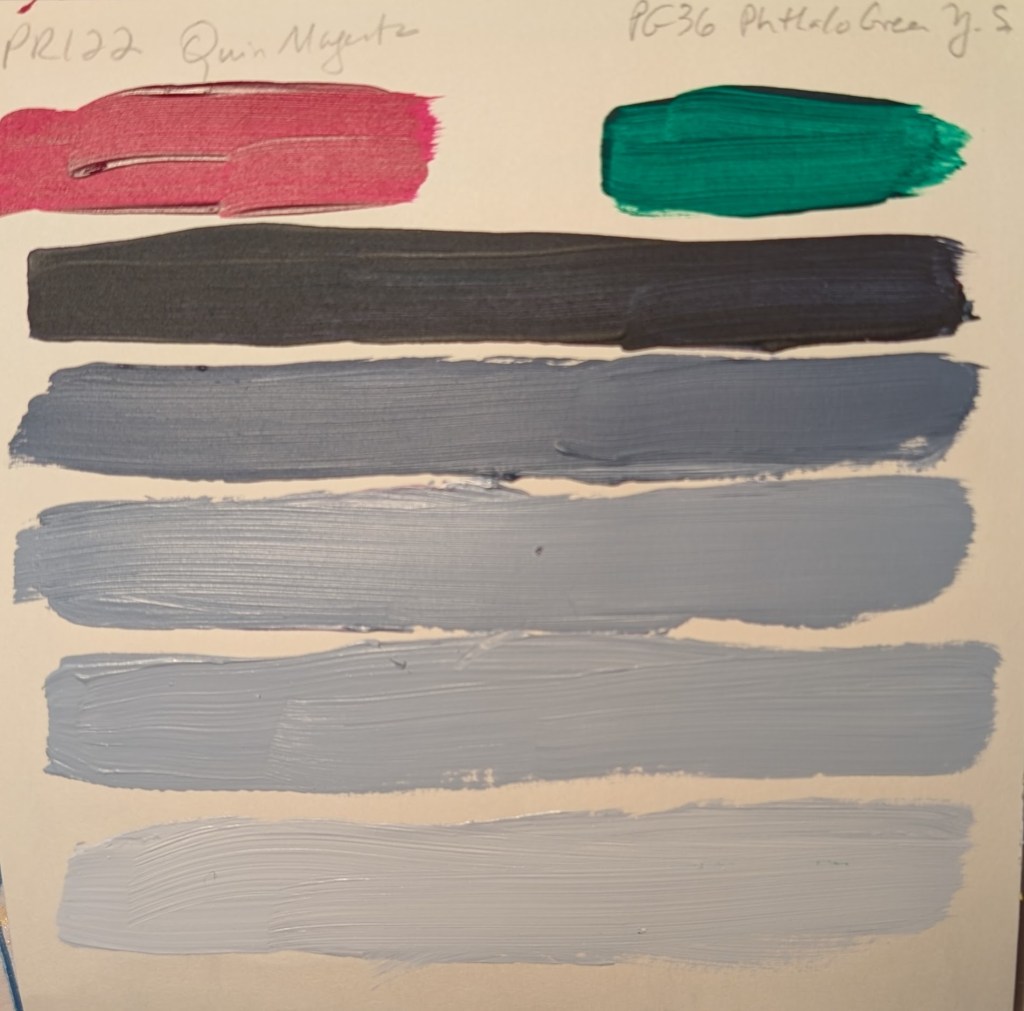
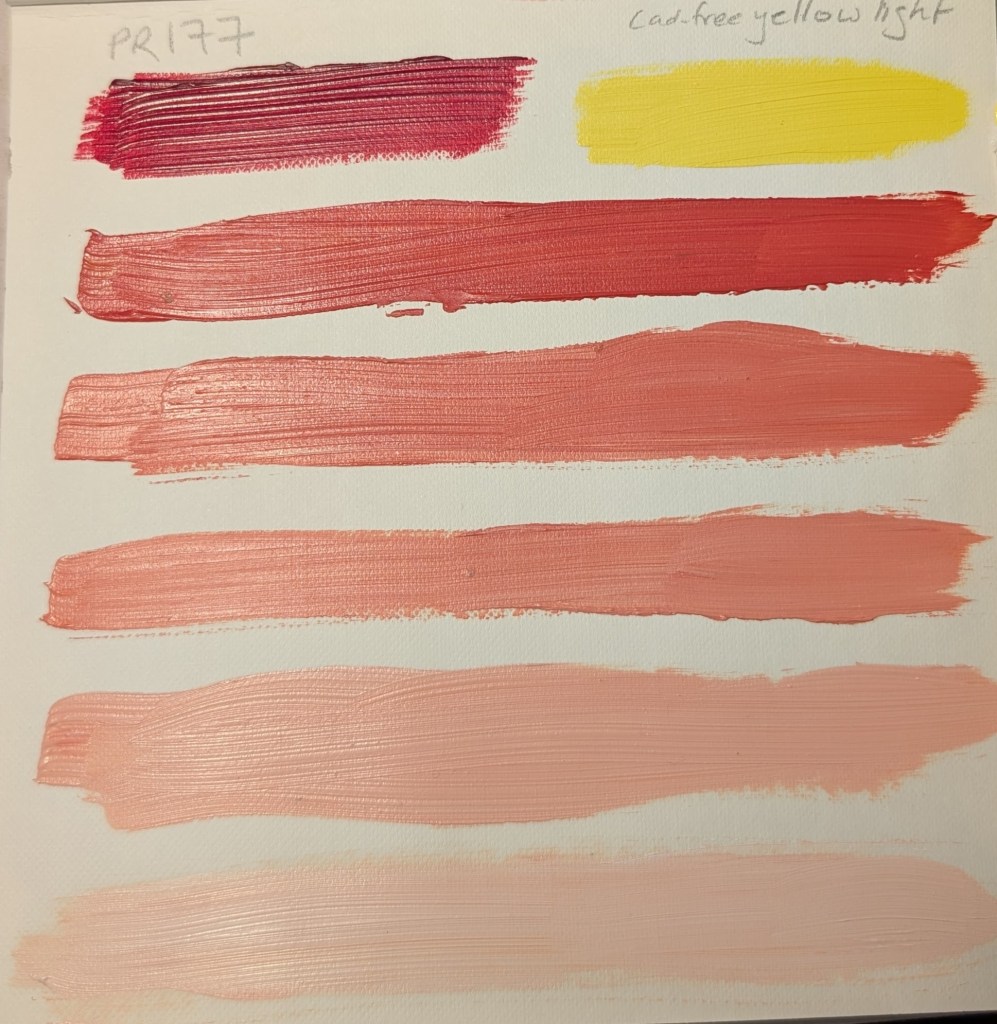
Finally I mixed Quinacridone Magenta (PR 122) with Phthalo Green Yellow Shade (PG 36) and then with Phthalo Green Blue Shade (PG 7). The chromatic black for both of these mixtures was far and away the deepest black (much more evident than in the photos). What was striking to me was how blue the tinted version of the “black” mix of PR 122 and PG 7. (See bottom photo.)



 BetterLateThanNeverArt