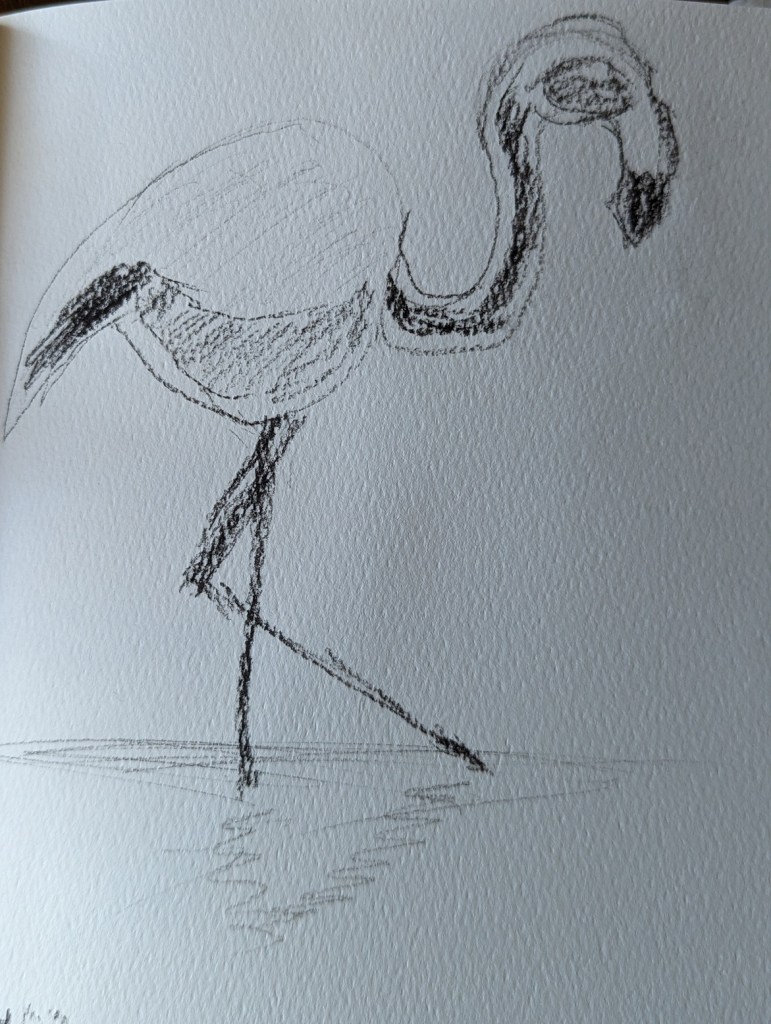
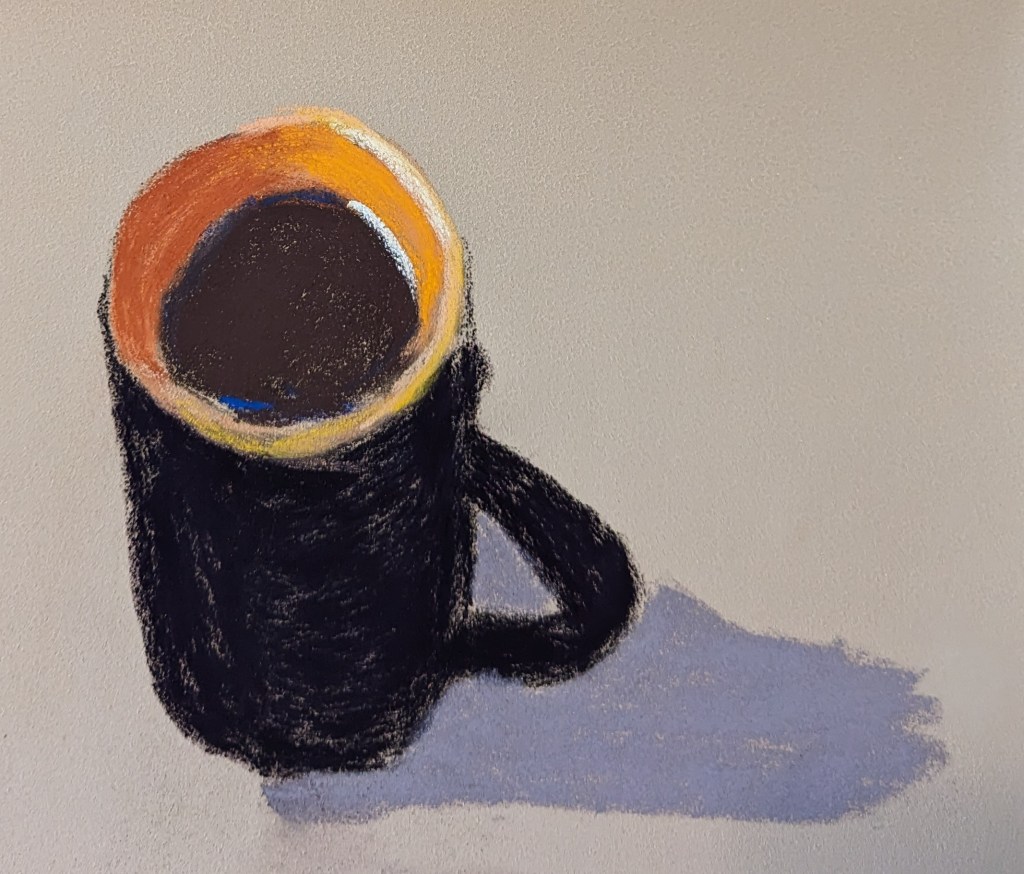
Figures in Graphite

I’m taking an online class (more precisely, watching streaming demos online) by Peggi Kroll-Roberts who is particularly known for her beach photos of human figures. The class is about value structures to show the form of the human figure: the lights and darks.

Effectively, this is a notan. You start with 2 values and then move to 2 darks, 1 light or 2 lights, 1 dark. And then you move to color.

My next step here would be to paint in black and white, then to move to 3 values, and finally to color — using colors mapped to the values.

In fact, Laurel Hart, in her 2007 book Putting People in your Paintings (on p. 23) even suggests you even go ahead and paint over your penciled-in shadows if you prefer. You can erase the pencil later.

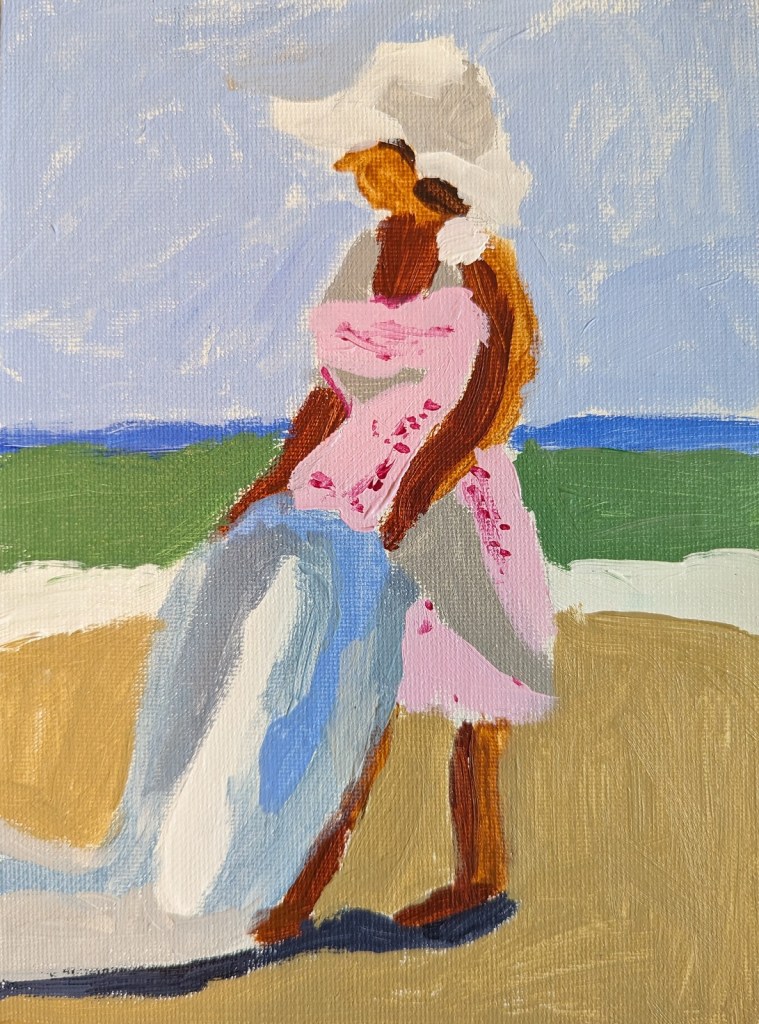
After Steve Strode… After Peggi Kroll-Roberts (Copying a master)

I recently purchased the June 2019 of Leisure Painter which had an article by Steve Strode about the basics of acrylics. He suggests you model good painters, and gives an example in the magazine of his painting based off of Peggi Kroll-Robertsstyle.

This is the first figure I’ve ever painted, and my goal was 1) just to do one, and 2) was trying to focus on using minimal brush strokes — just to boldly attempt it, in other words.

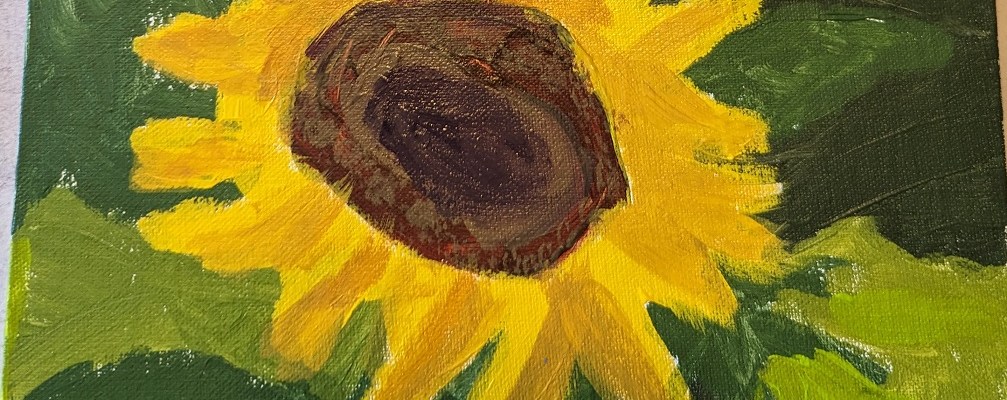
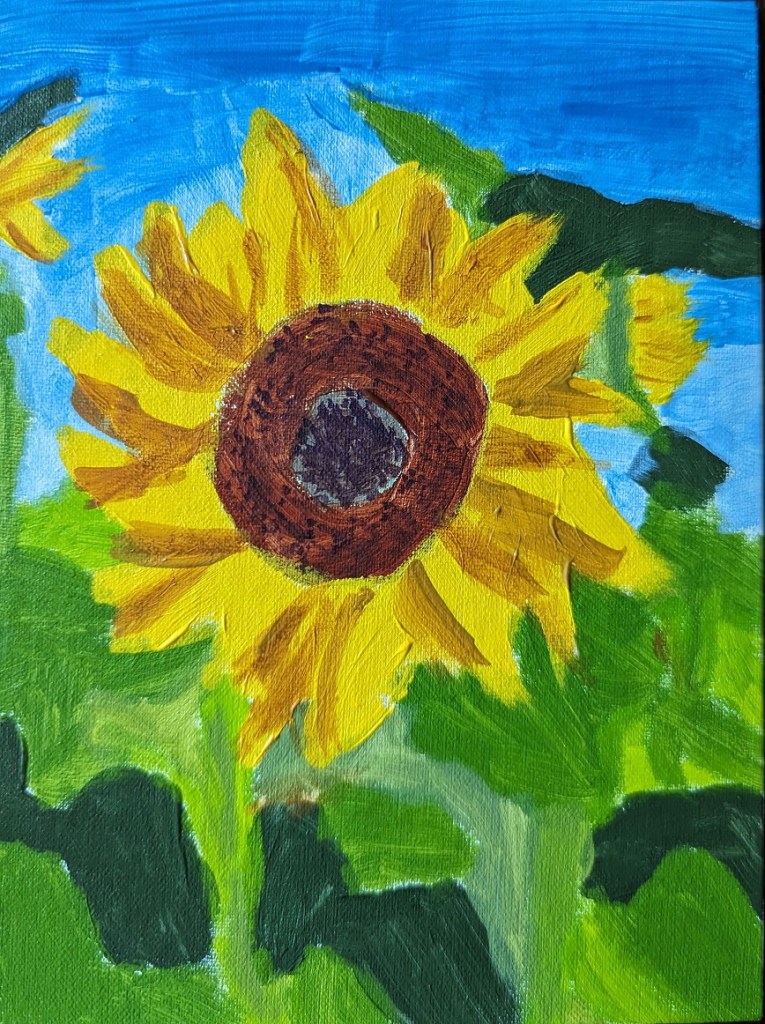
Sunflower #4

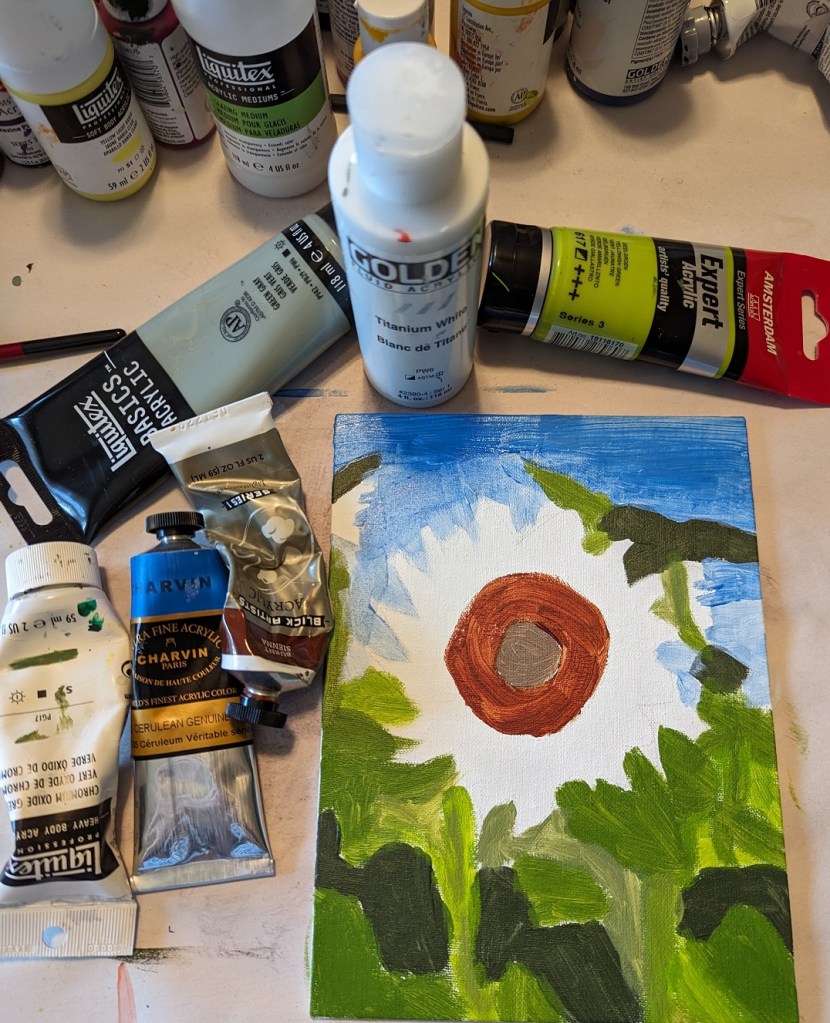
This 6×8 painting of a sunflower is based off the image used for Episode 29 of Artists Network Drawing Together series. What I did differently from the others I’ve painted was that for the shadowed part of the leaves, I mixed my yellow with a touch of Dioxazine Purple to desaturate it (rather than using Yellow Ochre). Ditto for the center of the flower; there’s a lot of the purple mixed in with yellow (although I also used Burnt Sienna and Burnt Umber).

Here’s the work-in-progress.

And here’s the finished piece.

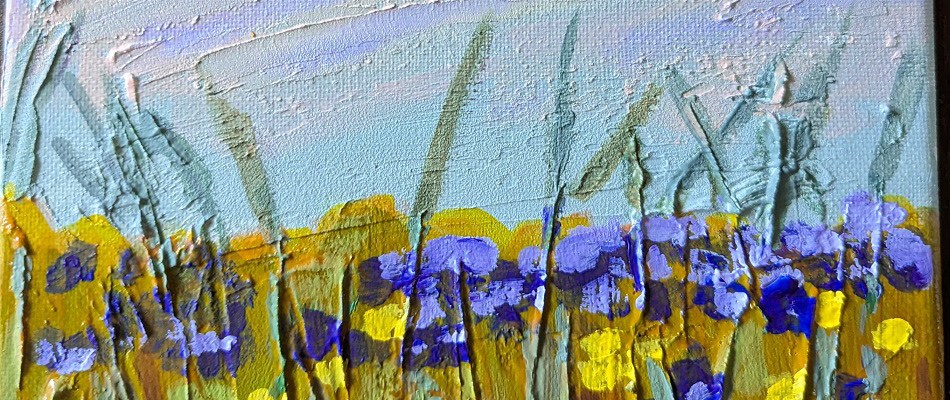
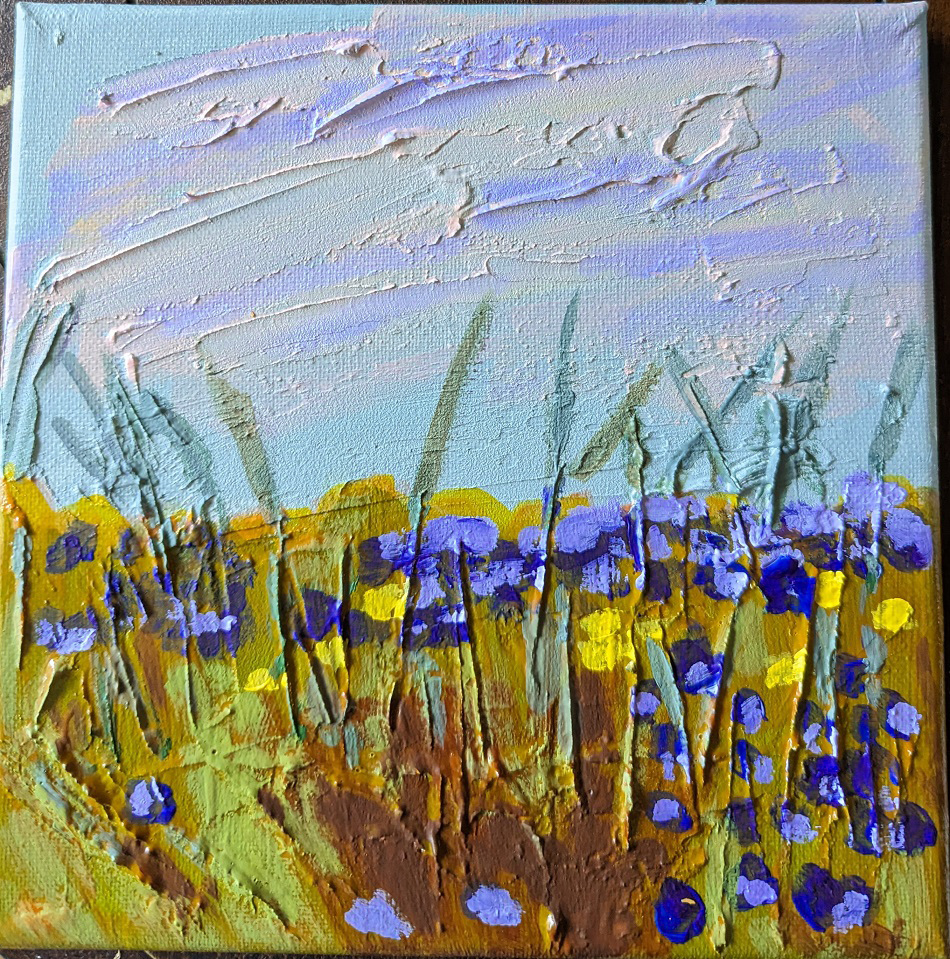
Meadow Wildflowers… Using Modeling Paste

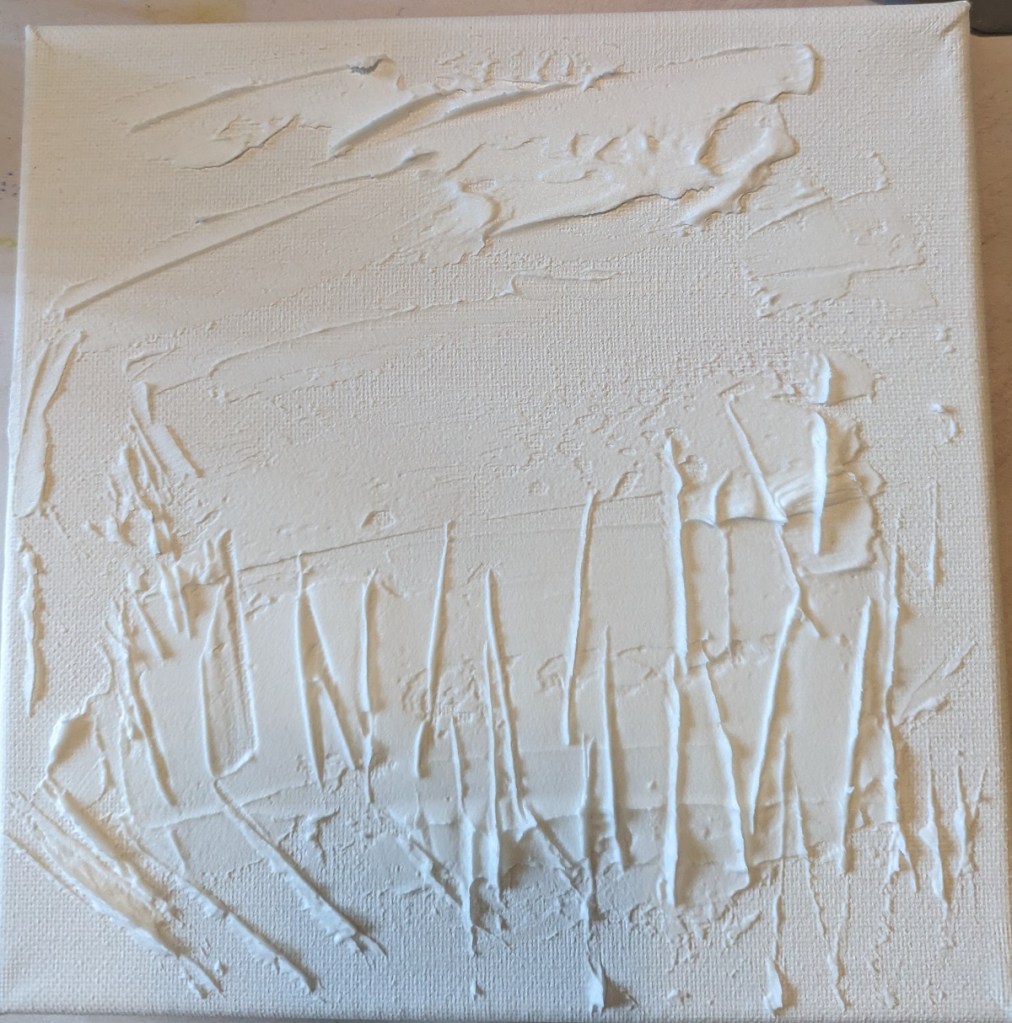
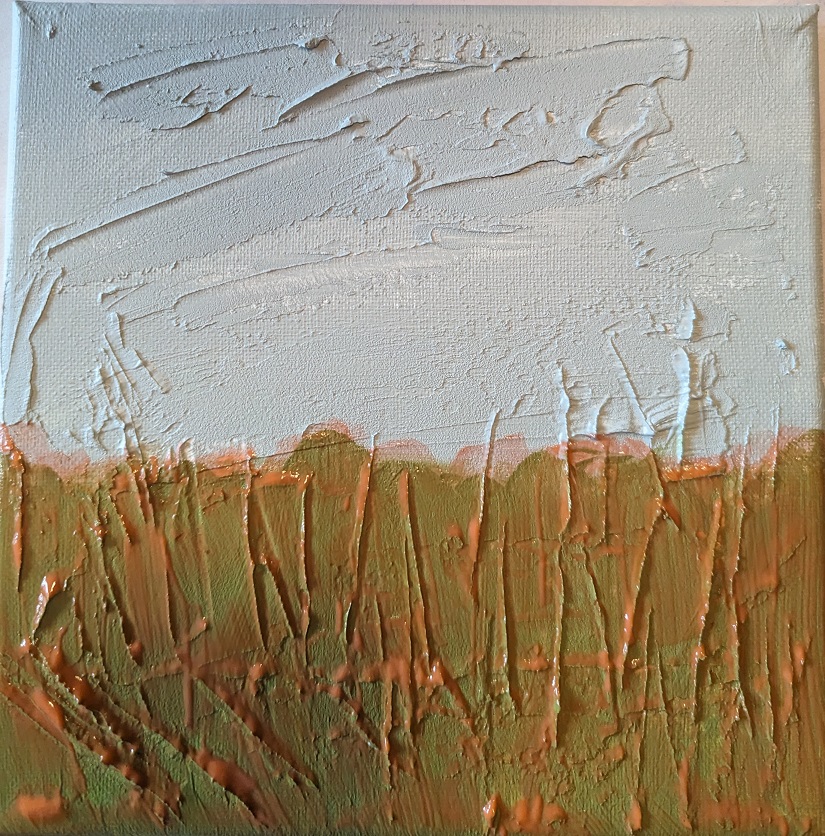
This painting was based off an image by RÜŞTÜ BOZKUŞ from Pixabay, and an article I found on the UK site Painters Online. I used an 8×8 canvas for this work, and took photos of each step I took.

Step One was to apply the modeling paste. The horizontal “goop” was to signify clouds; the vertical lines was to signify weeds and plant stalks.

After applying the modeling paste and letting it thoroughly dry, I went in my own direction rather than following the Painters Online demo.

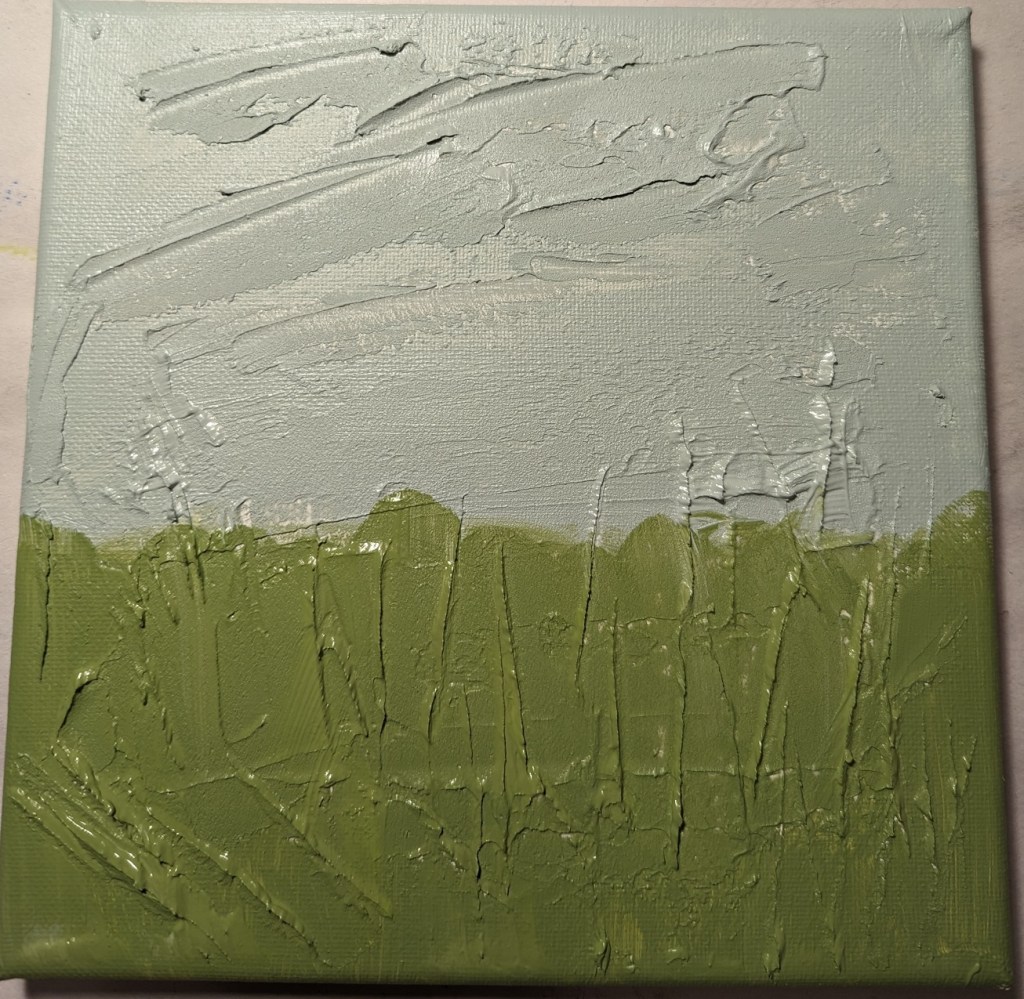
I used a gray green mixed with a yellow green for the grasses, and a gray blue for the sky area.

Green is reportedly not a good color to use alone when doing landscapes and meadows. So, my next step was to apply a transparent orange glaze (using Liquitex Gloss Glazing Medium over the green paint, and let that dry thoroughly.

After the glaze dried, I added a darker value in the center bottom (to match with the reference photo) as well as adding a glaze of Cadmium Red Medium Hue for the clouds.

Next I painted the flowers, using Dioxazine Purple with some Titanium White, some yellow flowers, and highlighted the stems with Gray Green, yellow, and Burnt Sienna. I retouched the grassy area with some green. Then I added some of the Dioxazine Purple mixture to the clouds in the sky, and called it a day.

(The photo here doesn’t fully reflect the periwinkle/purple color of the flowers; they look too blue.)

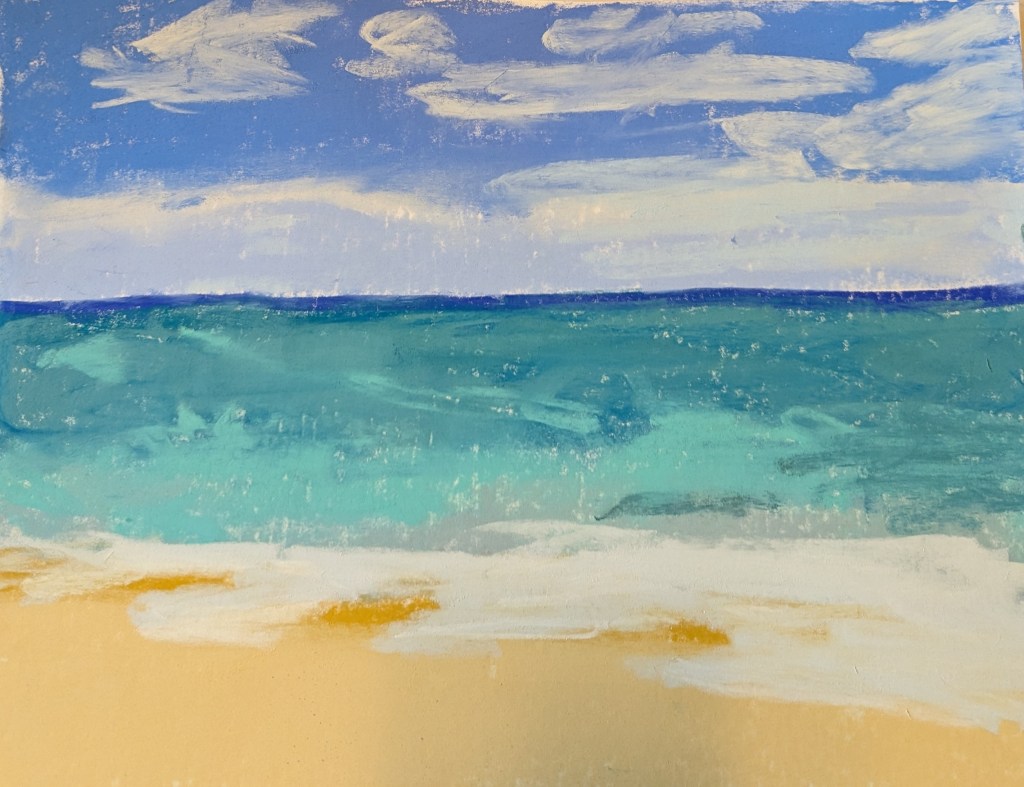
Beach scene

This pastel work, done on an approx. 12×10 scrap of white Pastelmat, was based in part off an image by Somchai Sumnow from Pixabay, but also off of some of my own reference photos of Hawaiian beaches.

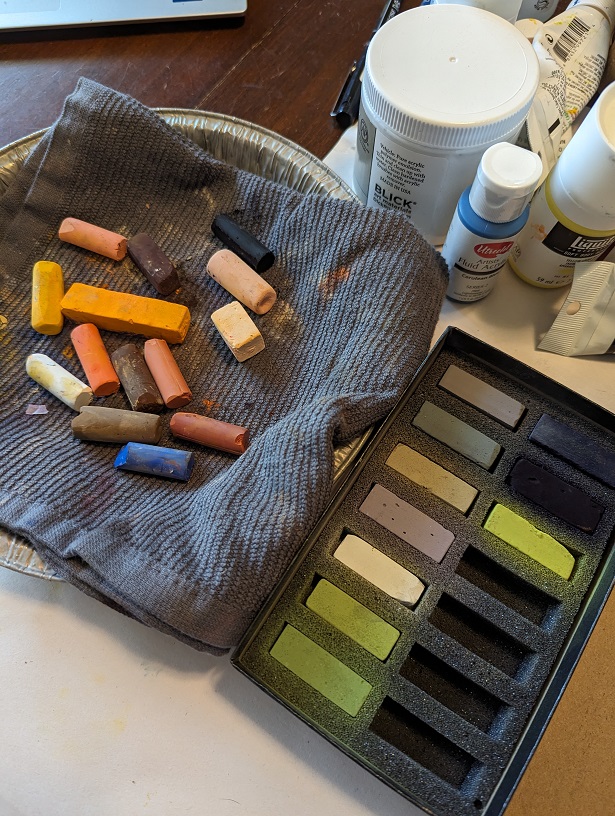
Mostly I was interested in the different shades of blue and also how different brands of pastel lay down on the paper. There are some weird diagonal lines, probably creases from the original 19×25 size of the Pastelmat sheet,

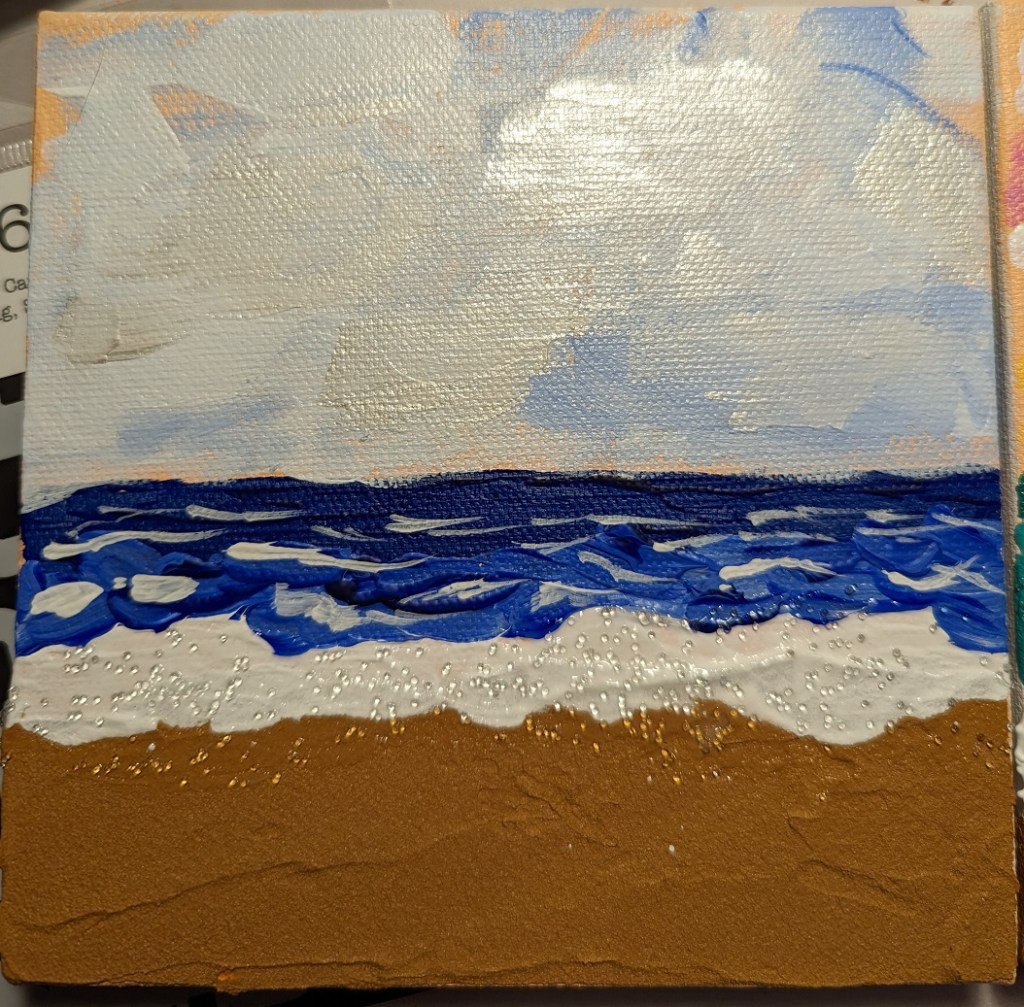
And, just for fun, comparing the above pastel piece with another beach piece I did 3 or 4 months ago with acrylics, sand texture, glass beads, and iridescent paint.