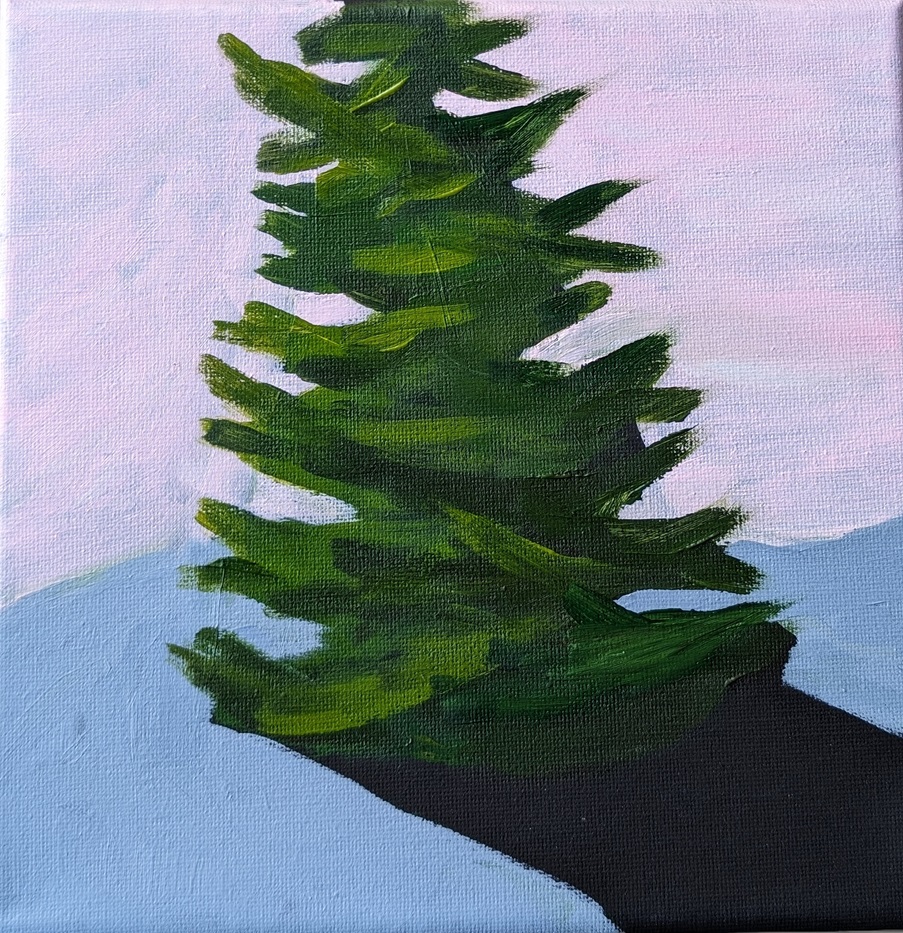
This was done on a black canvas, so the cast shadow is actually unpainted. The lights were painted in Hansa Yellow, but then I came back with some of my silver and gold metallic paints from Lascaux.
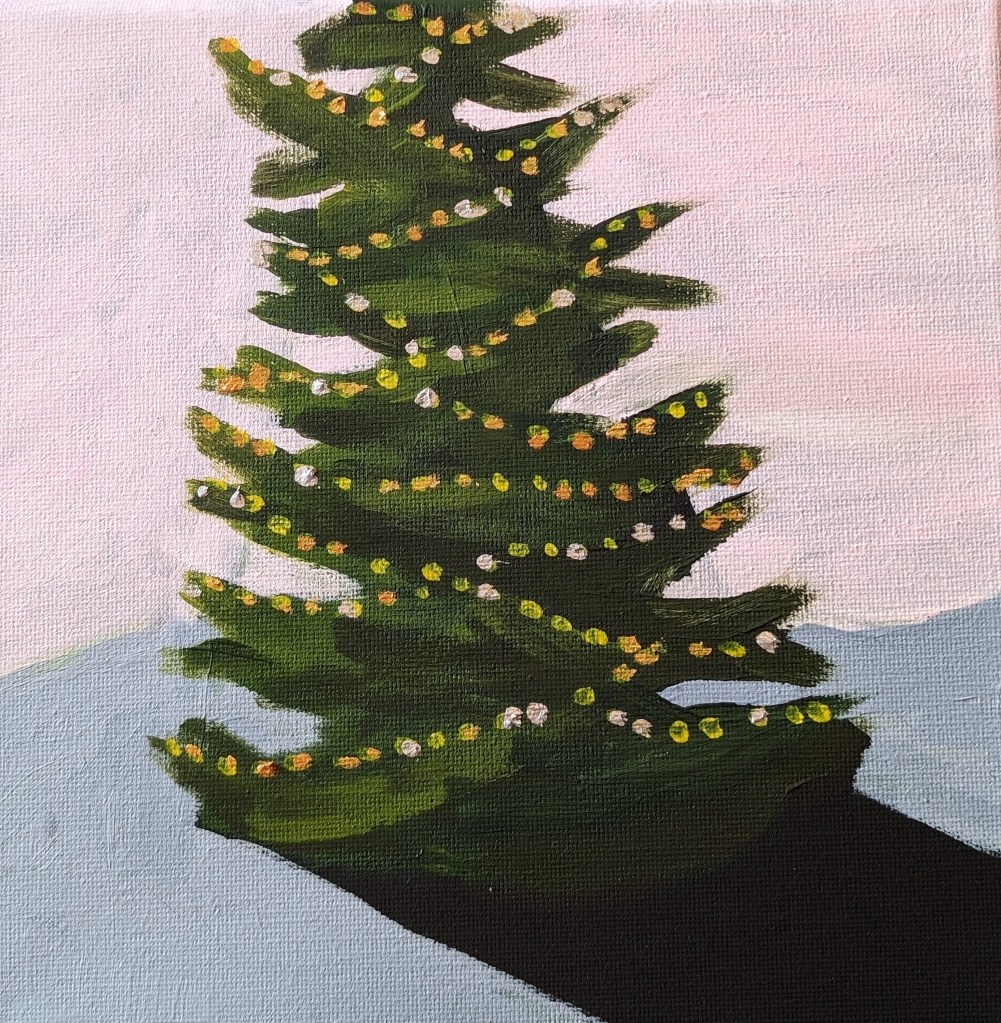

This was done on a black canvas, so the cast shadow is actually unpainted. The lights were painted in Hansa Yellow, but then I came back with some of my silver and gold metallic paints from Lascaux.
Over Black Friday, I bought access to a handful of online classes at Kara Bullock Art. One was the “Terrific Trees” class by Kim VanDerHoek.
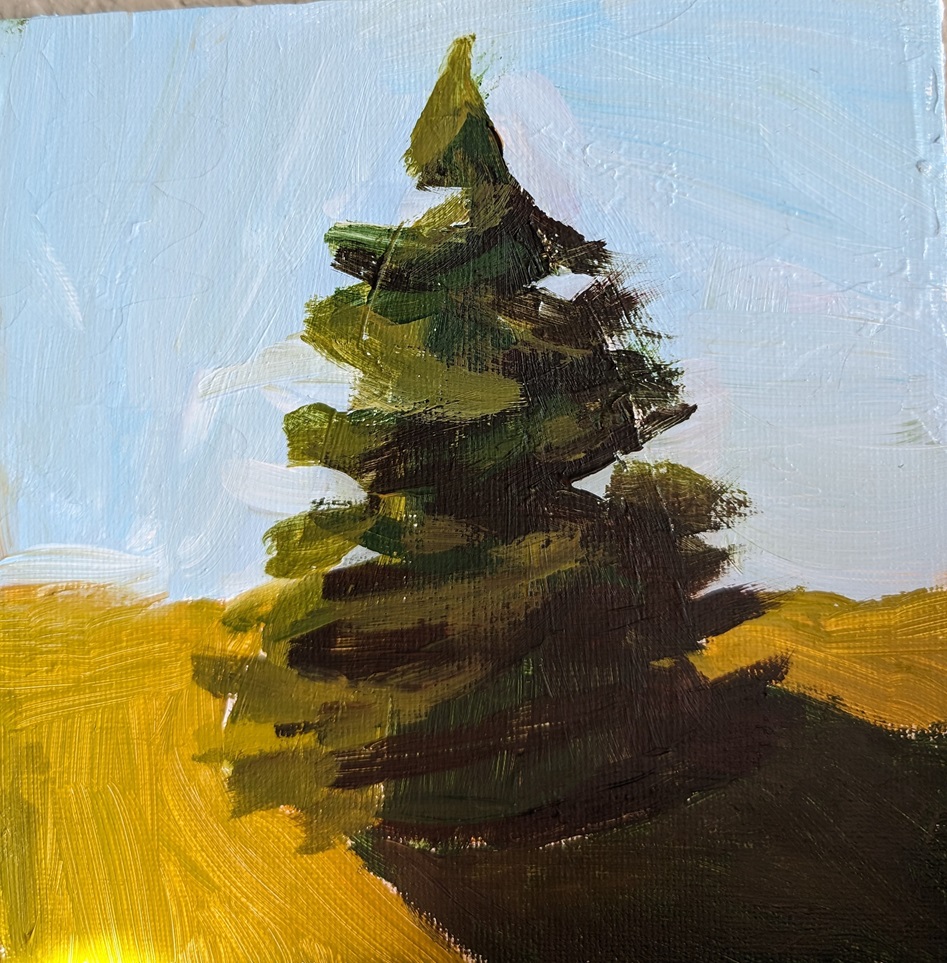
I ‘m working on painting pine trees, so I can make some Christmas cards on a Christmas tree theme. The tree on the left was painted on a 6×6 canvas panel, and is based on Kim’s class (a follow-along).
The tree on the right was painted on a 8×8 black stretched canvas. The shadow of the tree is unpainted; I’m just using the black of the canvas.
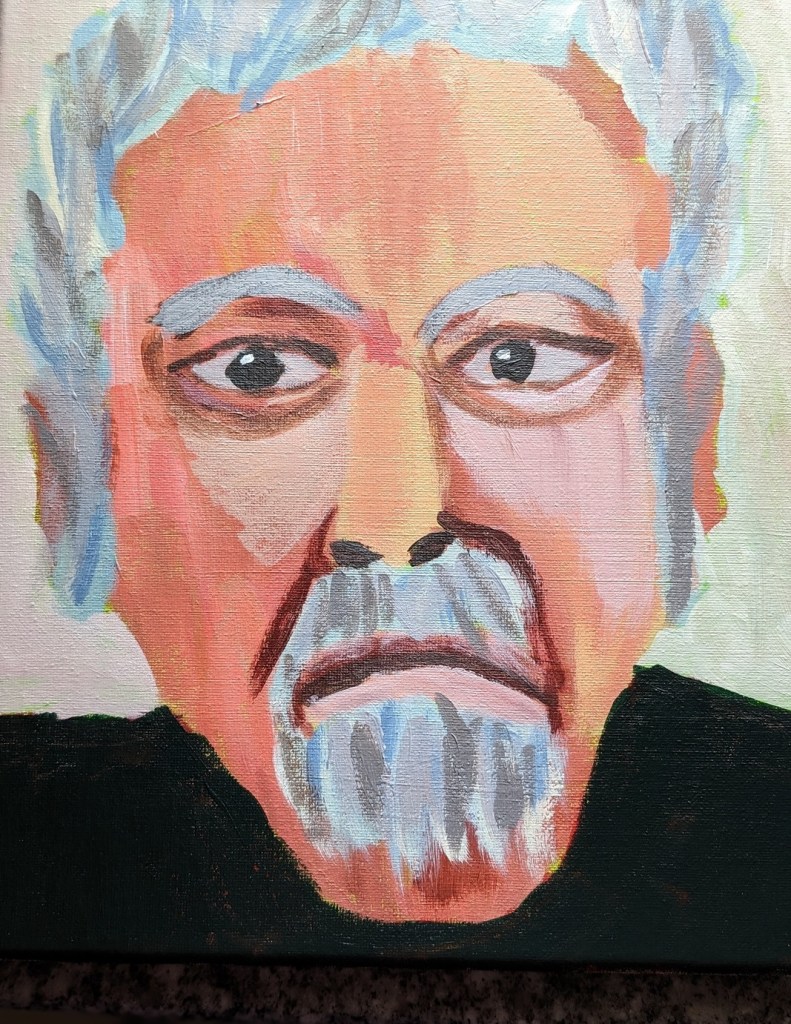
This is the finish of the older, bearded man portrait from the follow-along/demo portrait in Hashim Akib’s book Painting Portraits in Acrylic. I chose to paint his shirt as a sap green instead of the pyrrole red the teacher uses. Because I painted green over red, it looks almost black.
The shadows around his nose and lips are too purple; I need to lighten those.
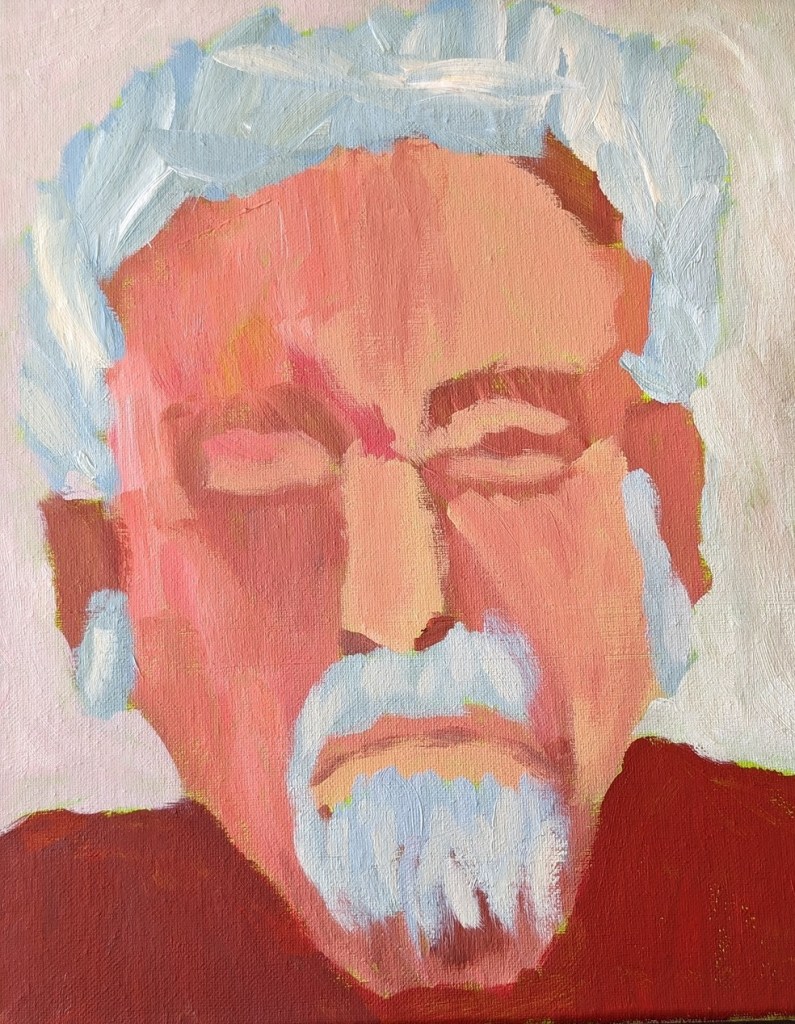
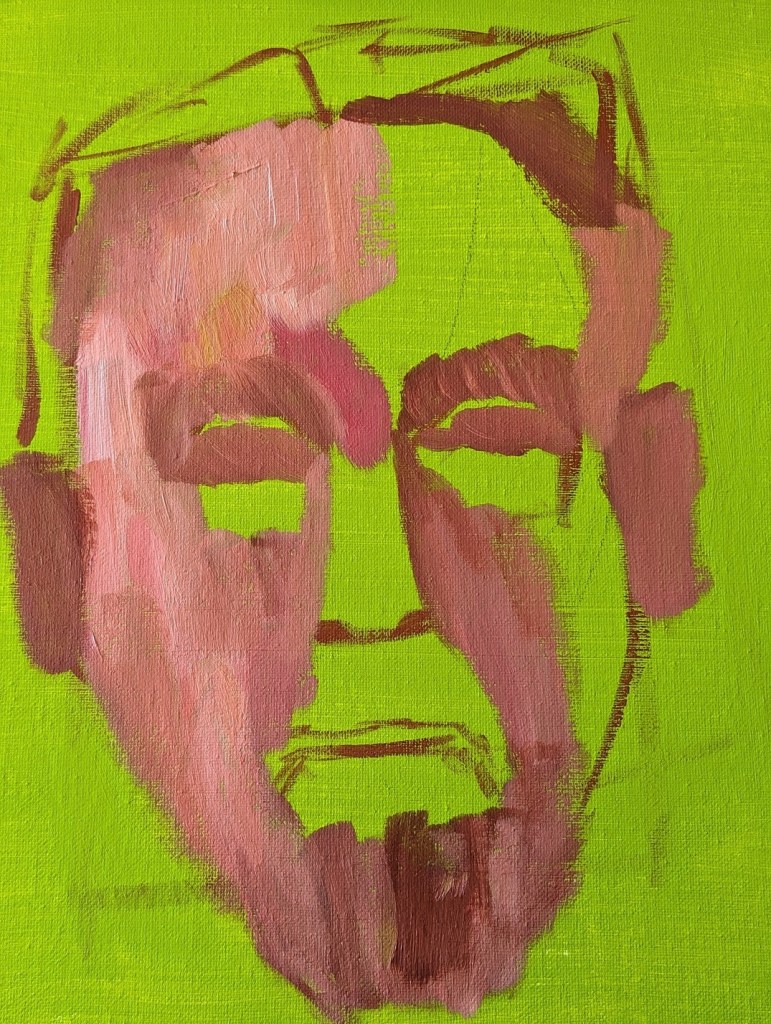
I’m continuing to work on follow-along/demo portraits from Hashim Akib’s book Painting Portraits in Acrylic. Today I started work on a portrait of an older, bearded man.

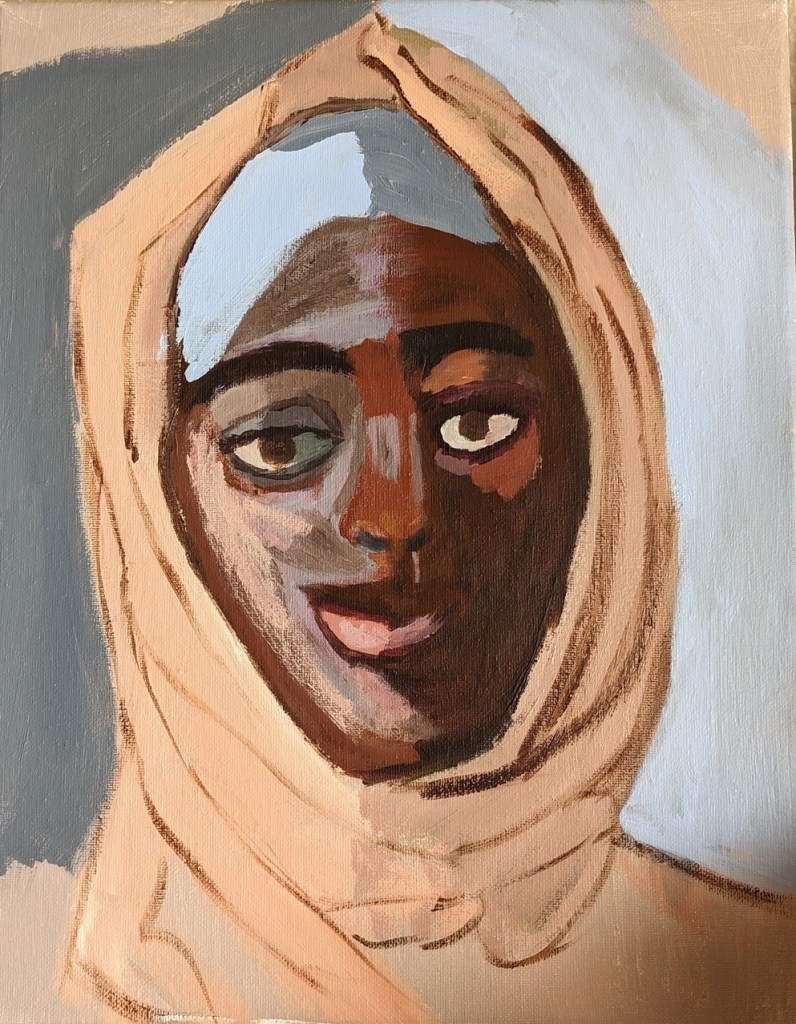
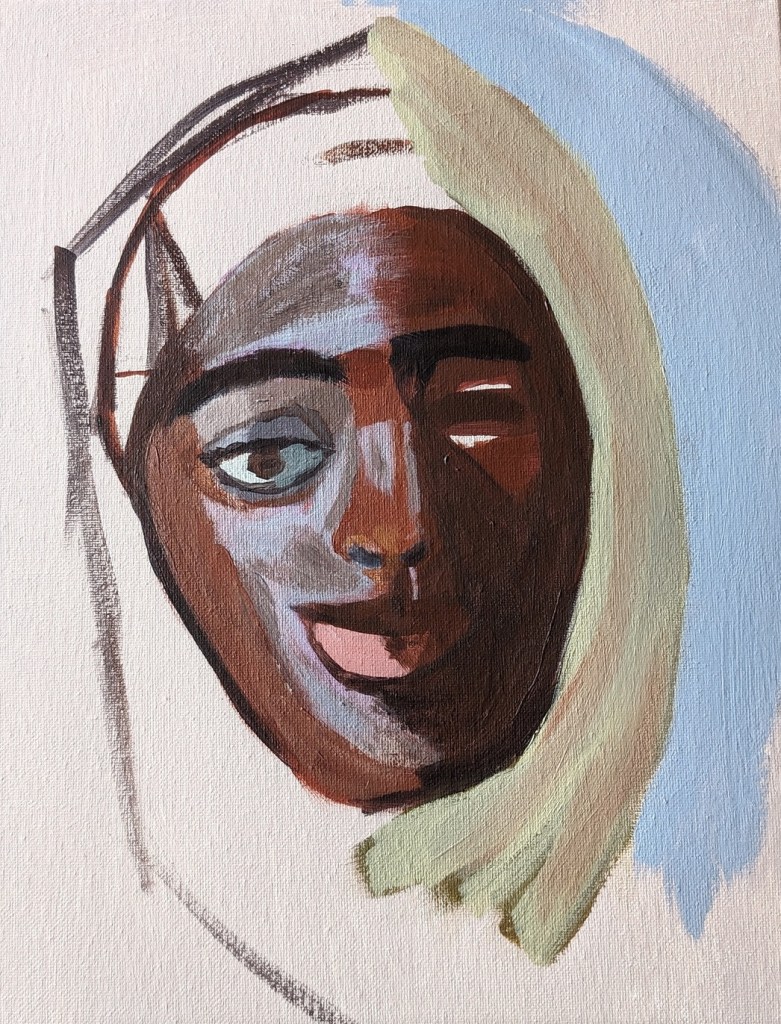
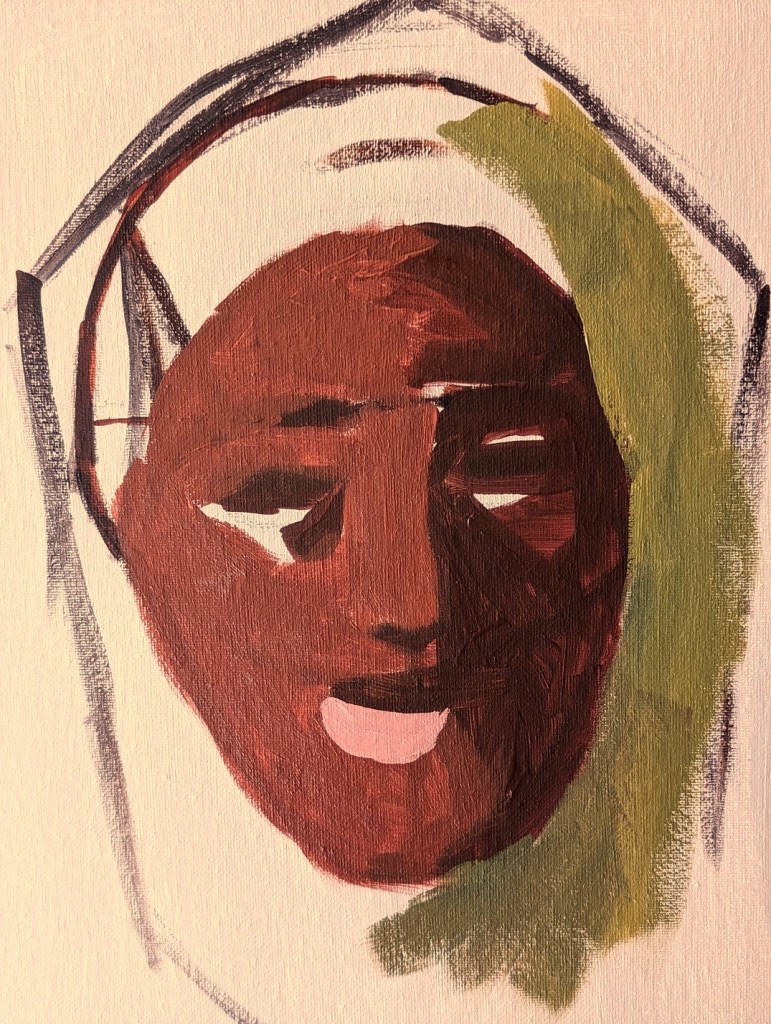
As with the work done in this earlier post, I did another follow-along/demo portrait from Hashim Akib’s book Painting Portraits in Acrylic. I bought some student-grade acrylics (Amsterdam brand) since this is merely practice. The background was toned in a Quinacridone Rose (PV 19) as directed, but I drew out the figure using willow charcoal. As for the skin colors, again I followed along mostly: the primary skin colors are burnt sienna, orange (PO 73) and yellow ochre (PY 42).
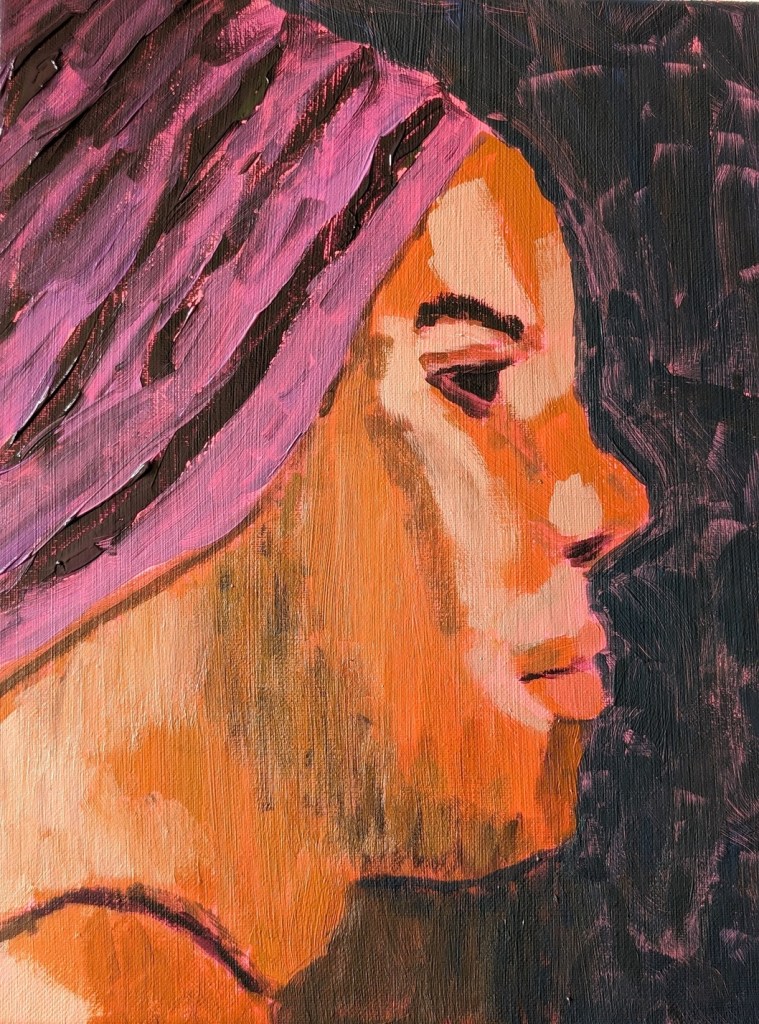
I painted the folds on the scarf using a palette knife; I did not go back and add touches of a pinkish yellow white representing sparkles reflecting the light on the scarf. Maybe later.
Her lips should be pinker and darker; the top of the scarf away from her head should be darker and bluer.
My last few works — a portrait and a “portrait” of the Asaro head — have been in the cartoon realm, so I’m skipping posting those for now!
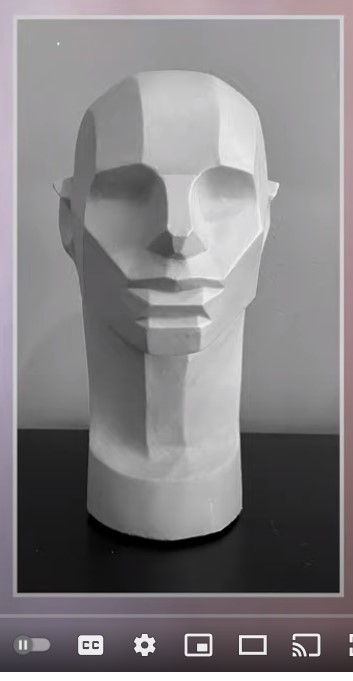
Instead, I found a video on YouTube that walks you through drawing the “Loomis Head” and converting it (for lack of a better term) to a planar head (what the artist calls the “memorized Asaro head”). After watching that, I drew the planar head on my 8×10 canvas with willow charcoal.
What I discovered in my failed attempt at painting the Asaro head is that the color Ivory Black is fairly transparent, and doesn’t cover well. I ended up going to Michael’s and bought some Mars Black from Liquitex Basics. It’s student grade compared to the artist grade Ivory Black, but wow, what a difference!
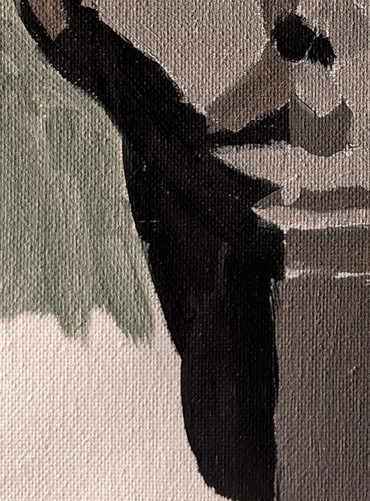

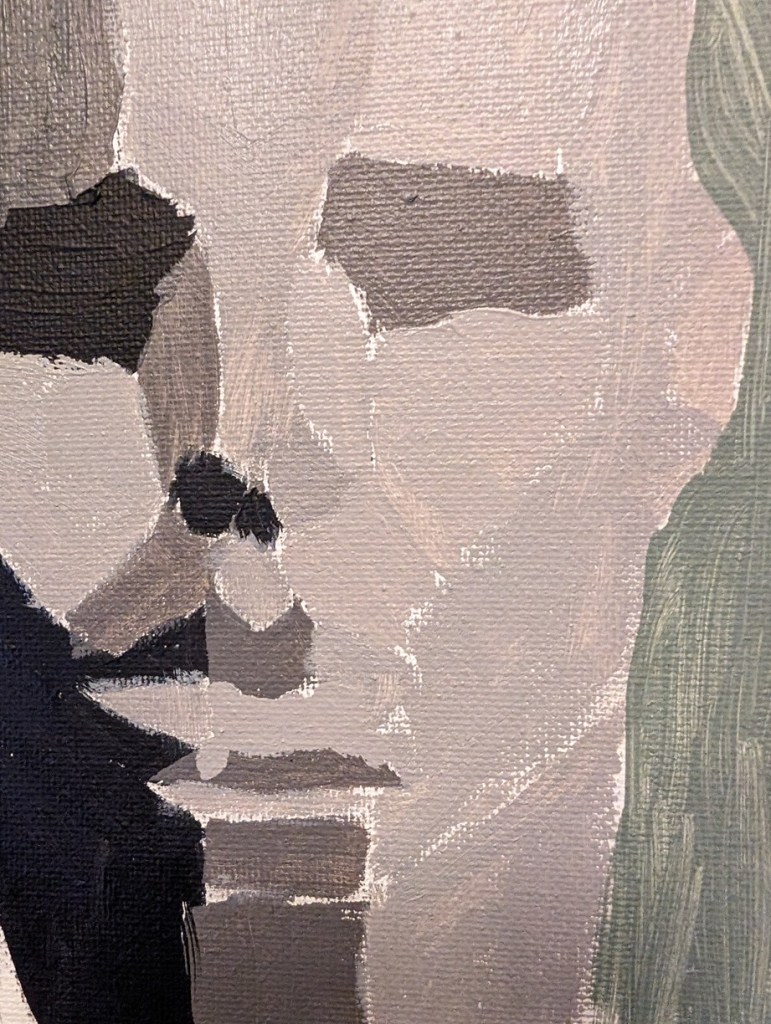
Anyway, here’s the Asaro head done; sage green for the background.


Below is a copy of the reference photo I used to paint, as well as a close-up of my value changes. In some cases like the upper lip, the value change is too abrupt, while in other cases there’s not enough of a value change. I’ll have to keep practicing.
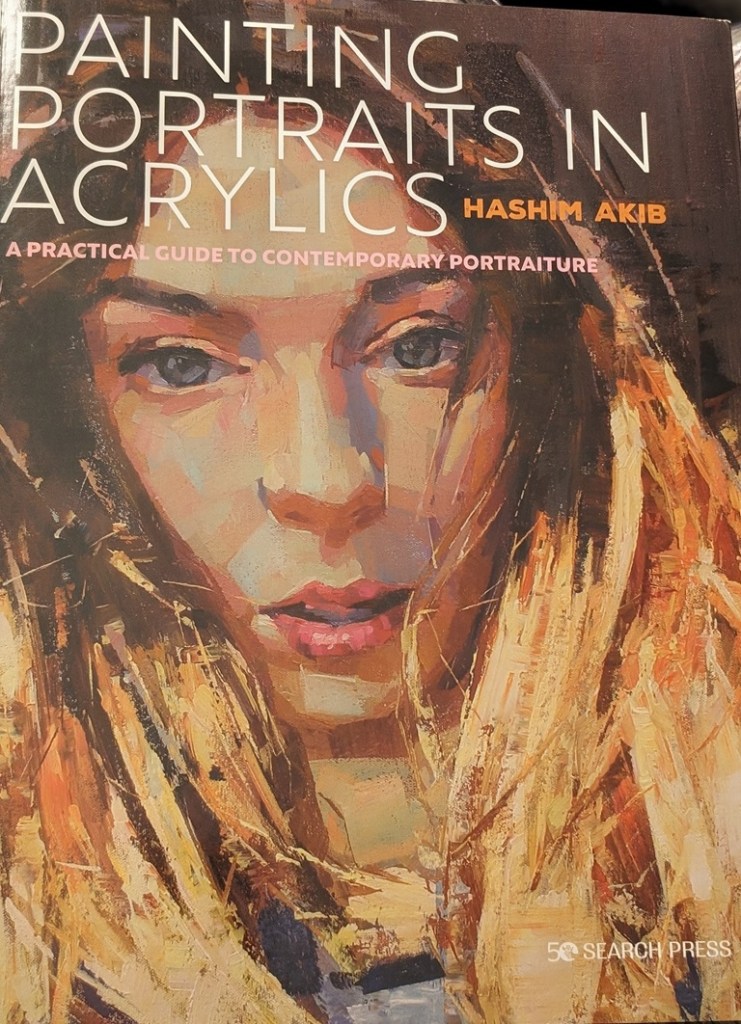
Back in February, I bought the British artist Hashim Akib’s book Painting Portraits in Acrylic because I liked his portrait style, and because he uses acrylics. Included in the book are 6 exercises, and the first one is in monochrome.
I had earlier toned a 9×12 with a pale blue (ultramarine and white) so I just used that.

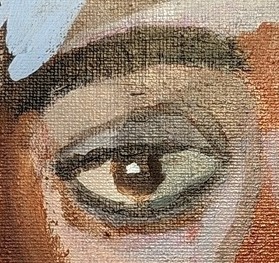
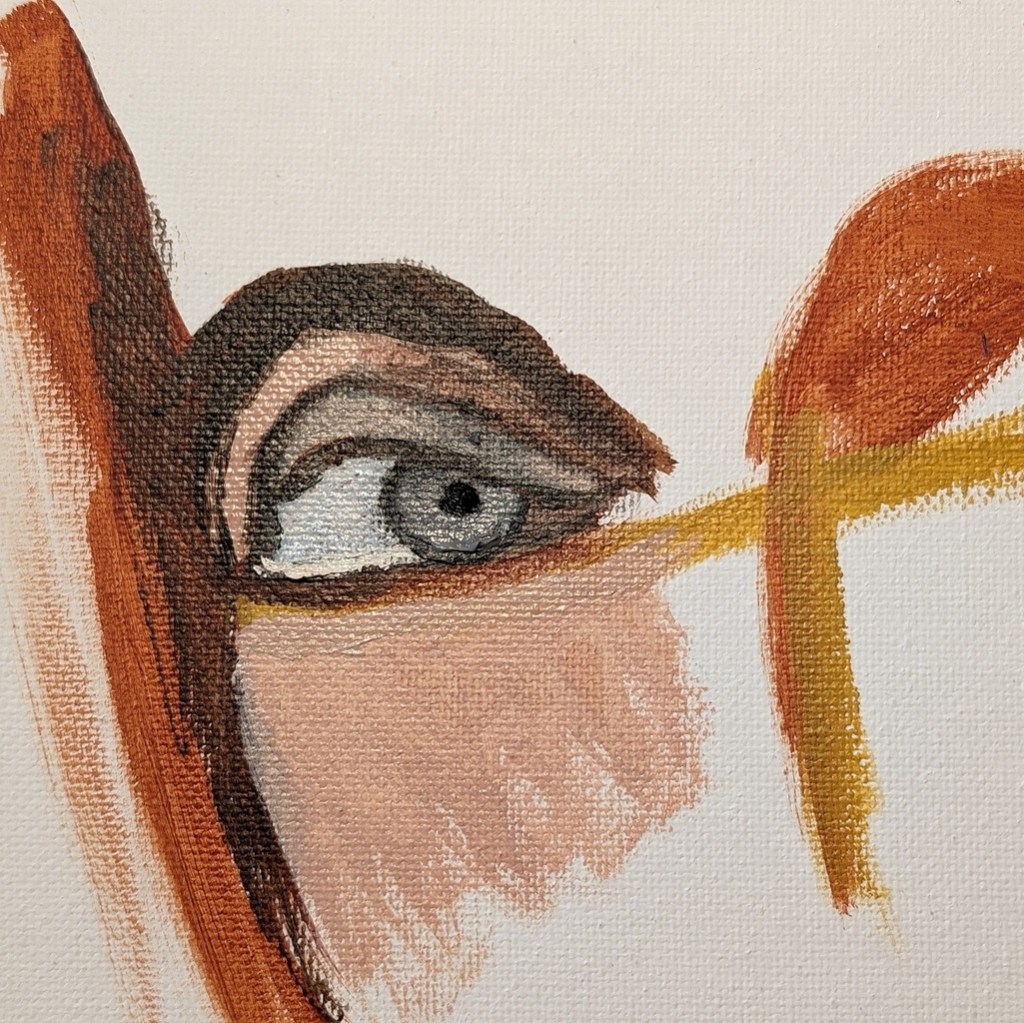
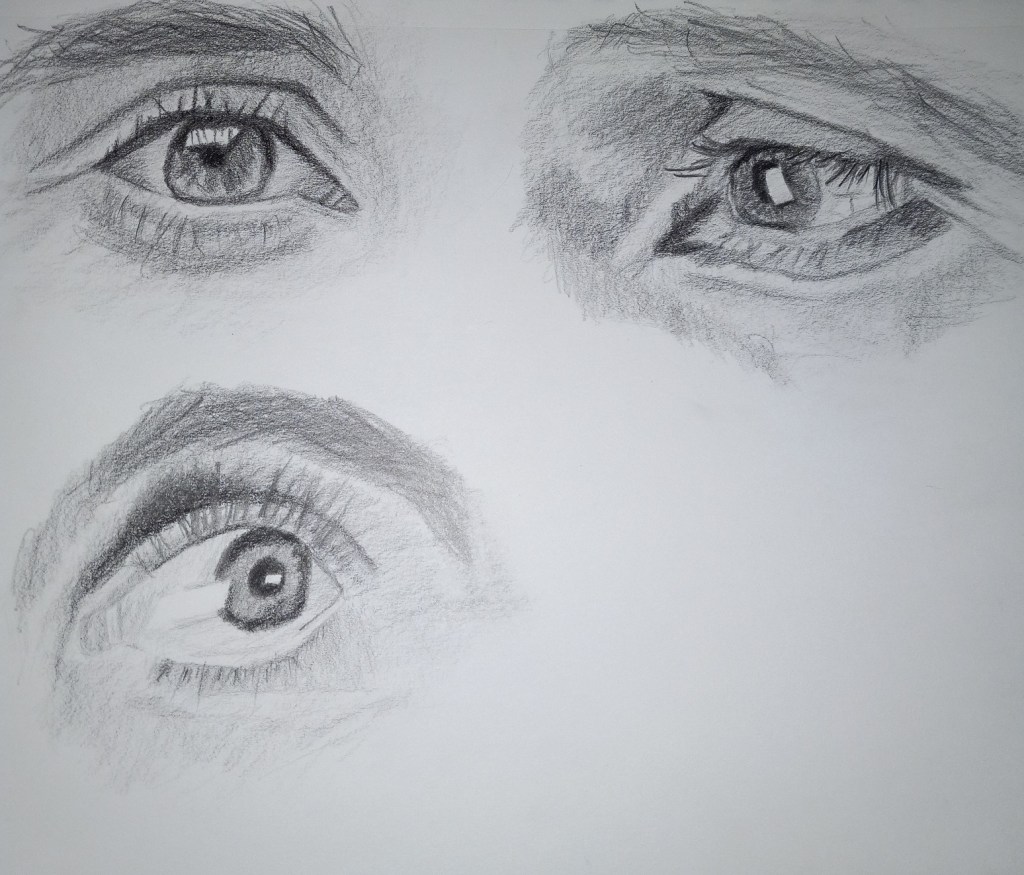
Drawing eyes is not the same as painting eyes! (I think I can draw them better than I can paint them.)
The first eye is from the head-scarf lady (with the highlight added). The second painted eye is from another PaintCoach Patreon tutorial. The drawn eyes are from the Draw Awesome online class I took in 2022.
Yep, she looks cartoon-like. LOL. But now I’ve gotten my first portrait under my belt. It’s difficult to make soft edges and do blending with acrylics since they dry so fast — I will have to try oils sometime soon.
Again, as with so much that I’m painting these days, this was from an online tutorial by PaintCoach. I tried using Golden Open Acrylics thinking they would work more like oils — that’s how they seem to be advertised — uh, no, didn’t work at all. The light on her face looks more like a crazy mask than seamlessly blended in.