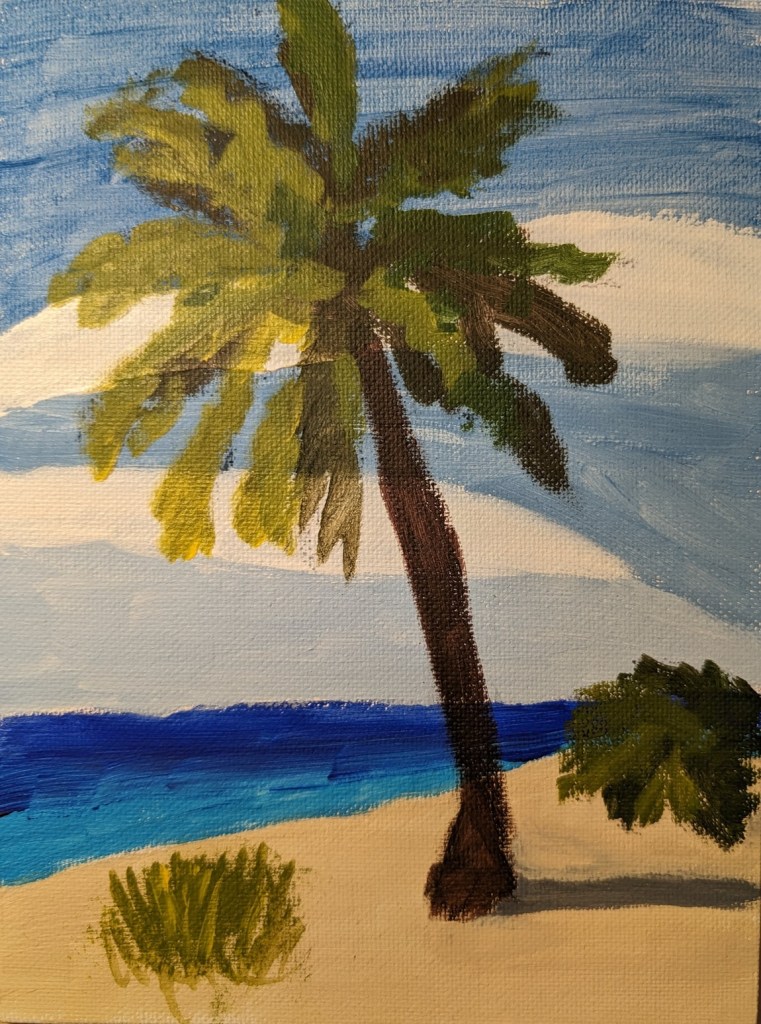
For a brief change of pace, I decided to paint this 6×8 palm tree on the beach which I found on Pixabay months ago. I used a fan brush for the first time to paint the plant at the bottom left. (Hadn’t even realize I bought a fan brush!)

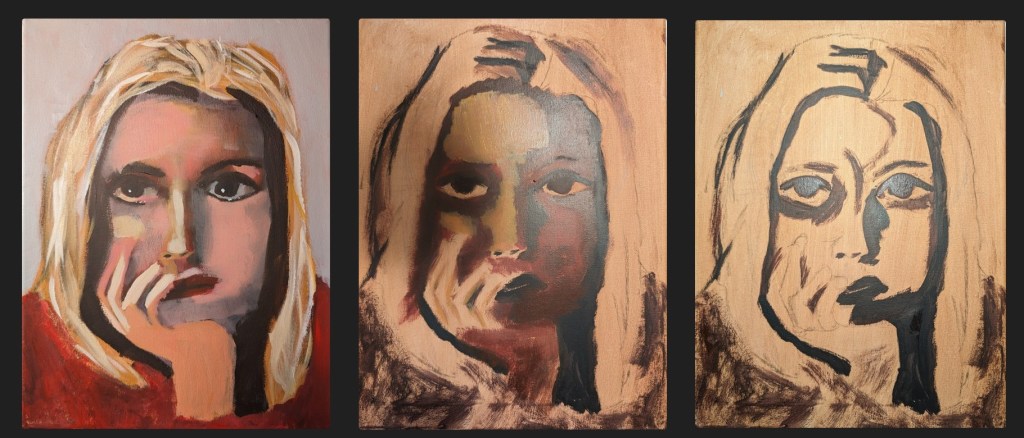
The portrait comes from the week 43 exercise of Kara Bullock Art‘s Let’s Face It 2018 portrait art experience/class. While I am participating in the 2024 version, and (sort of) participated in the 2023 version, I bought the 2018 set of classes (52 weeks in all) last year. This was one that interested me.
I drew out most of the face last June with pencil, finished it earlier this week with willow charcoal and decided just to get it painted for the practice. (Even though I’m not crazy about parts of my drawing.)
Here’s the completed version, and below I have a set of photos of the in-between phases. (Too often we only see the final work people do, not the messy/ugly intermediate stages. 🙂 )

Here’s the in-progress stages. She looks more than a little sickly, and then I revised all the colors, not following the instructor at all.
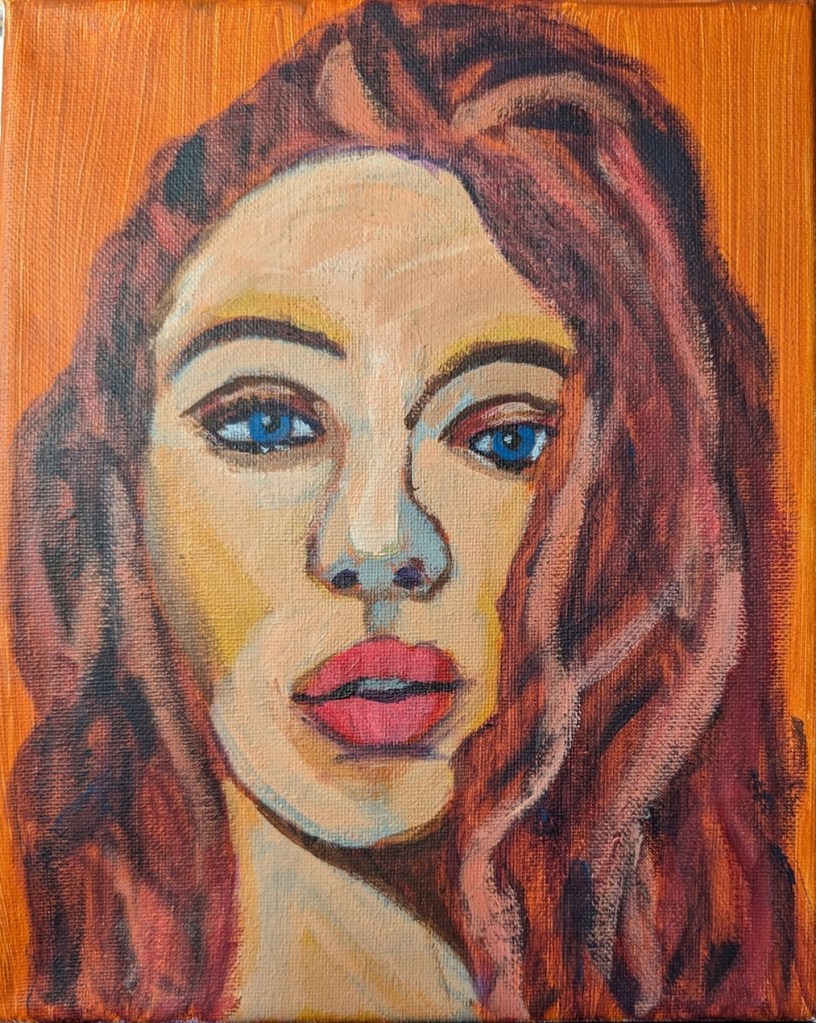
The portrait lesson from my “Painting Portraits with Karl Staub” class on Sktchy is now complete. If I had it to do again, I wouldn’t use the Opera Rose/Raw Sienna mixture. I’d go with a pale umber or a light yellow ochre. Or even just a plain white canvas! Anyway, I am mostly satisfied with it — the eyes are better than I’ve done before!
I skipped a lot of the blue and the white highlights the teacher used in the online class; the red background of my canvas made it look like she had red highlights in her hair (as opposed to the black tresses the actual model has in the photo reference used.)
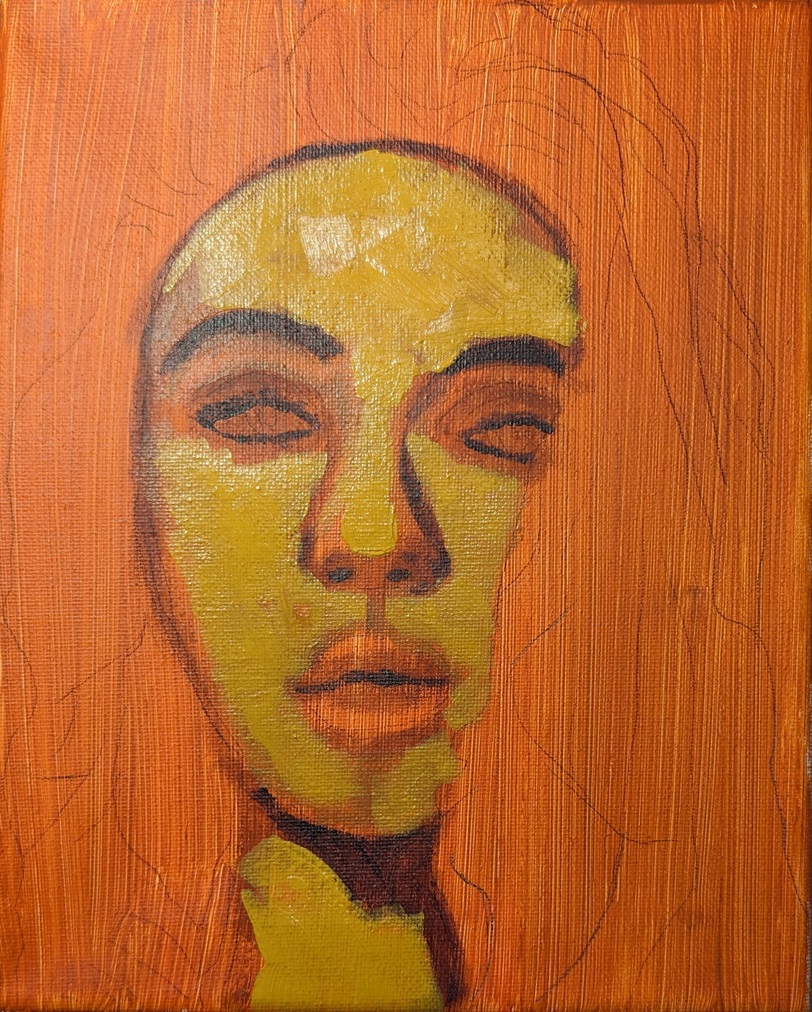
This work-in-progress is again from my “Painting Portraits with Karl Staub” class on Sktchy. I am doing this one in acrylic on a 8×10 canvas. The background is a mix of Opera Rose (Winsor & Newton Galeria) which is a garish bubble gum pink and Raw Sienna. The face was drawn on to the painted canvas, and I’ve done the first layer in Burnt Umber (following along).

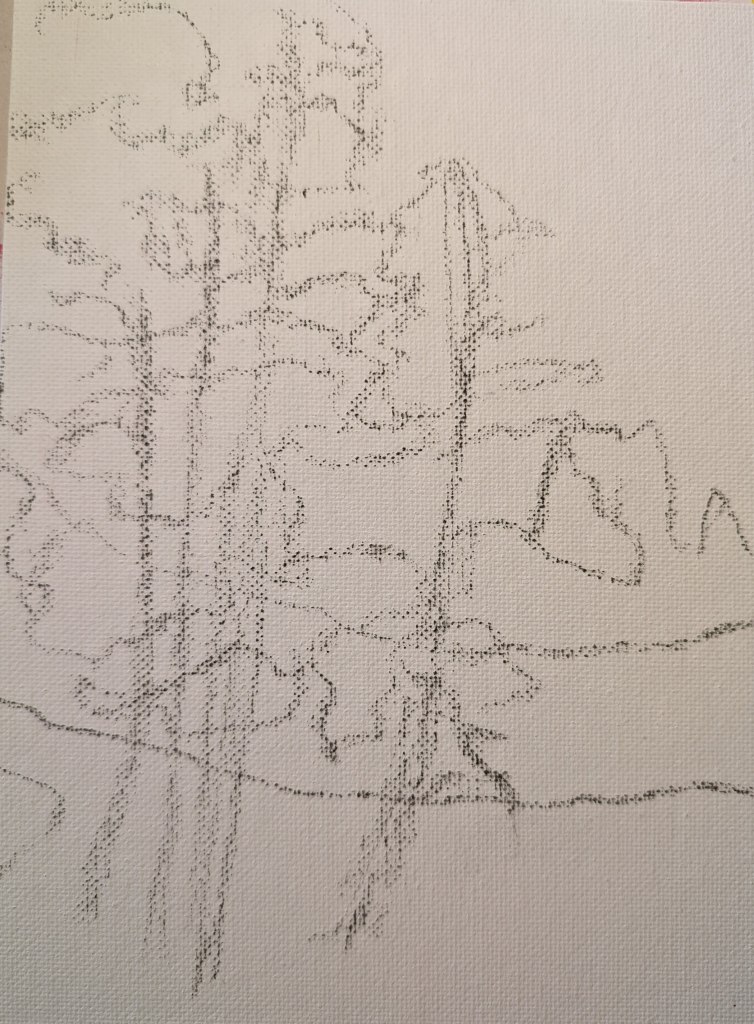
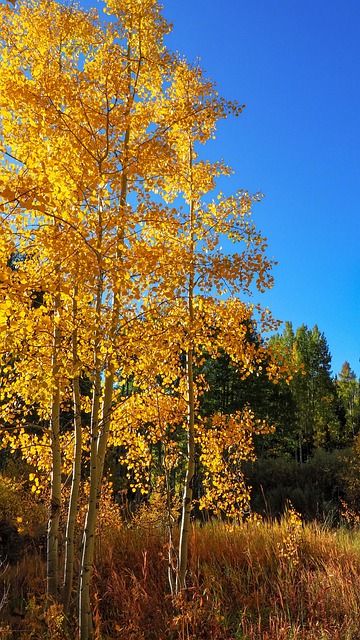
These trees are based off an image by Inna Sherman from Pixabay. I stuck with the primary palette (cad-free yellow medium, pyrrole red and ultramarine blue), black and white, but I also used a bit of yellow ochre, mainly for the grasses. I worked it on a 6×8 canvas panel.


This was week 3 for Jed Dorsey’s Mini Painting Challenge at Acrylic University. It’s based on a picture he took of a hazy morning with the grass full of dew, in an area near his home. It reminds me a lot of the English cottage landscape I did at Paint Coach Patreon.
This was done on a 6×6 canvas panel. I used the 3 primaries, plus black and white.
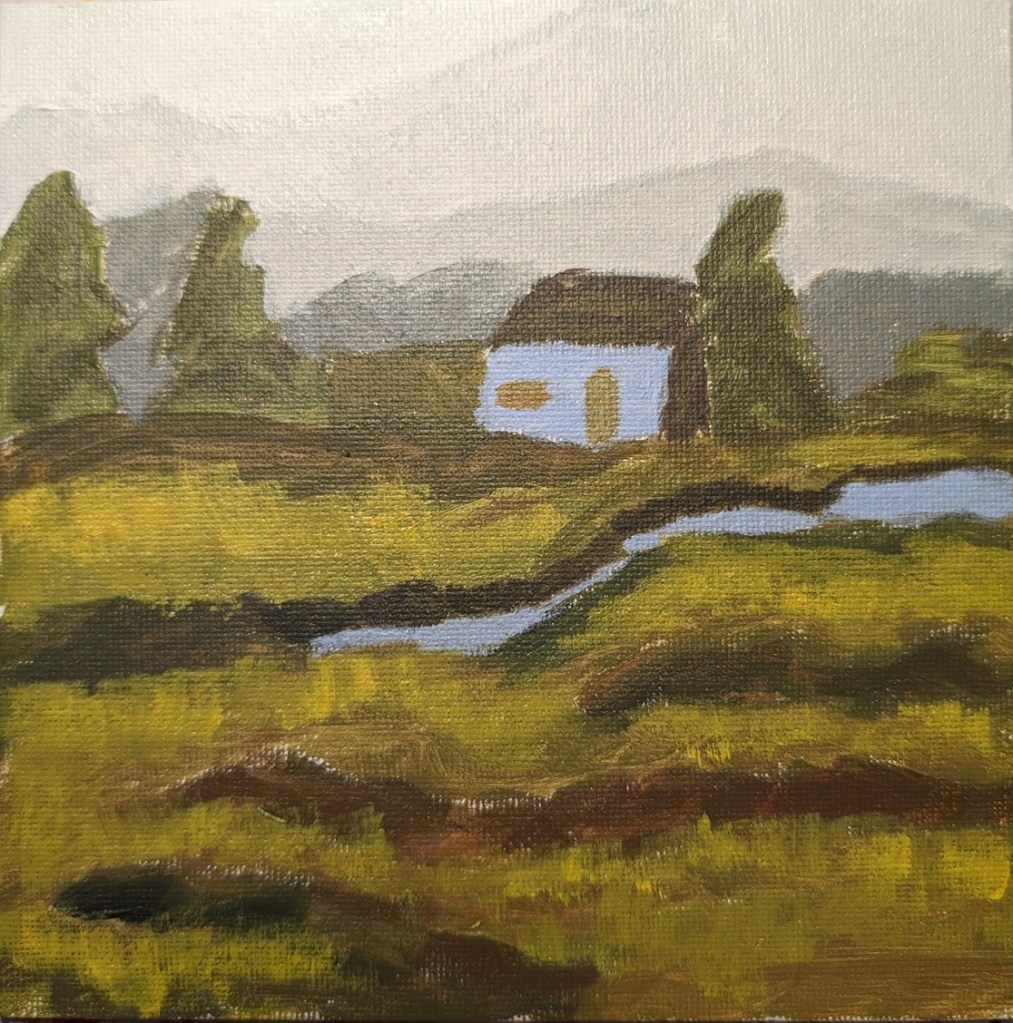

This was the third of the 3 mini practice paintings where we the students copy some of Jed’s paintings. In the next round, we copy bigger paintings which are more challenging. Then we move on to more detailed studies of subjects like color mixing, perspective, design/composition, etc. (All with practice paintings of course!)
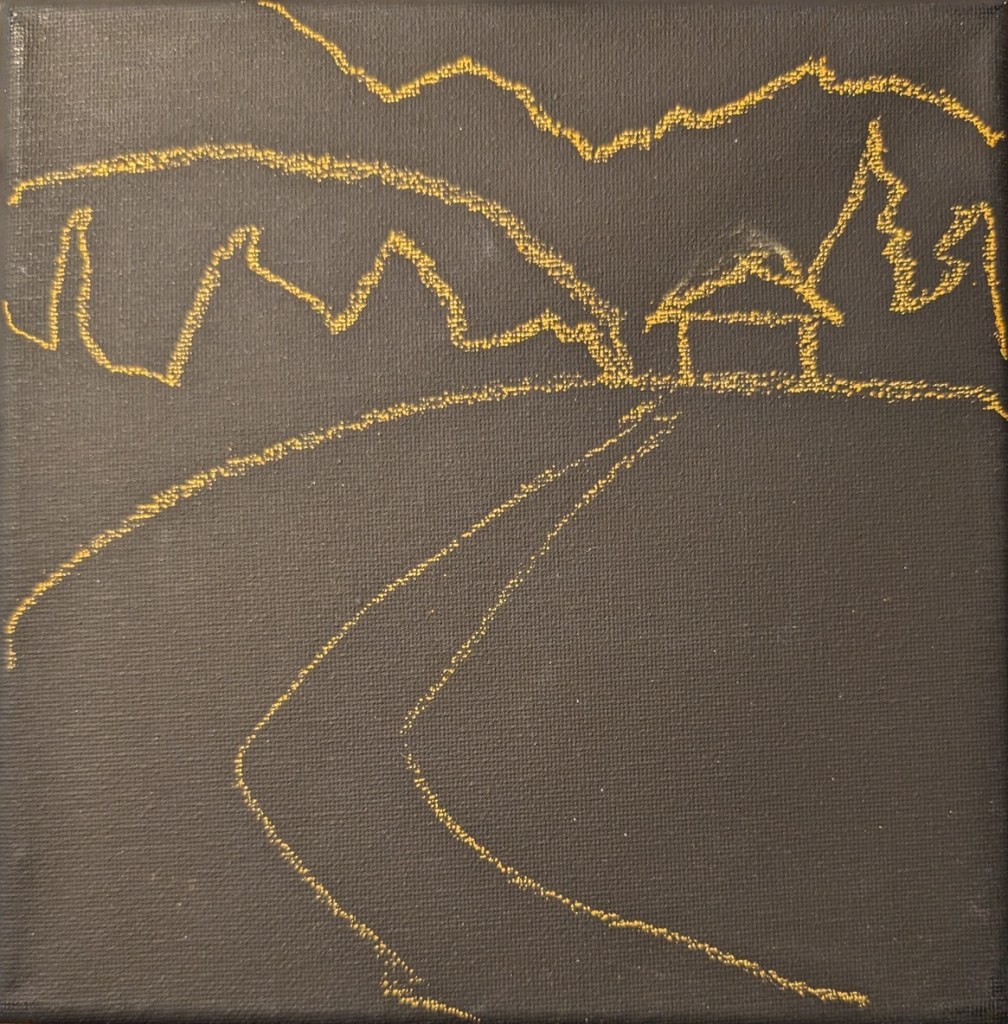
I had bought some black 8×8 canvases during the holiday season so I used one of those rather than tone a white canvas with Mars Black. Same difference — I just don’t like the black canvas. It skews my sense of color. Ugh. I just want to paint all over it to cover it up!
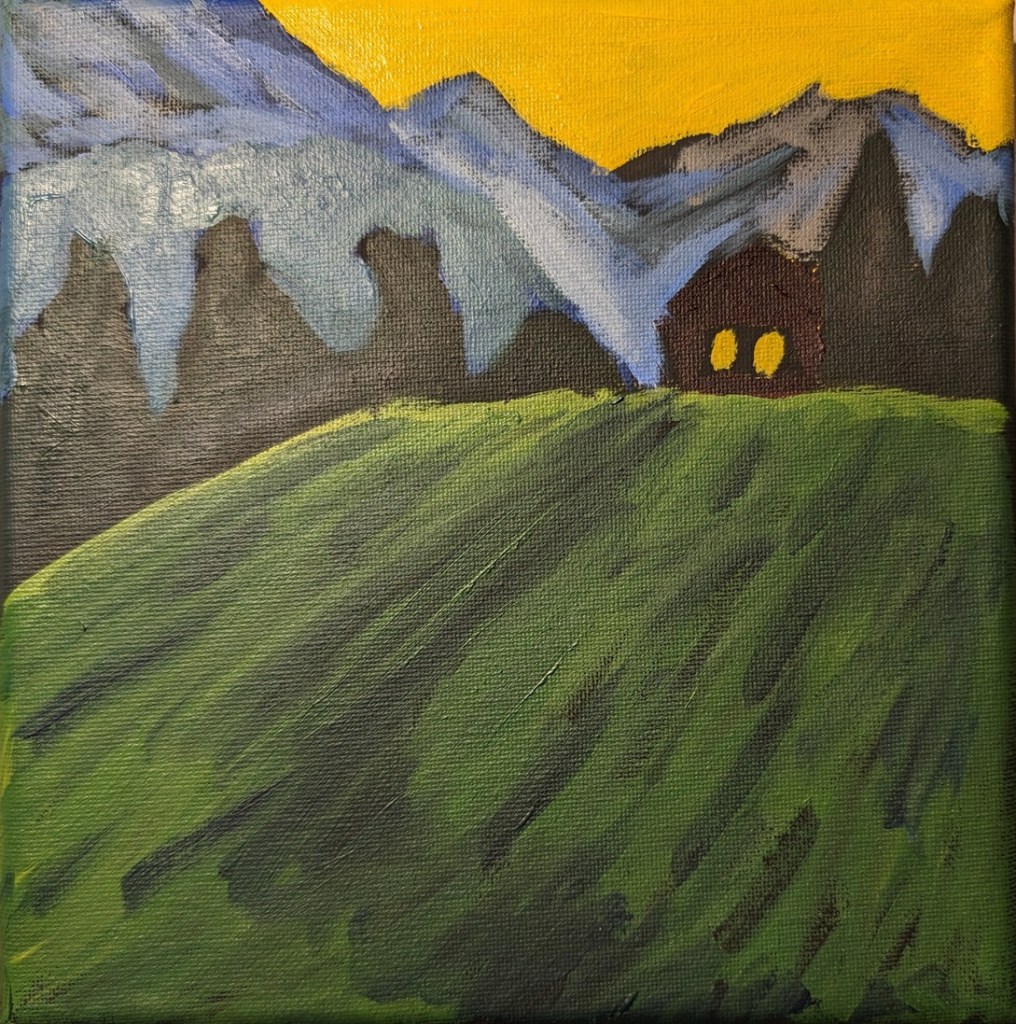
This is the second of 3 miniature paintings from the Acrylics 101 course at Acrylics University. (See also this post.) I used a medium neutral gray as the toning color, and a red soft pastel to draw out the design.
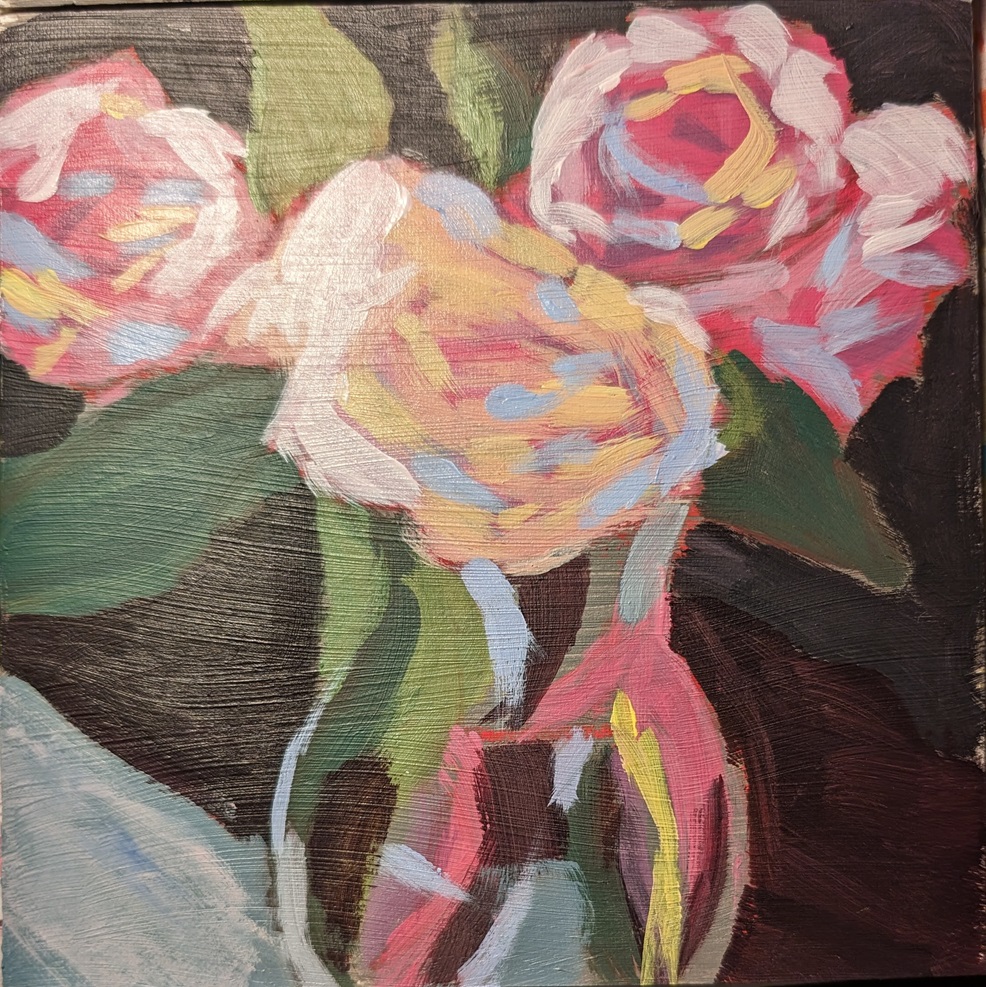
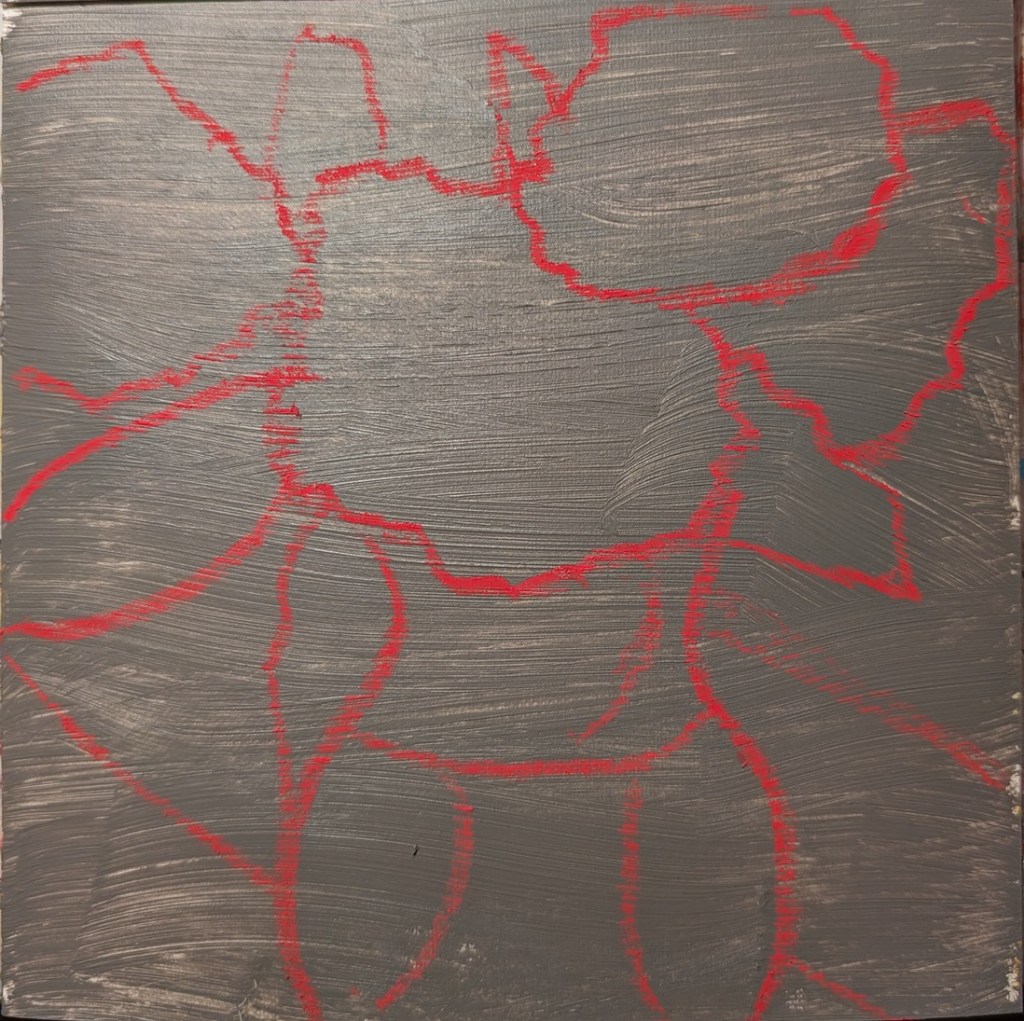
So I’m going through the Foundations classes in the library of Acrylic University — basically the reason I paid for a year’s subscription. In Acrylics 101 we cover the basic tools (brushes, easels, types of acrylic paint), the importance of thumbnail sketches, values, color (opaque vs. transparent, color mixing, etc.) and then finally we do some practice paintings. Three are minis (6×6) and three are larger sized (up to 16×20).
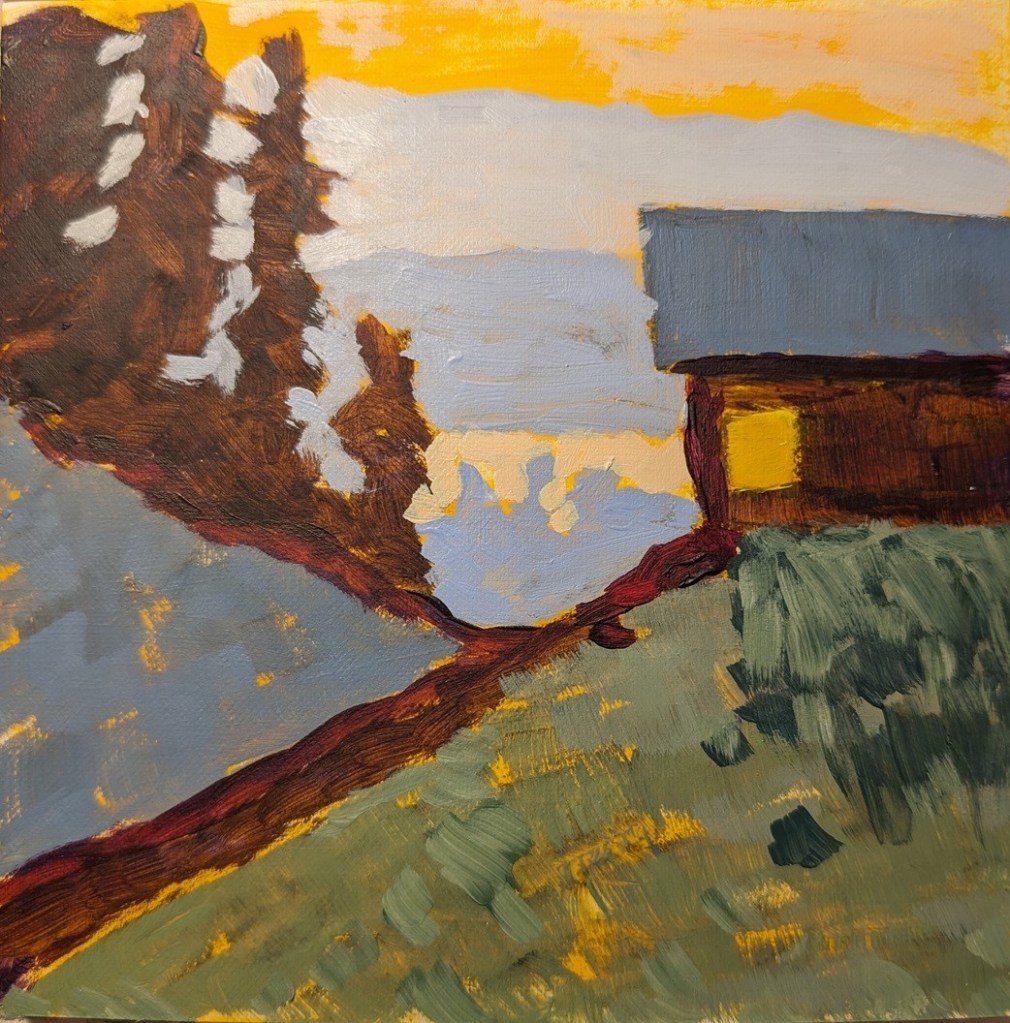
Jed Dorsey, our instructor, says that he has found that beginners do better — and gain confidence more quickly — when they attempt to copy a painting rather than work with a reference photo (or plein air) primarily, I assume, because the artistic decisions have already been made. He demos painting a copy of his own painting, explaining why he did what he did.
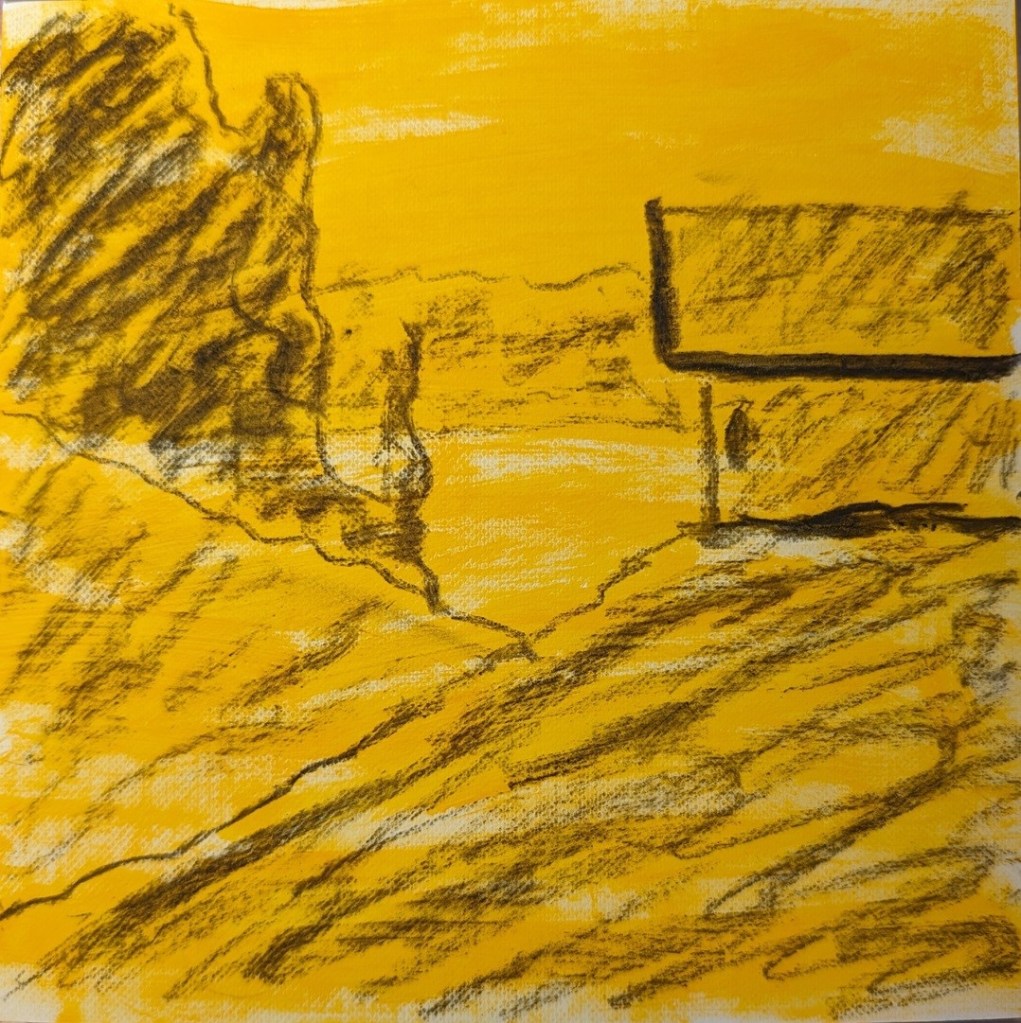
So, with that lead-in, here’s my painting of his painting. I used Diarylide Yellow as my toning color, and painted on 6×6 canvas paper using only a #8 flat brush.
 BetterLateThanNeverArt