Green Apples…Round 2

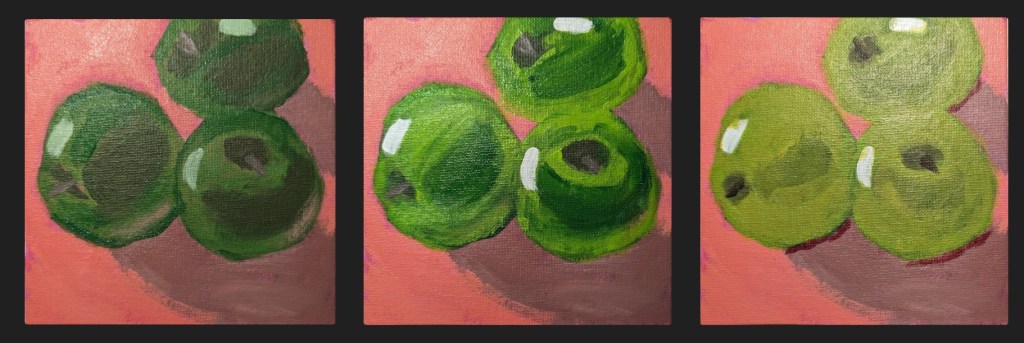
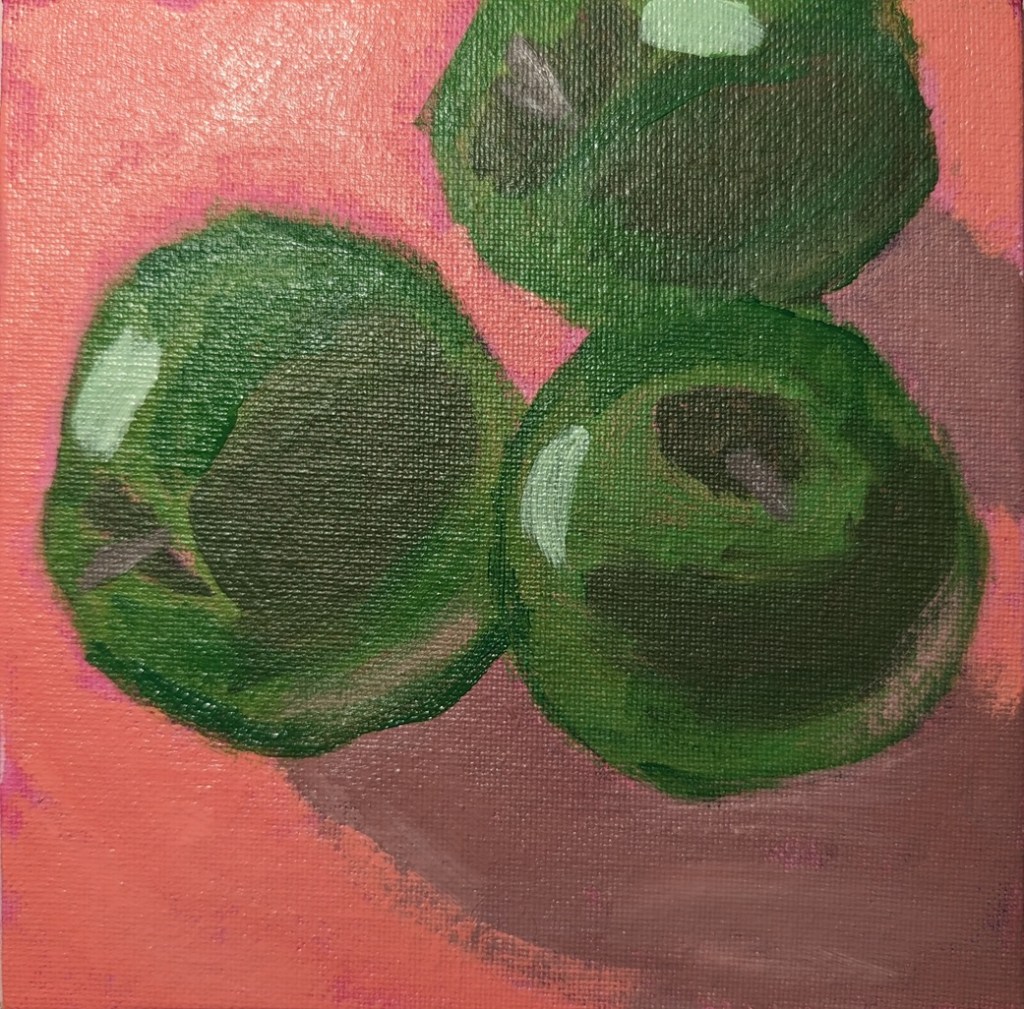
So, after making my apples too green (and dark) with mostly Winsor & Newton Sap Green (and some yellow, believe it or not, I tried a “convenience” color (Yellow Green from Amsterdam). That got me closer, but at that point, I was over-painting the original dark green apples. The third try, I got closer to the color I wanted, but I ceased paying attention to the darker shapes in the reference image (including the shadows).

The only thing I’m relatively satisfied with right now is the dark area around the apple stems. AND that I finally got reasonably close to the local color of the apples.

I need to paint this again from scratch, but frankly, I’m temporarily sick of apples! 🙂

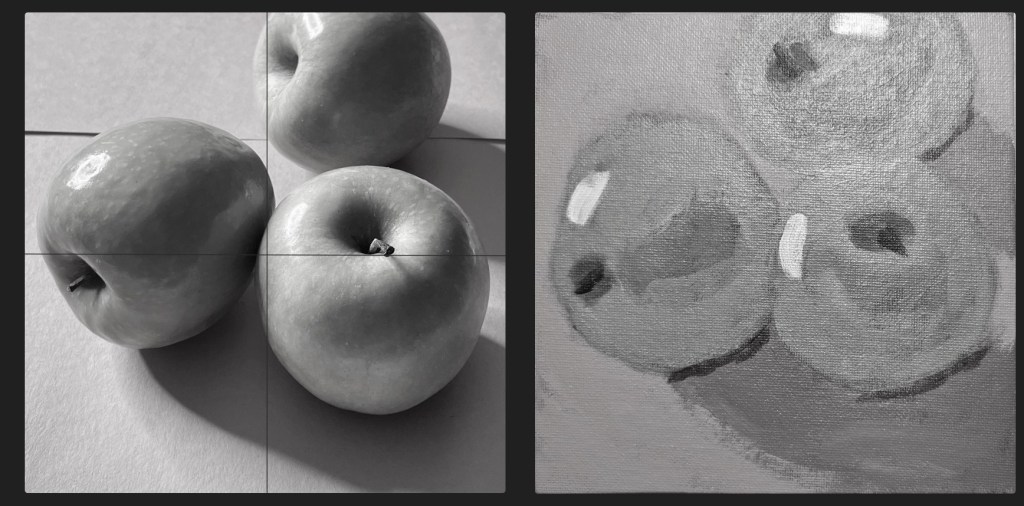
Here are the value comparisons between the reference photo and the original painted green apples, and the reference compared to the final painting.

Originally, my lights were too dark, while some darks (the cast shadows) weren’t dark enough. Now my lights are okay but the darks aren’t dark enough. And the apple at the left is misshapen.

Green Apples.. Round One

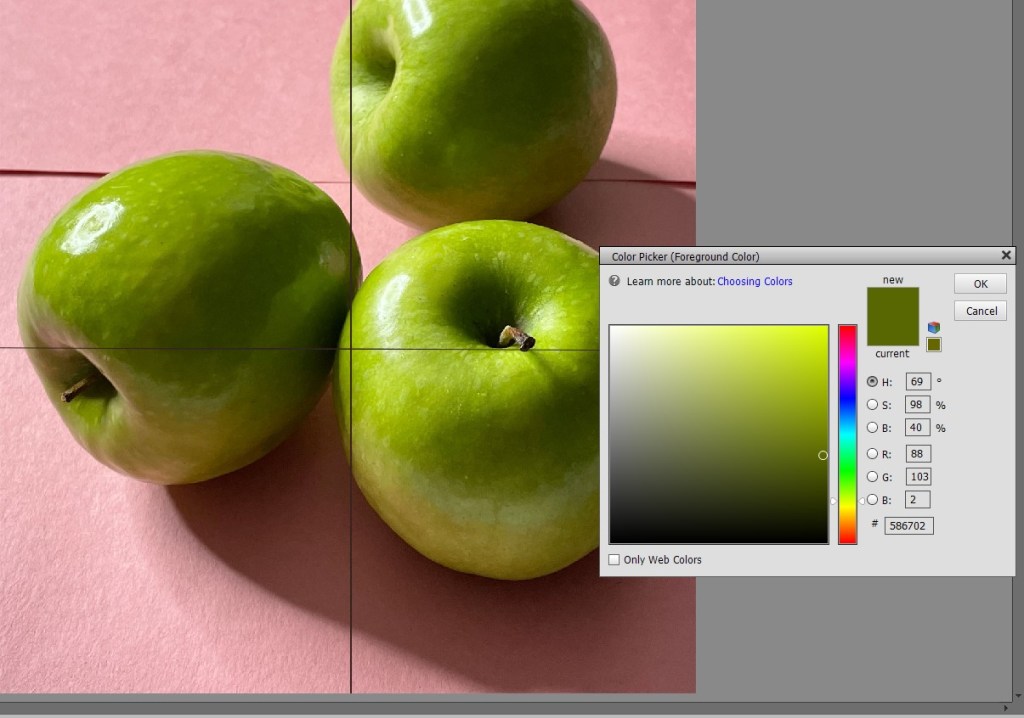
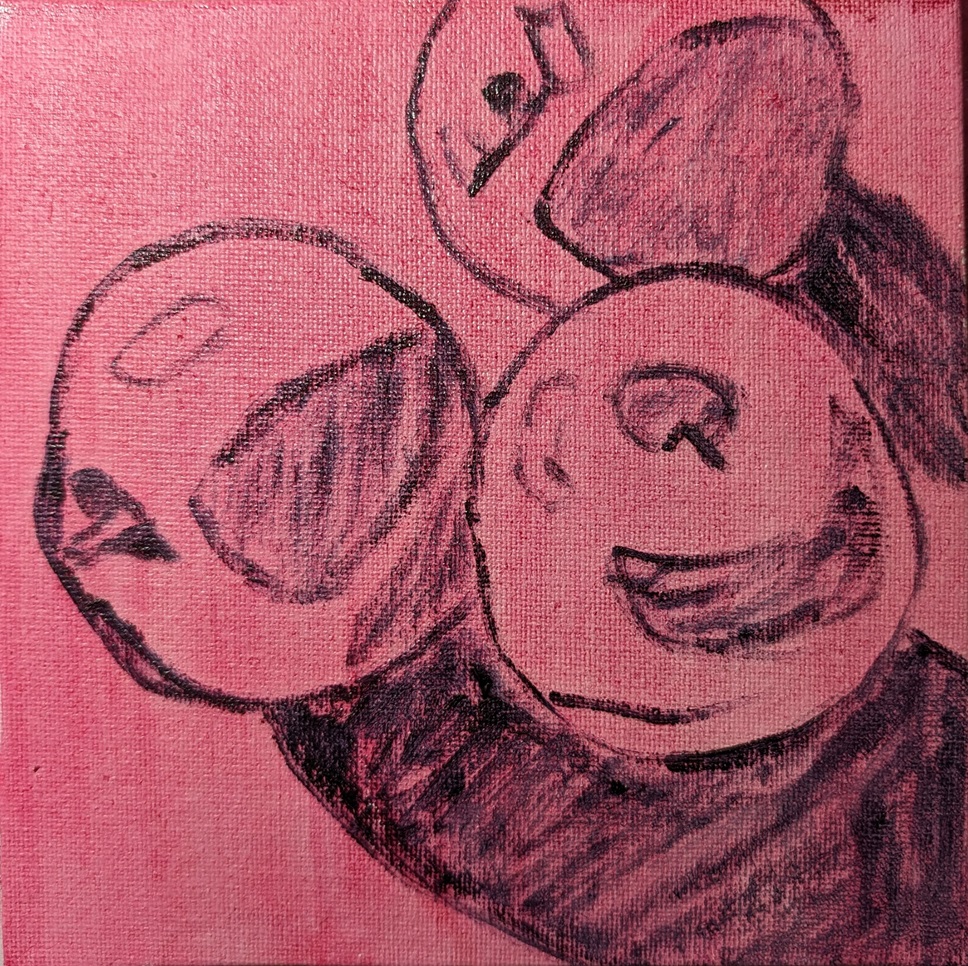
This is another paint-along from PaintCoach’s Patreon page. I painted what I thought I saw, not what I actually saw. “Green” apples are green, right? Wrong. They’re mostly yellow. The image from Adobe Photoshop Essentials shows the darkest green as being mostly an olive color. (Actually, with photos the way they are, the darkest areas showed up as black, so I “color-picked” the edges of the shadow.)

Anyway, this image testing came AFTER my first attempt here — and the quinacridone magenta wash, and Payne’s gray outline to start did not help anything. Ugh.

Exercise: Colors as Values

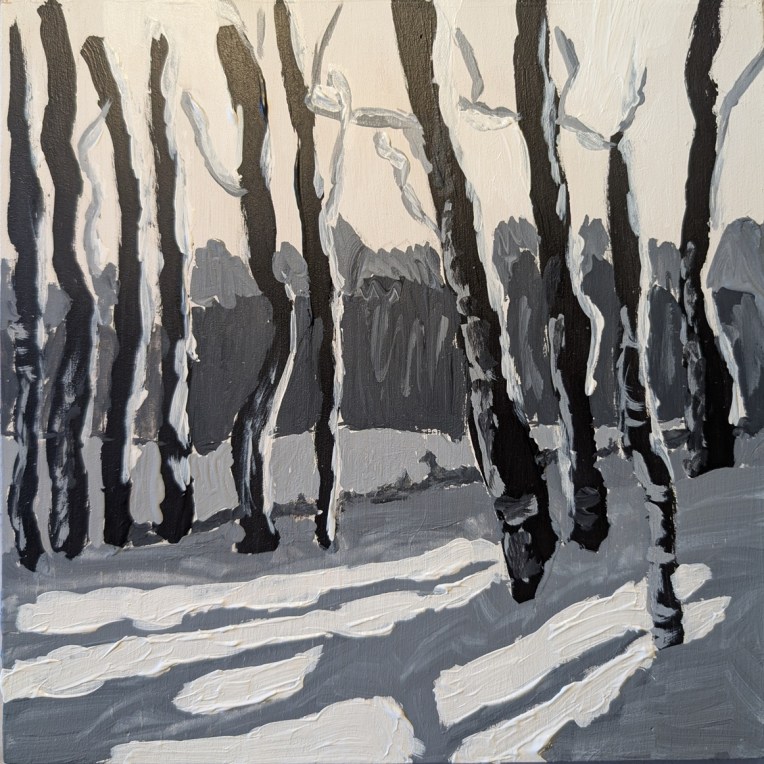
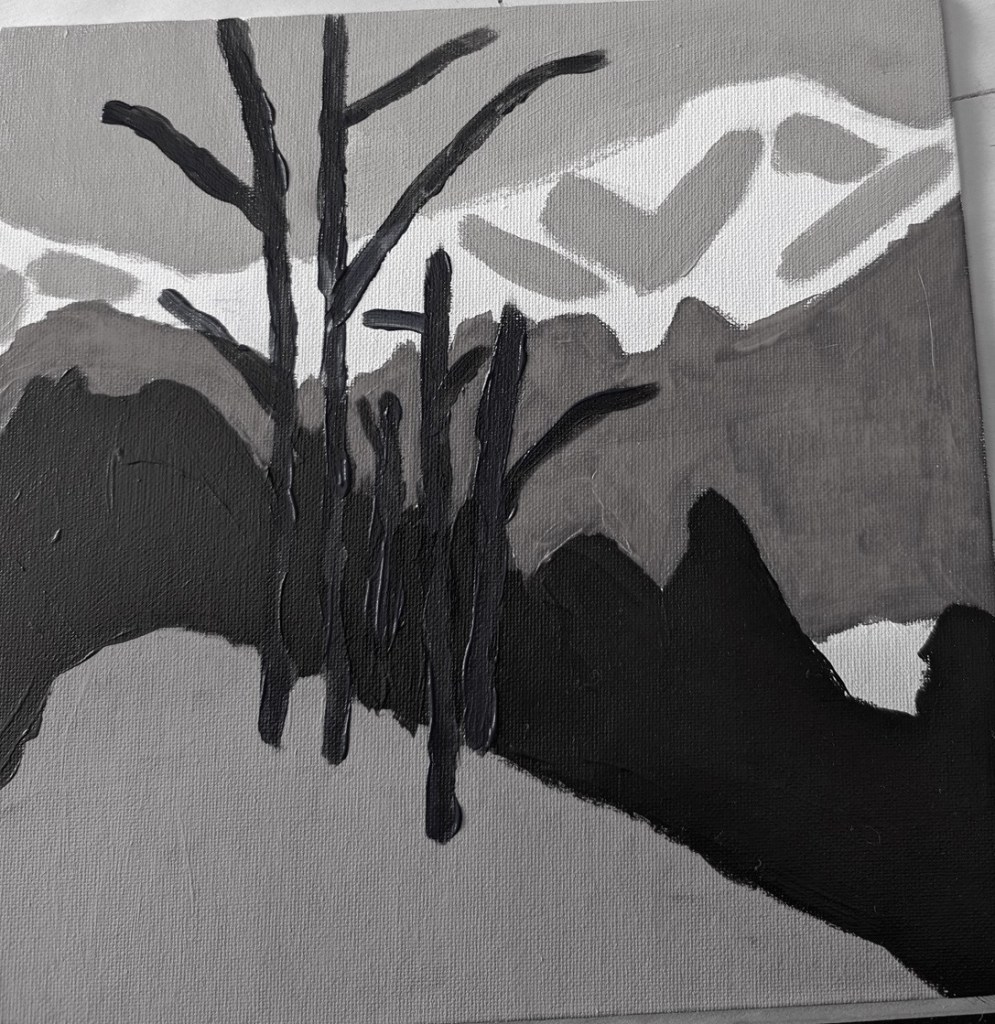
This is an exercise from one of the foundational courses (Acrylics 101) at Acrylic University wherein you do a value map of your painting using black, white and gray, and then applying color on top of the different value areas, using care to make sure your values — post-color — remain. It’s a more detailed version of the quickie free course I mentioned here.

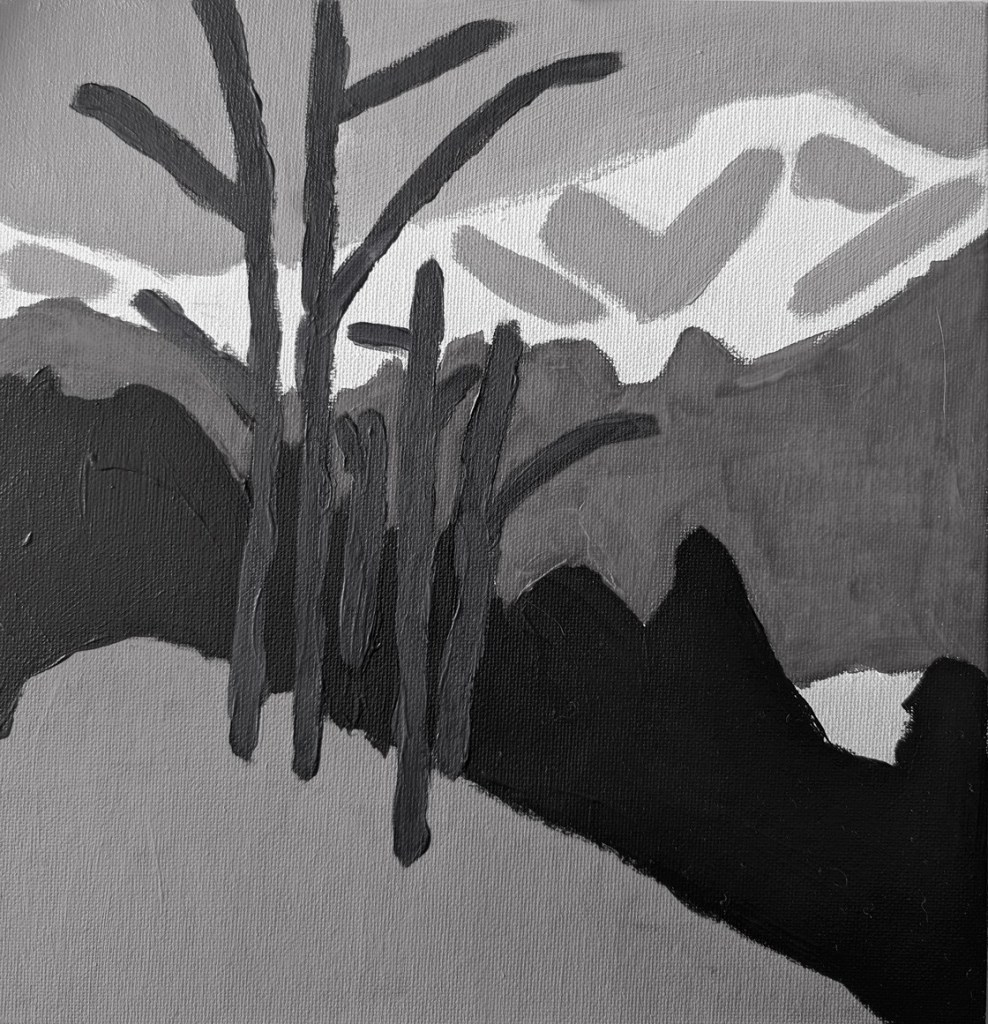
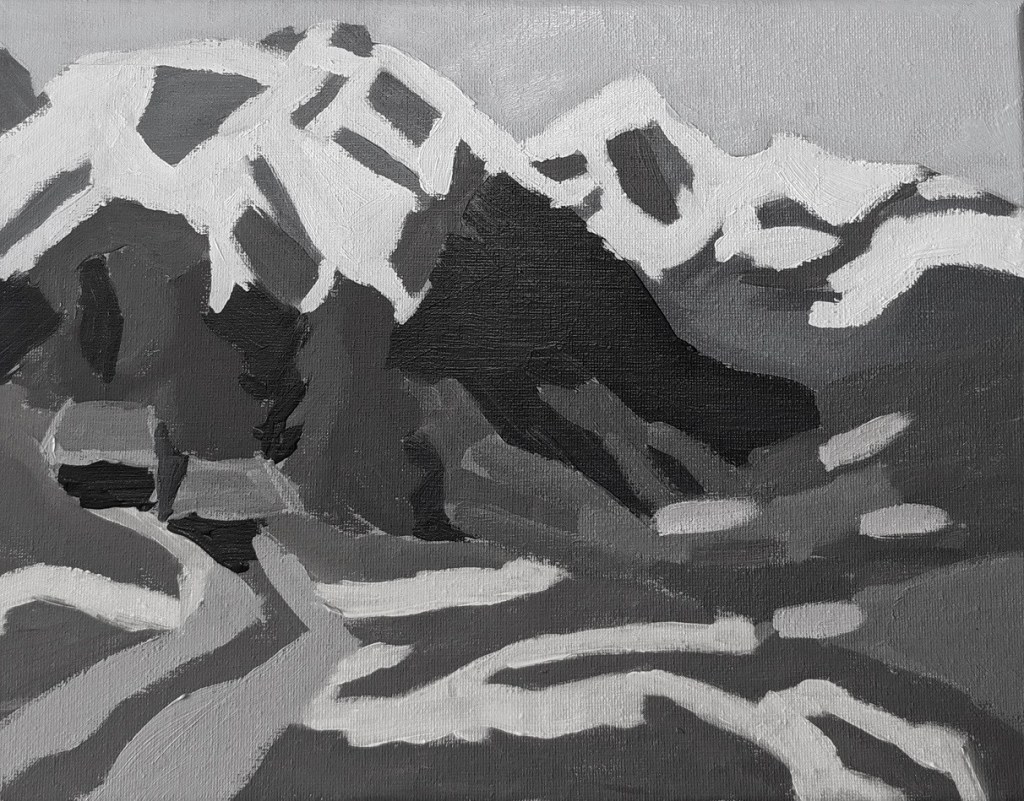
Here’s my original painting done in grayscale, done as part of the Acrylics 101 online class, using their reference photo.

I did a value check on my primary colors and mixed secondaries.

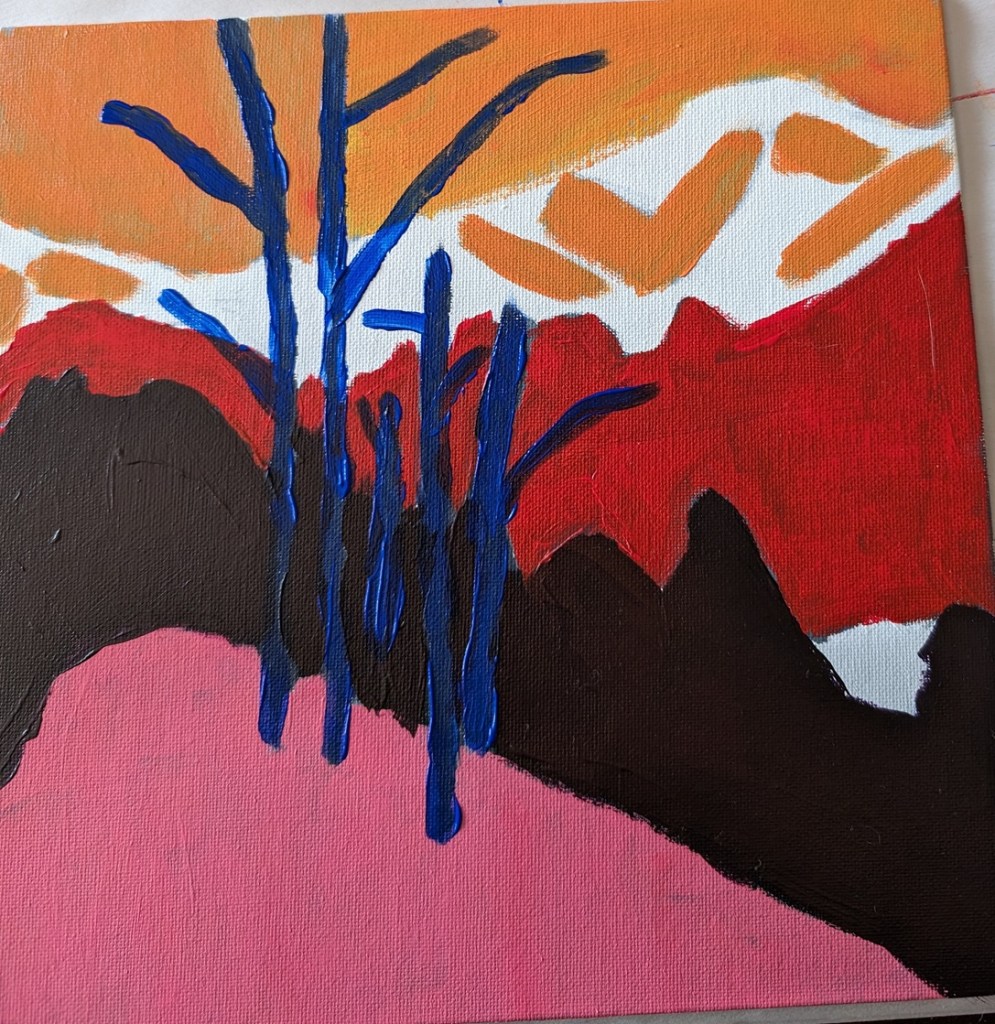
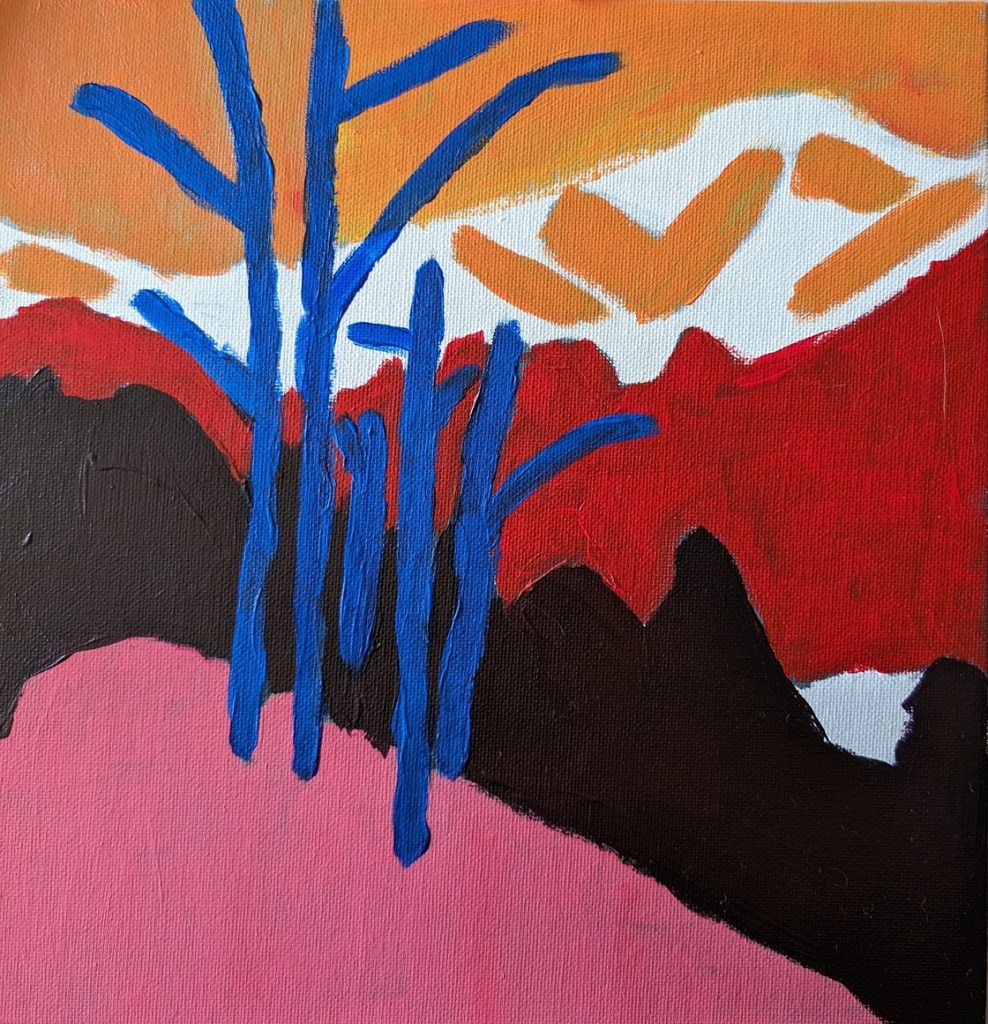
The next task was to choose colors that aligned to the value map/painting I already did. This was my first effort. The abstract trees were a bit too dark, compared to my original (above), pretty much the same as the (abstract) forest.

This was my next attempt, which I think is better. Also I turned on the grid function on my Pixel camera; it makes a real difference!

Acrylic University – Freebie class & Small Paintings

I mentioned the other day that I signed up for a Clouds Challenge on Acrylic University. I have since signed up for Jed Dorsey’s mini painting challenge which starts in January 2024. There’s also a freebie class: “Acrylic Painting for Total Beginners – Everything You Need to Know in Less Than 2 Hours” which I’m also doing. These days I’m not a total beginner, but a free class lets me check out the instructor, Jed Dorsey.

The class covers basic suggested supplies, brushstrokes, values, the grayscale, color mixing, and 3 small paintings.

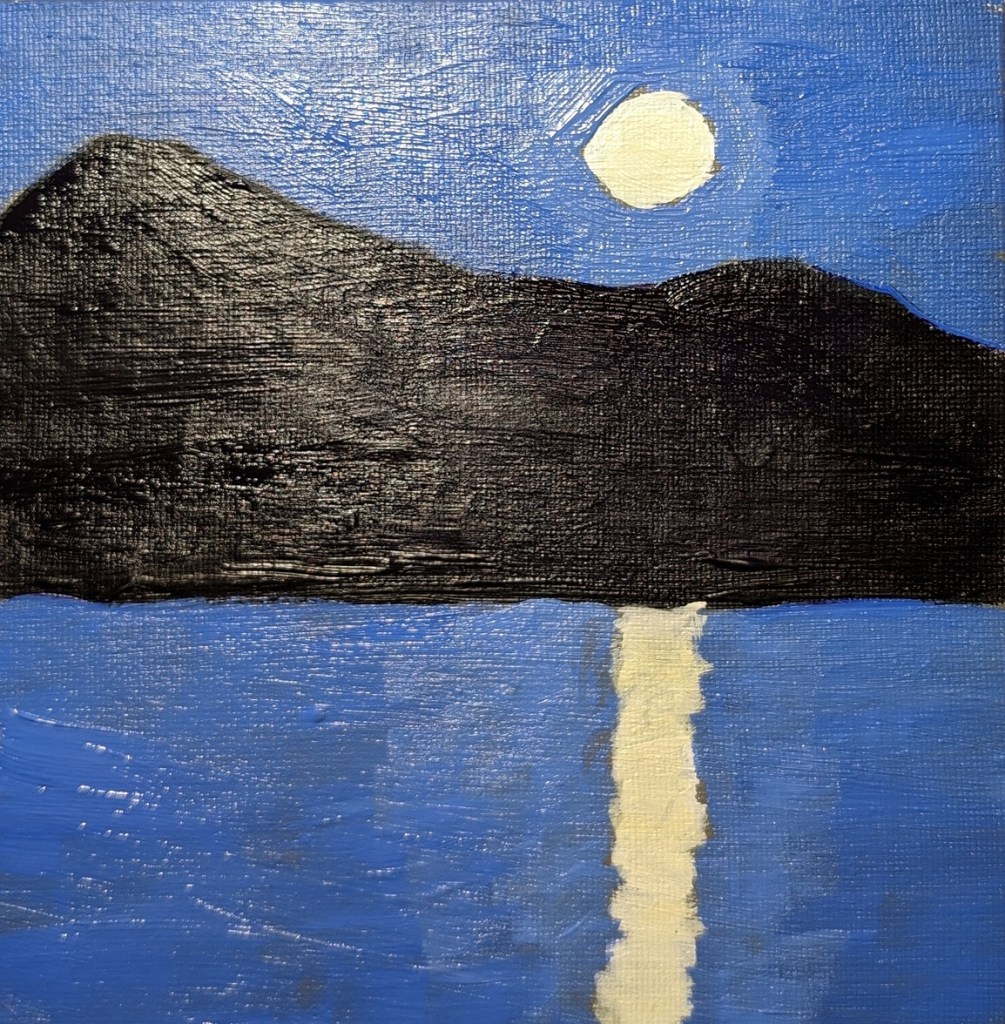
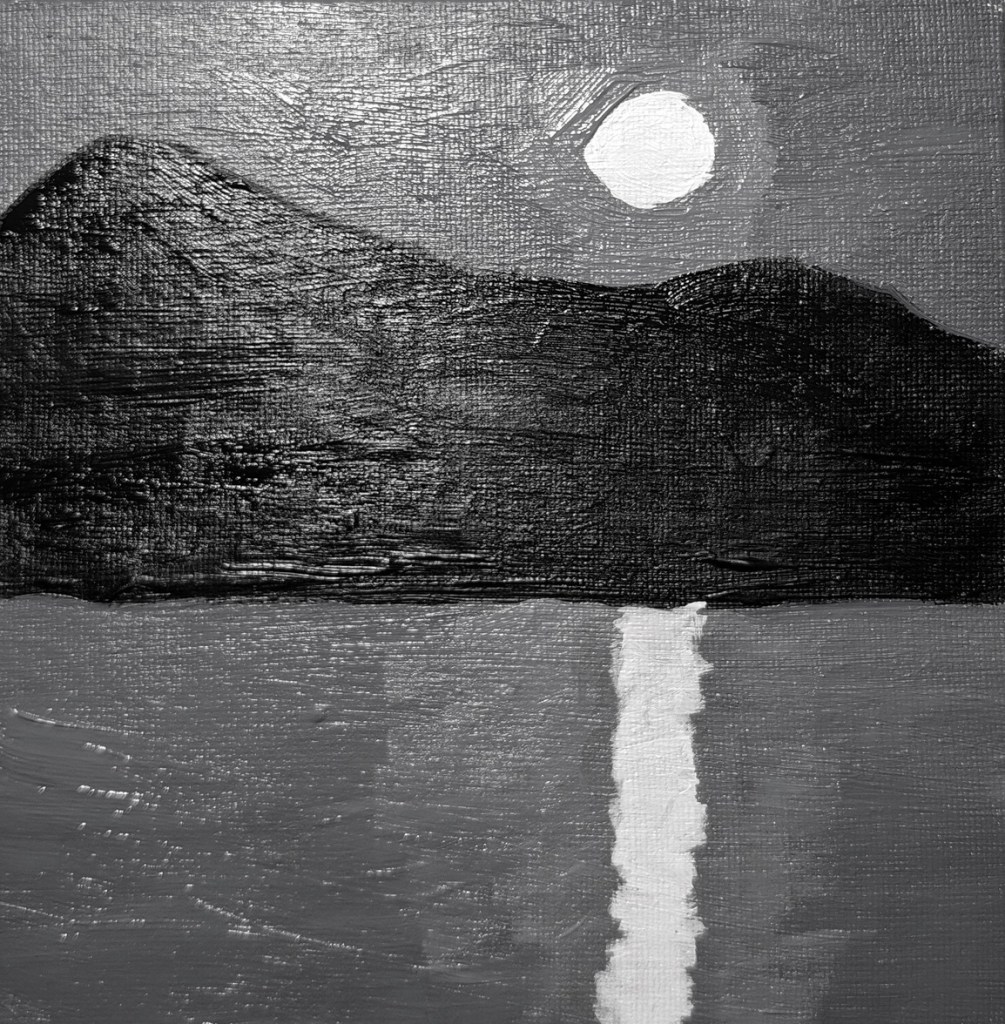
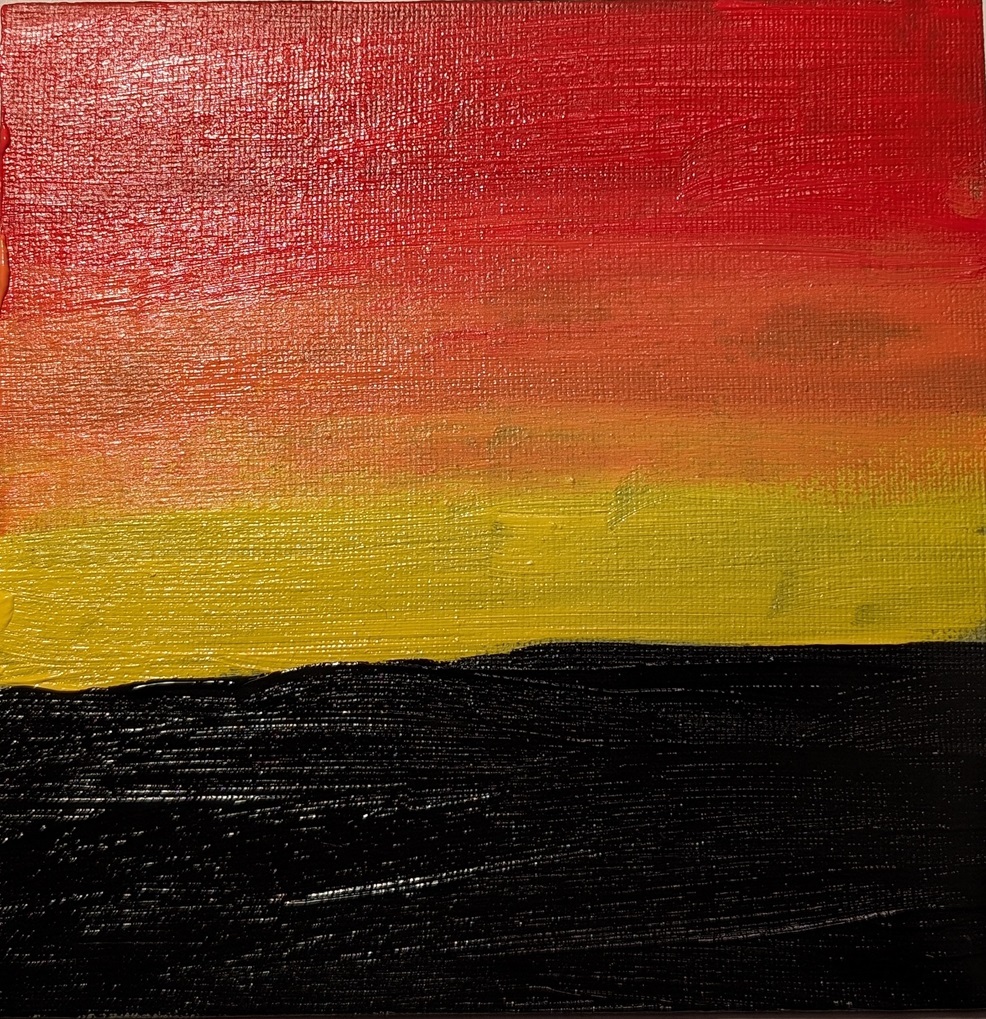
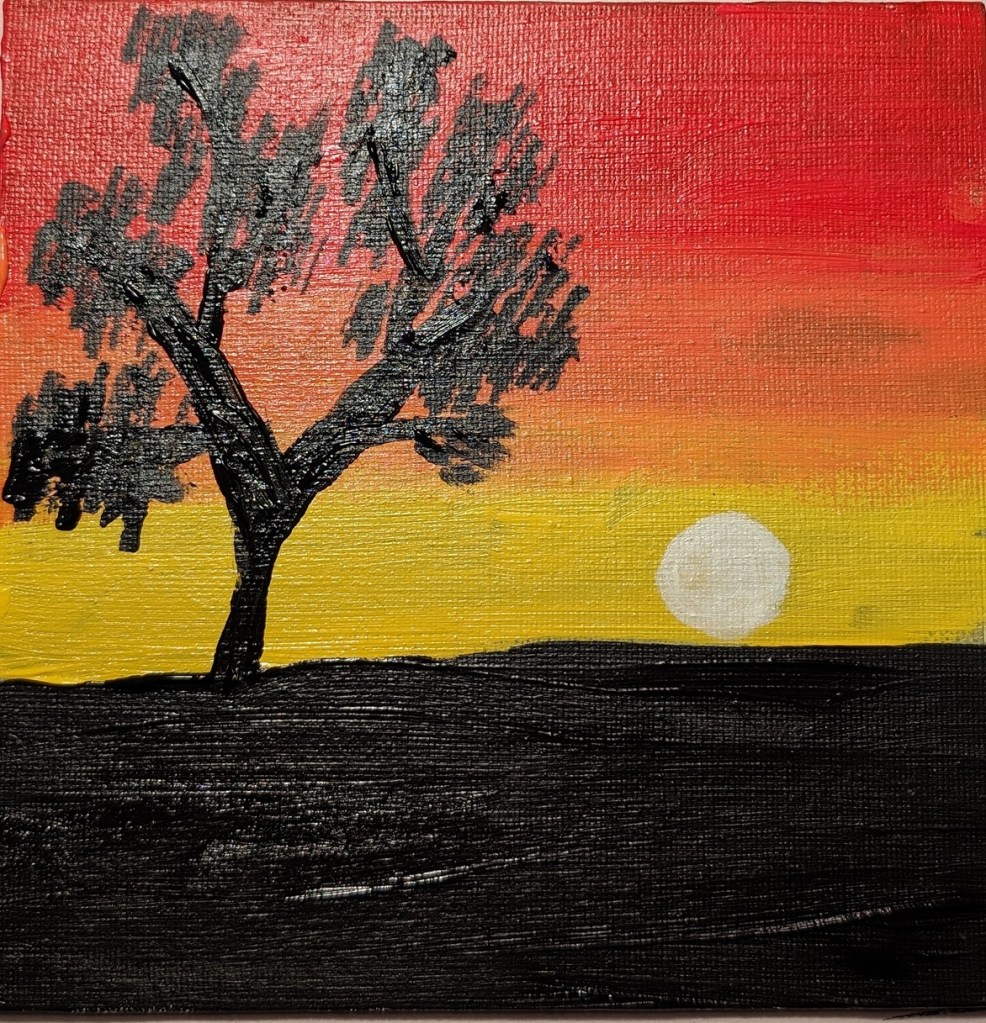
The first two paintings from the class are below. You paint the moon scene in grayscale first, and then paint color over it, keeping with the value map. The last photo is of the color painting, but in black & white to validate the value map.

The second set of paintings is a sunset, and the last one (not yet completed) will be roses.

Portrait Practice — Painting the Asaro (Variant) Head

My last few works — a portrait and a “portrait” of the Asaro head — have been in the cartoon realm, so I’m skipping posting those for now!

Instead, I found a video on YouTube that walks you through drawing the “Loomis Head” and converting it (for lack of a better term) to a planar head (what the artist calls the “memorized Asaro head”). After watching that, I drew the planar head on my 8×10 canvas with willow charcoal.

What I discovered in my failed attempt at painting the Asaro head is that the color Ivory Black is fairly transparent, and doesn’t cover well. I ended up going to Michael’s and bought some Mars Black from Liquitex Basics. It’s student grade compared to the artist grade Ivory Black, but wow, what a difference!

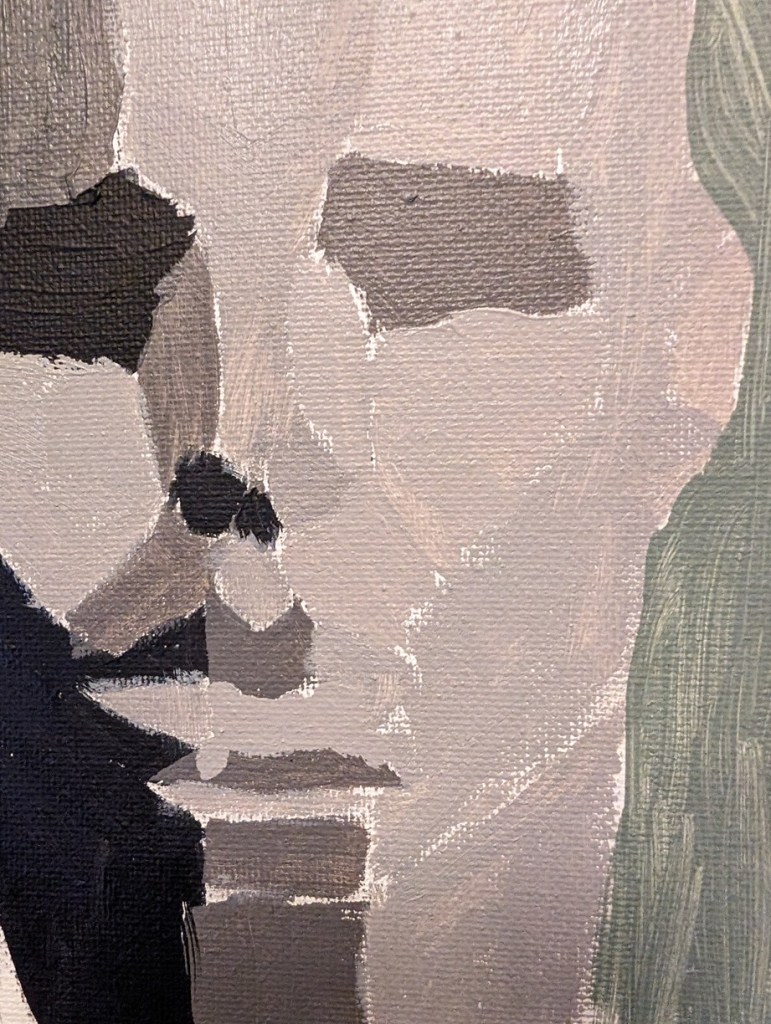
Anyway, here’s the Asaro head done; sage green for the background.

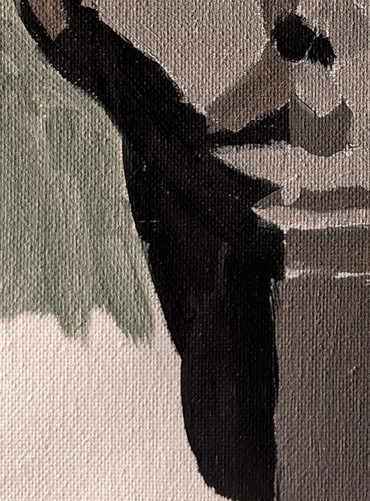
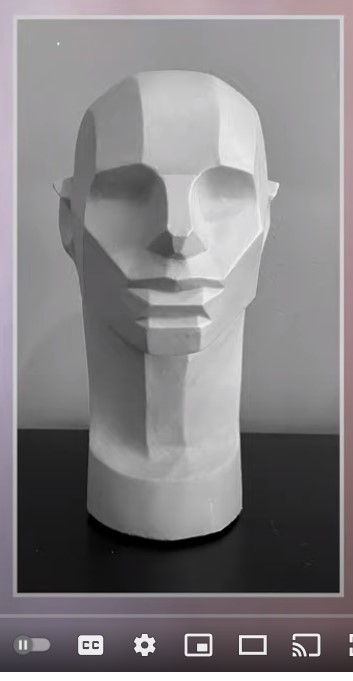
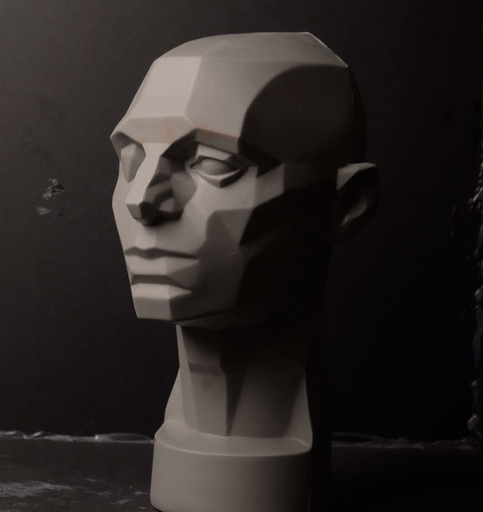
Below is a copy of the reference photo I used to paint, as well as a close-up of my value changes. In some cases like the upper lip, the value change is too abrupt, while in other cases there’s not enough of a value change. I’ll have to keep practicing.