
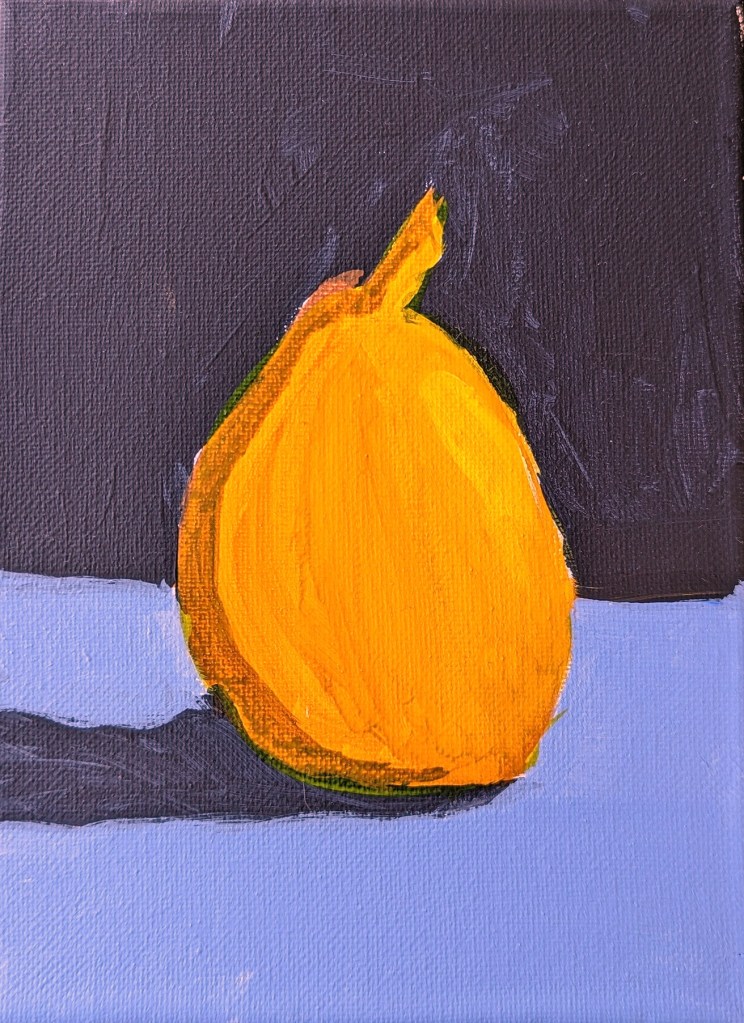
Nothing special about the results of this study, which I found on Patreon… I used a glaze of yellow and satin glazing medium on top of the brightest side of the pear. Might as well use some of the features of acrylic painting.
Acrylics
Autumn Tree from #PAINTCOACH Patreon

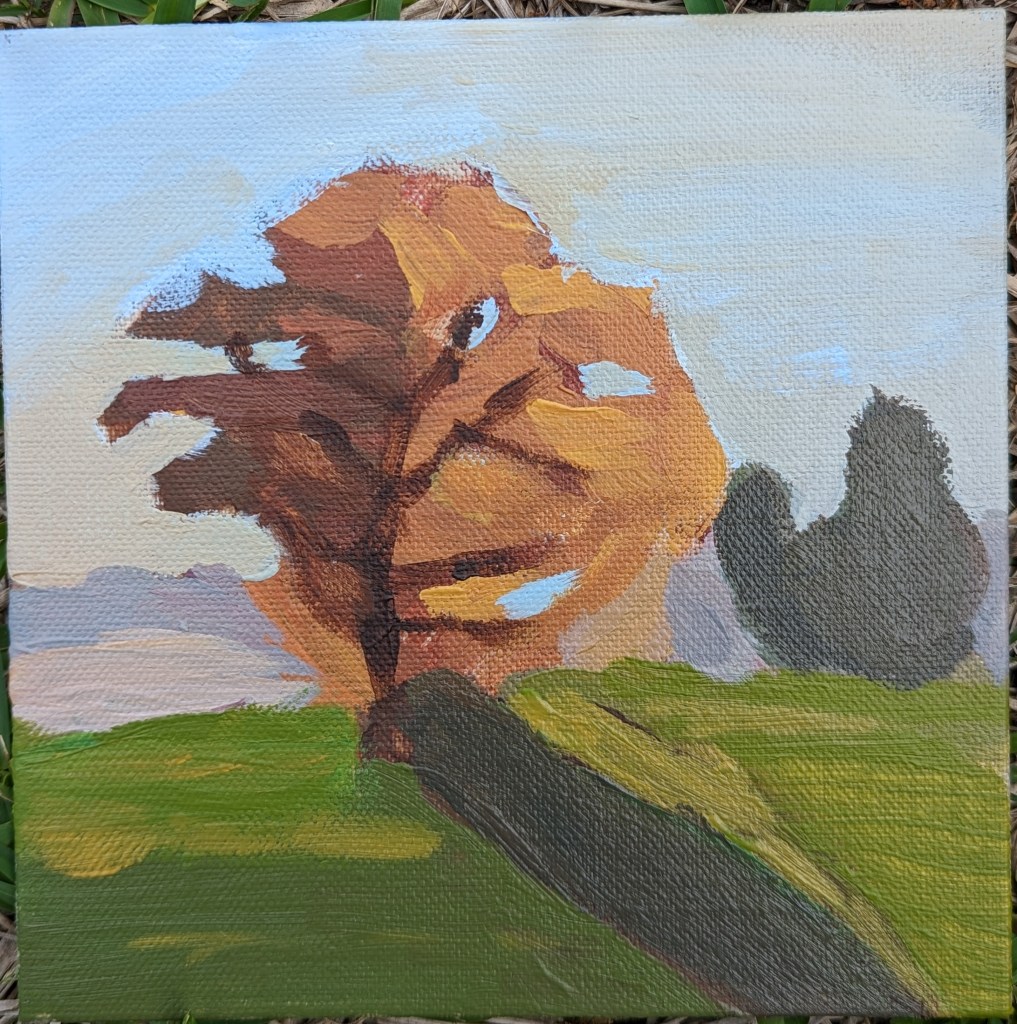
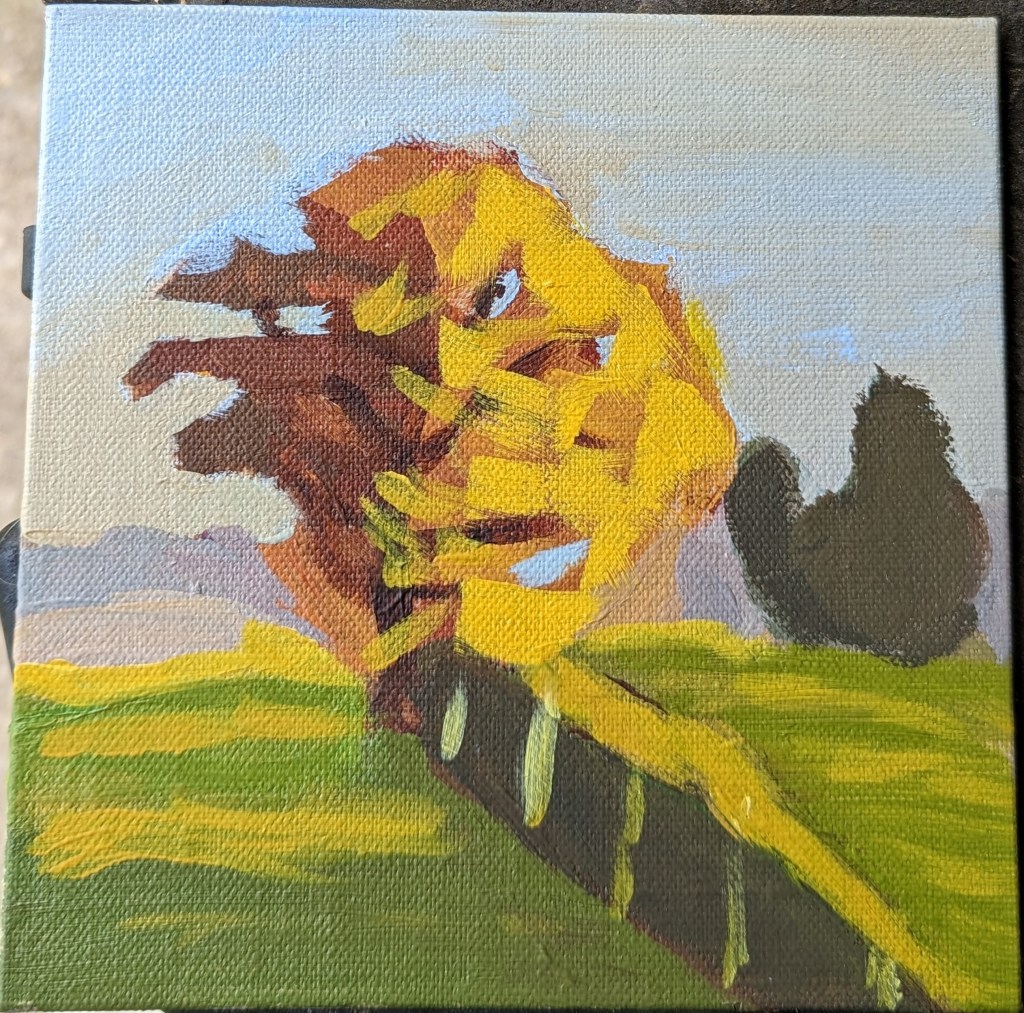
This Autumn Tree exercise was from a PaintCoach post on Patreon. I did it on a 6×6 linen panel in acrylic. Getting the colors even close to correct was a beat-down. I’m discovering I prefer liquid or soft-body acrylics to the heavy-body, at least when I’m trying to imitate painting in oils!
One photo is of the work-in-progress; the other is the “I’m done with this!” version.
I’m most satisfied with the sky. If I were to paint this again, I’d use much less yellow in the tree, and make shorter and less uniform brush strokes.
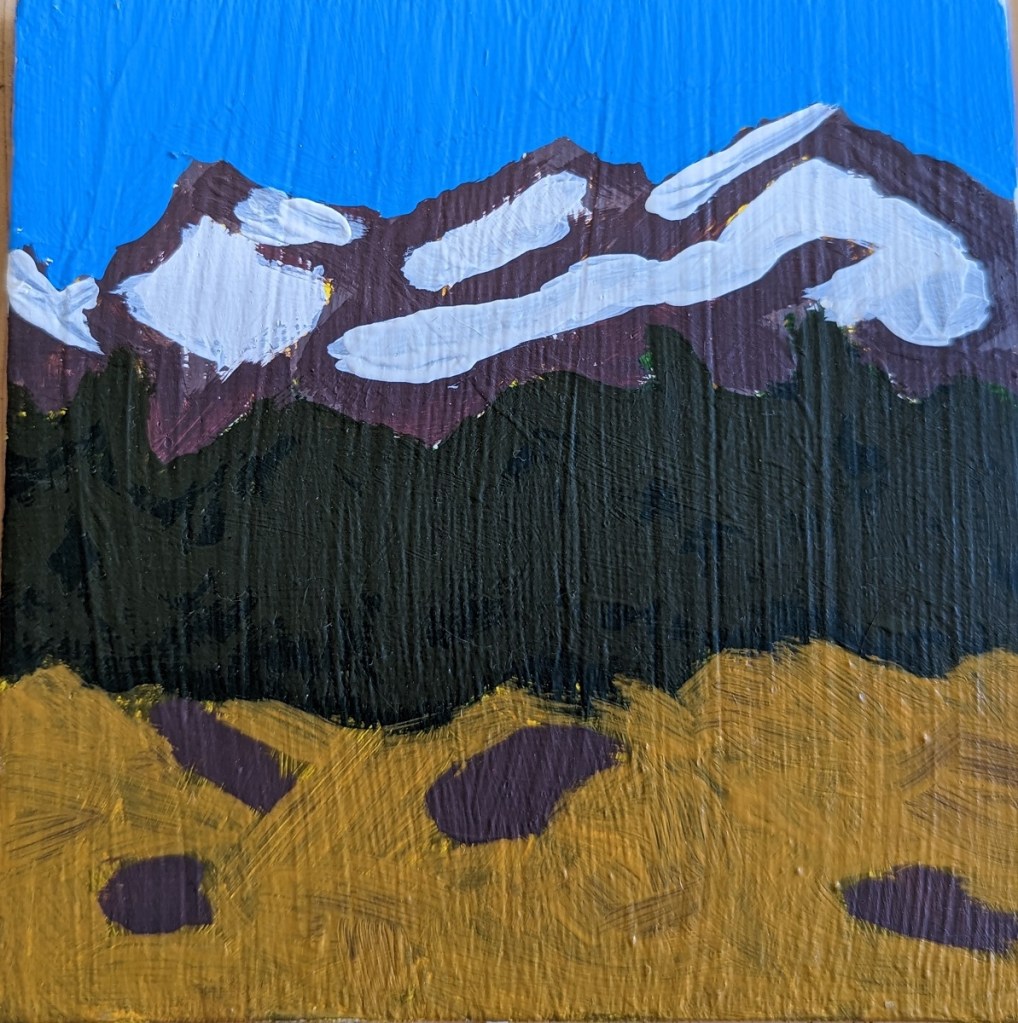
Redo of “50 Small Paintings”: Mountain Landscape
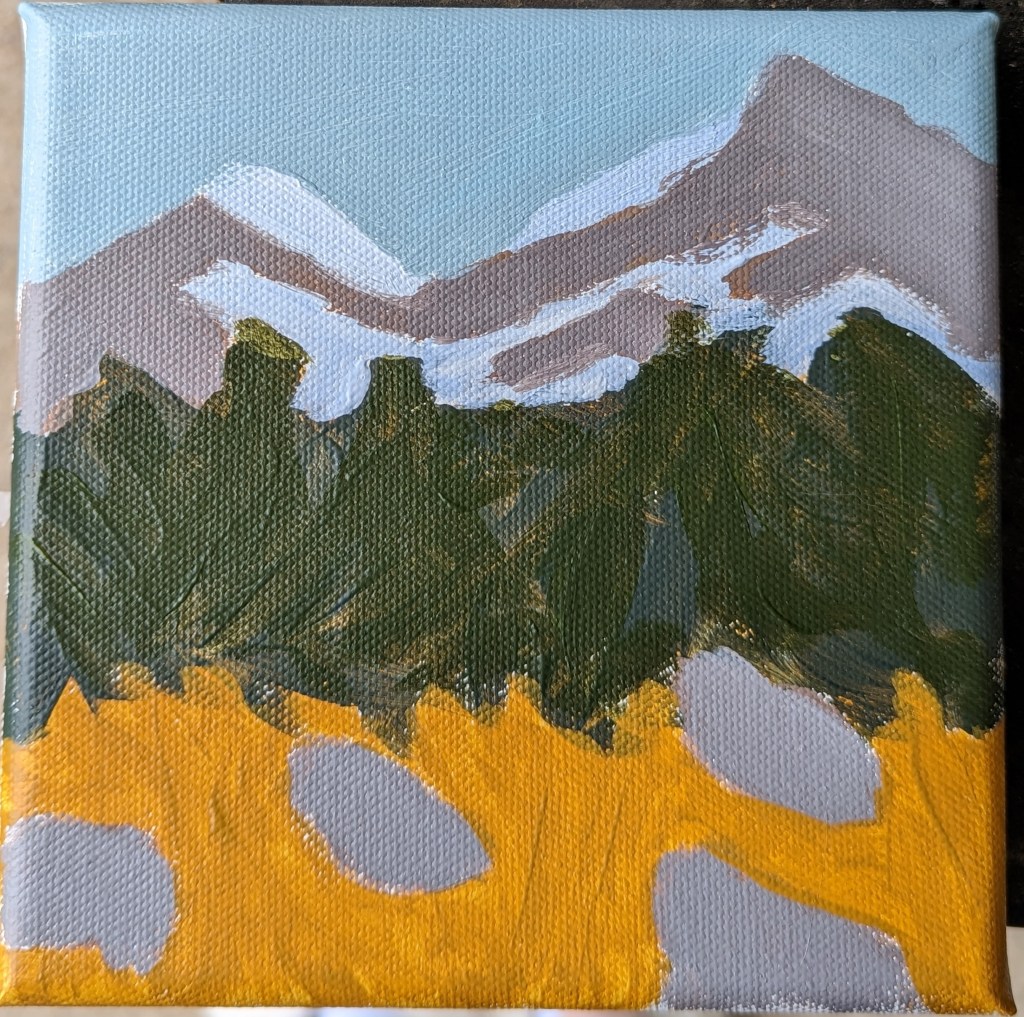
My original 5×5 painting of a mountain landscape, based on Mark Nelson’s “Learn to Paint in Acrylics with 50 Small Paintings: Pick up the skills * Put on the paint * Hang up your art” did not adequately reflect, in my opinion, atmospheric perspective. The mountain was unrealistically brown, the snow was unrealistically white, and the sky unrealistically blue!
So, I’ve tried again. The new version, obviously, is on the left. This was a 6×6 canvas, also painted in acrylics. It’s marginally better.
However, I think if I were to paint it yet a third time (!), I’d leave out the rocks in the foreground, instead adding a path through the meadow to the trees. I’d also work on my brushwork for both the mountain and the snowcap, and would add shadowed shapes to better indicate the form of the mountainside.
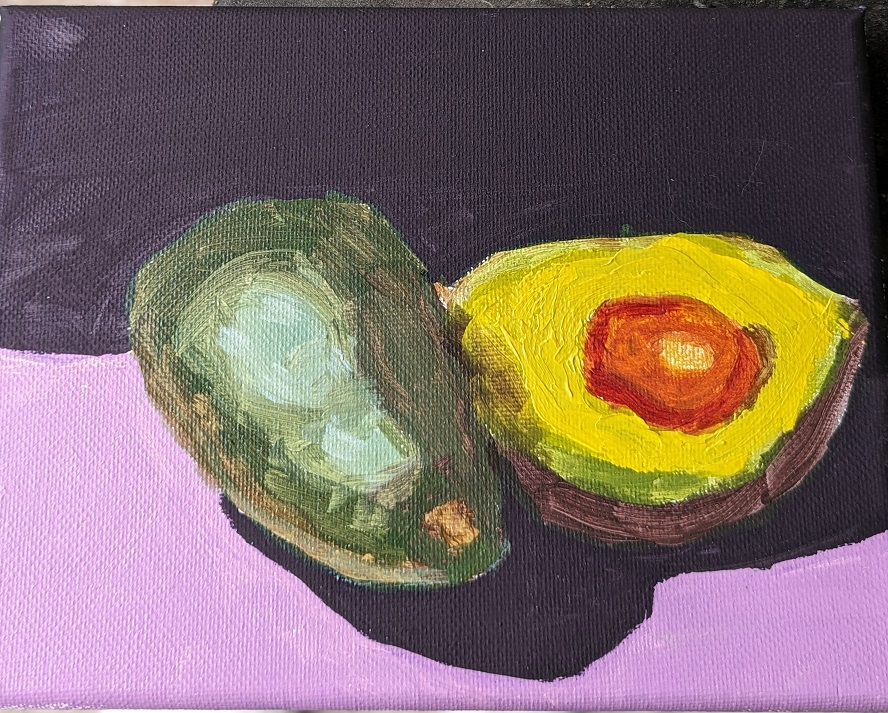
Avocado Still Life: #PAINTCOACH Patreon
I’m a Patreon subscriber to PaintCoach’s account, and one of the still life project is to do an avocado. This work is done in acrylic. I’m happiest with the whole avocado. As for the yellowish flesh of the avocado half, I painted it thickly with a palette knife, and later applied a satin glaze mixed with yellow paint.
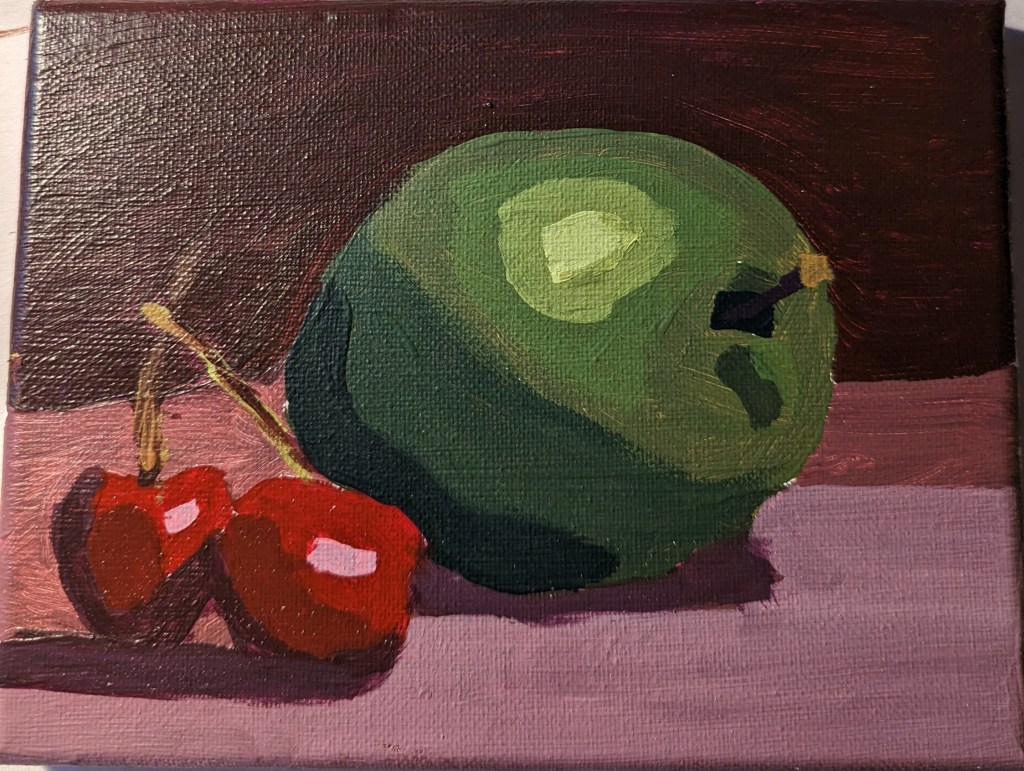
Apple & Cherries from #PAINTWEEK
I signed up to Paintcoach’s PaintWeek class, and did this demo painting of an apple with cherries. Because I was using acrylics and not oils, the gradations between the values are harsher. I didn’t blend; I was layering.
I am more satisfied with the cherries than the apple.
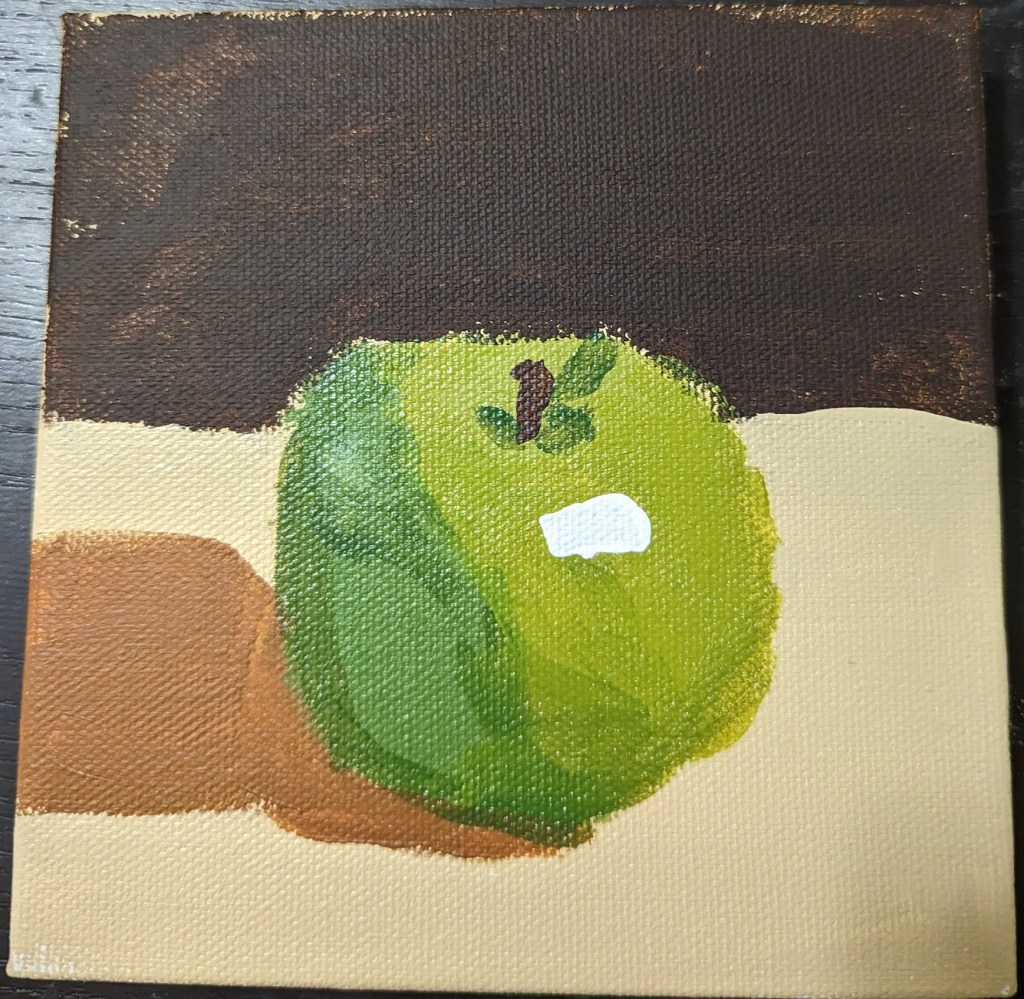
Two Different Apples.. from #PAINTCOACH
These two apples are from YouTube videos by PaintCoach.

Lessons Learned
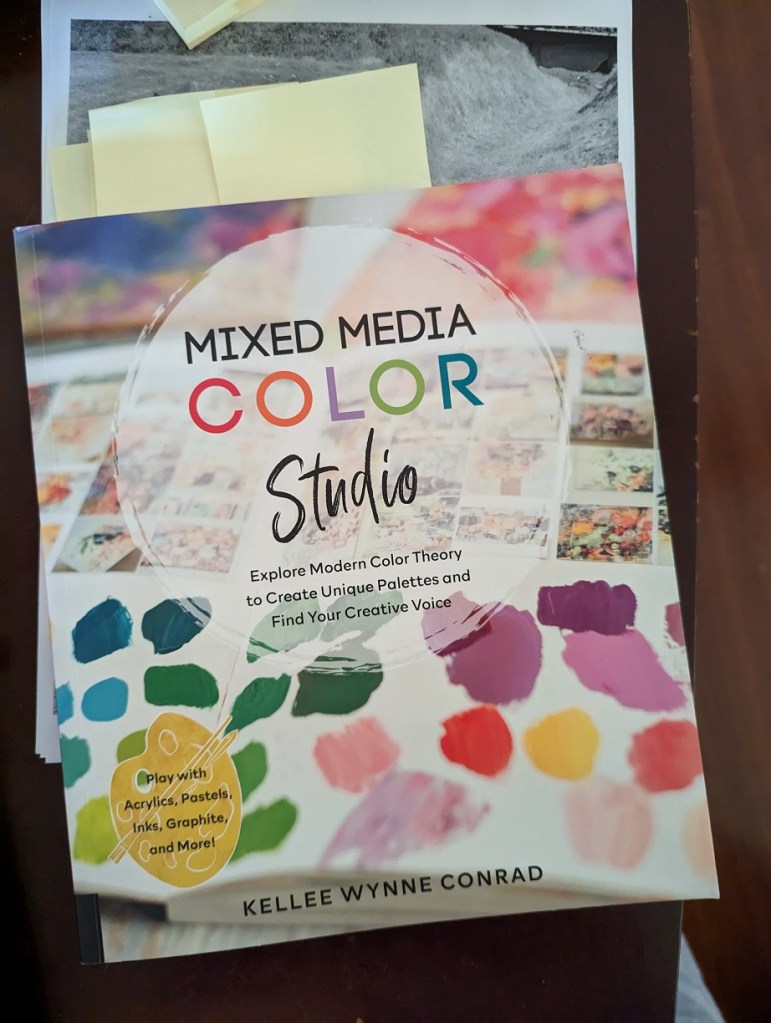
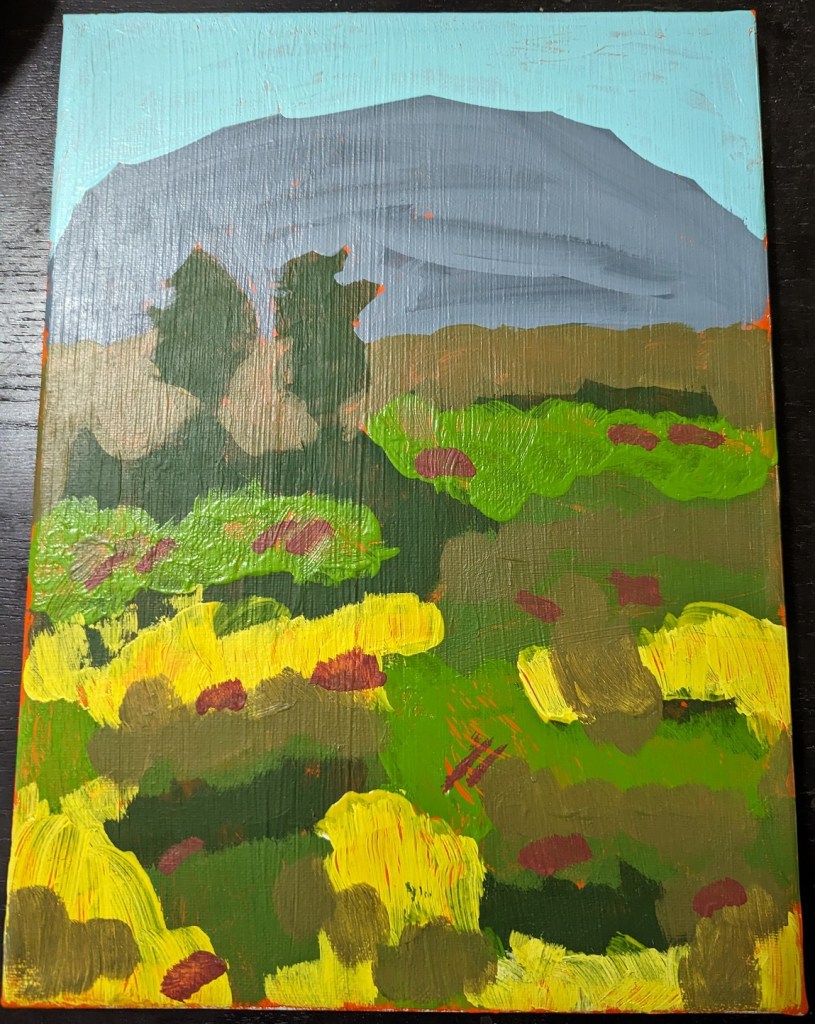
Using a demo project in Mixed Media Color Studio by Kellee Wynne Conrad, I attempted a landscape scene. And unfortunately I used a vivid fluorescent orange paint as background. This was a huge mistake!
The entire landscape became, for me, an exercise in trying to paint over the vivid orange, so I got very sloppy. I also discovered that my yellow paint was entirely too transparent — and that I need to pay attention to how transparent or opaque the paint I’m using is.
I also broke basic landscape rules around atmospheric perspective, in that the more distant the shapes (mountains, trees, etc.) are, the bluer they should be.
Small Seascapes Project
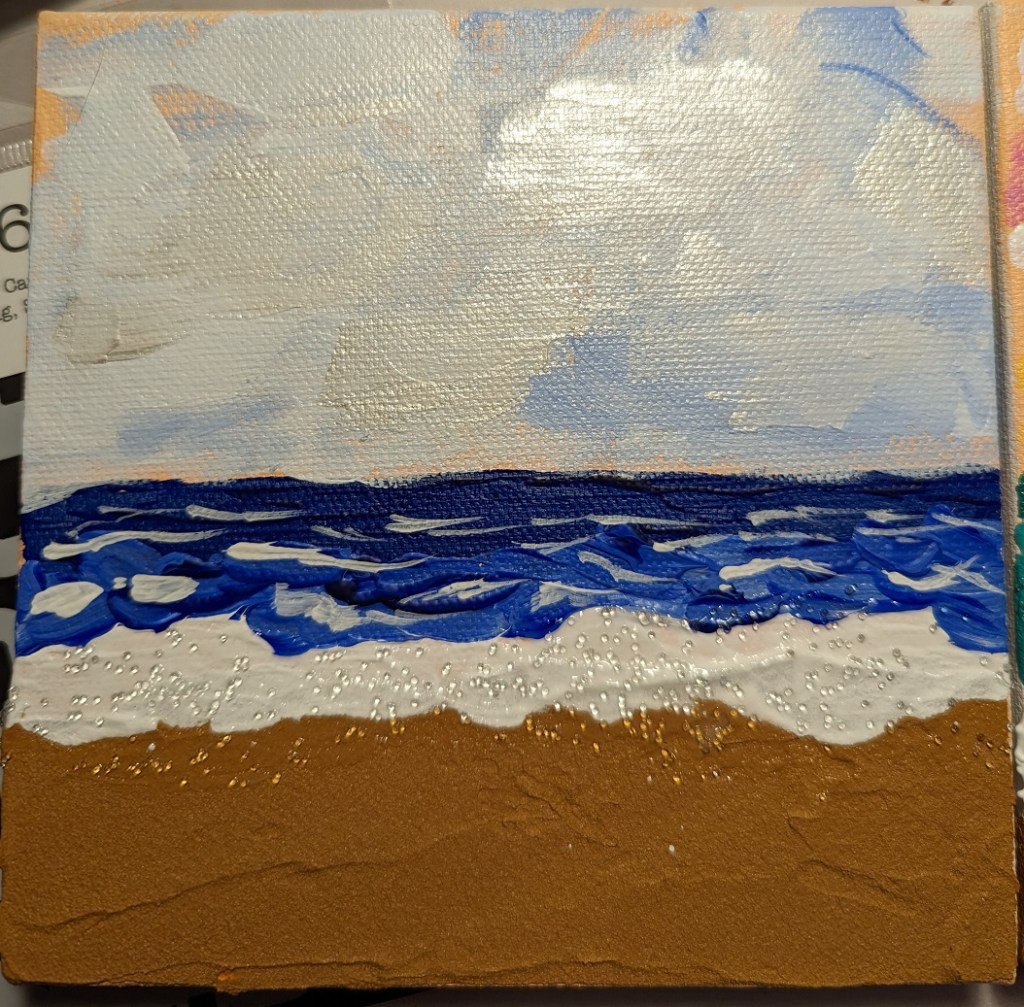
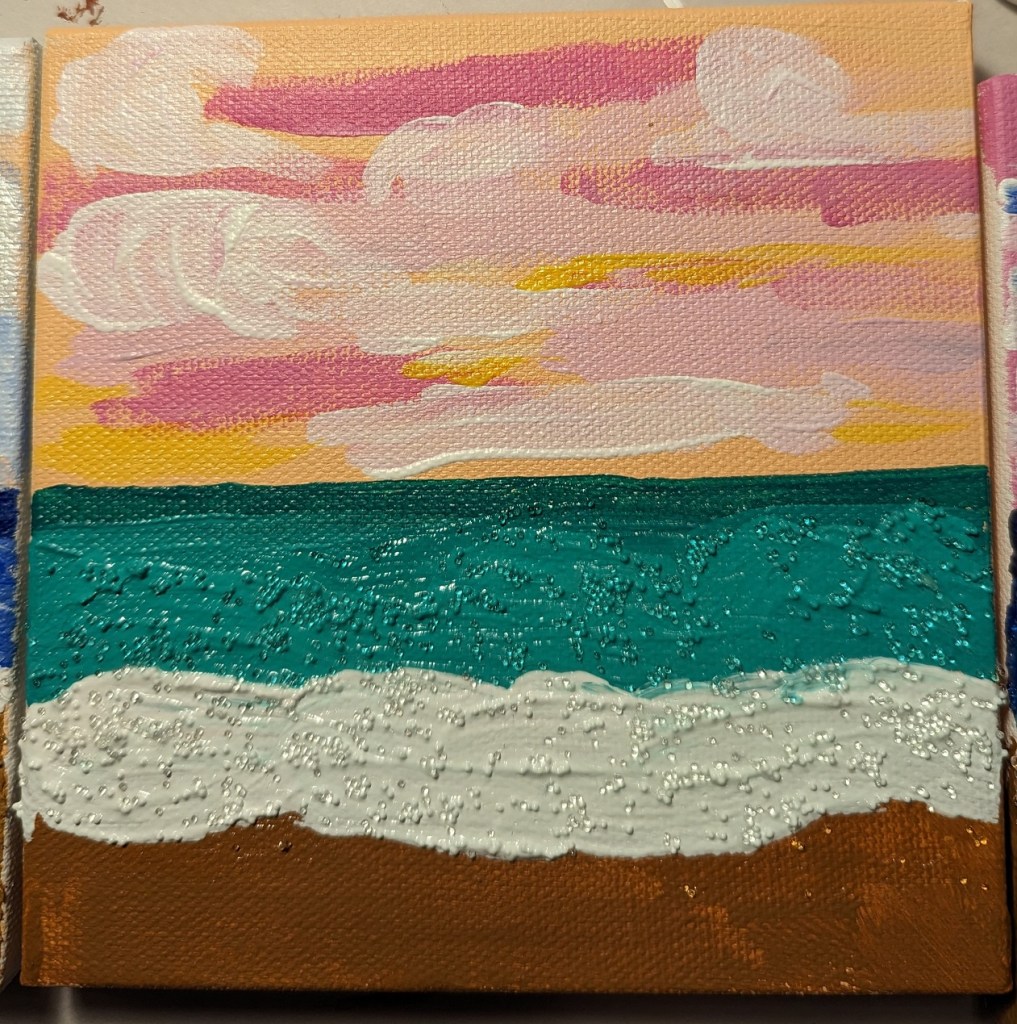
Using the Mixed Media Color Studio book by Kellee Wynne Conrad, I followed along with the seascape project. The author used 4×4 wood panels, but I used 6×6 blocks. The author used only paint, but I used Liquitex Basic Coarse Texture Medium from my sister’s stash to mix in with my burnt sienna/yellow ochre paint as “sand”. I also finished off the foamy waves with Liquitex Glass Beads, painting over the dried paint.
(I also tried mixing paint with the glass beads, as you can see below with the green sea scene; unfortunately, you lose the light effects with the glass — didn’t care for that.)
The upper-right photo also includes the clouds painted with Golden Heavy Body Iridescent paint. Not sure how useful that paint is, but couldn’t resist buying some to try it out.

Desert Scene Project
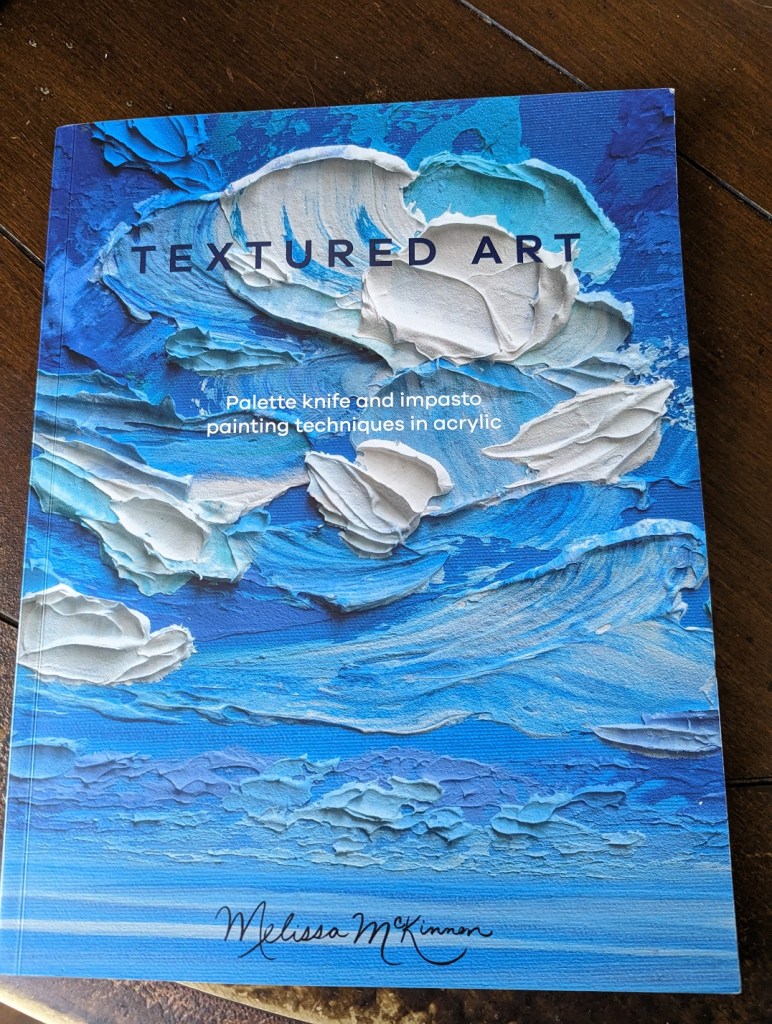
Using the book Textured Art by Melissa McKinnon and a 16×20 wood panel (gessoed with clear gesso), I followed along the demo of a desert scene. For the project, as directed, I used acrylic inks from Liquitex and Daler-Rowney FW acrylic inks, Golden’s High-Flow acrylic paint, and modeling paste and crackle paste.
I would not use the inks or the high-flow paint again; they were just not of interest to me. There’s no reason to not just use regular acrylic paint for this, in my opinon, and the ink base (under the crackle paste) didn’t really show through. I tried to hack at it and remove some, as the author of the book did, but was largely unsuccessful.
However, I would consider using the modeling paste again. Not sure the crackle paste would be useful to me.

 BetterLateThanNeverArt