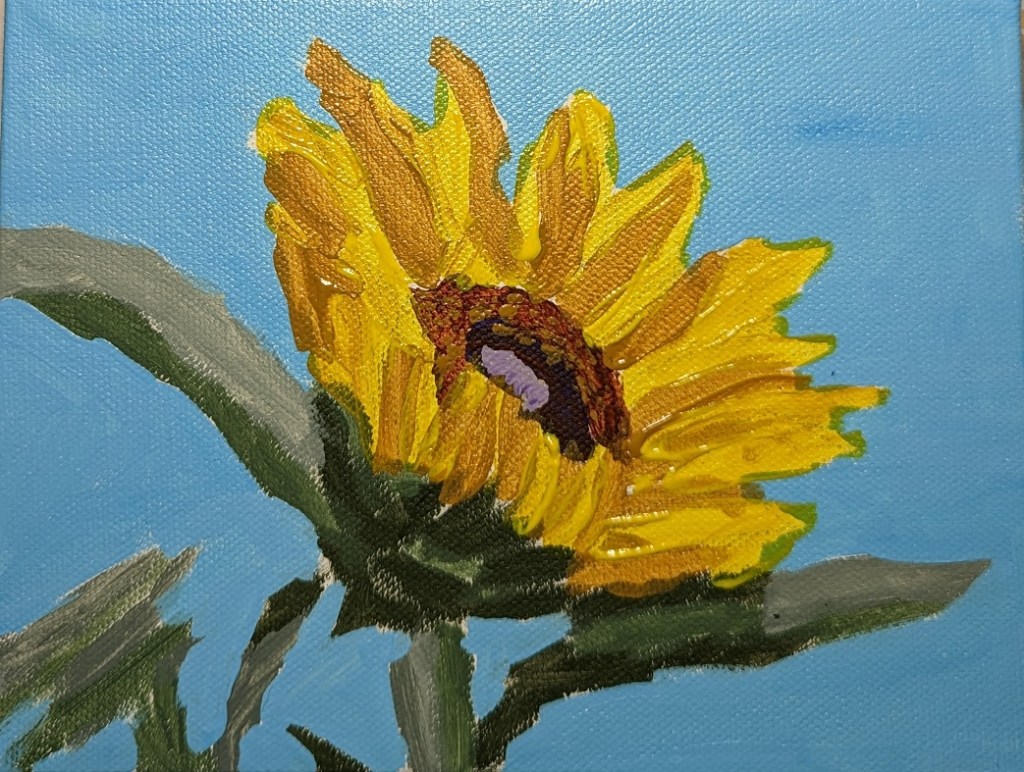
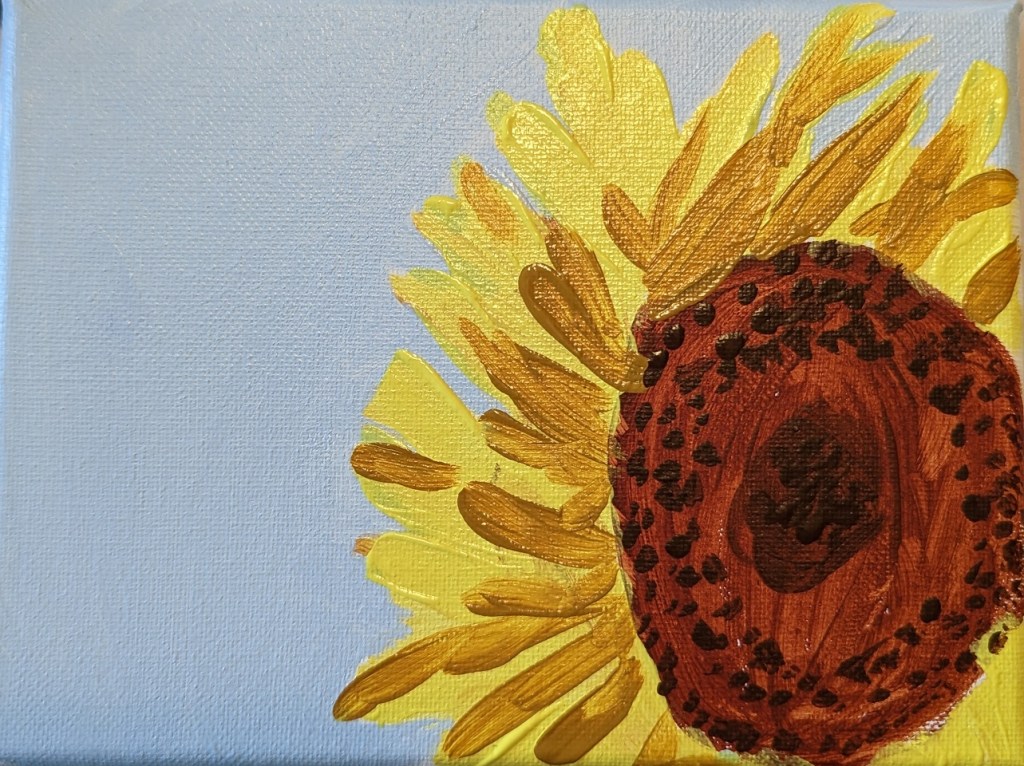
I used Yellow Ochre for the shaded parts of the petals, and Liquitex Soft Body Yellow Azo Med (PY 74) for the brighter parts of the petals. The yellow is fairly transparent, so I deliberately wanted to leave brush marks to give some additional definition to the petals.
I may come back around and paint over the greenish areas where I overpainted the yellow on to the background. Then again, maybe not, as from afar it looks a bit like shadow. We’ll see.
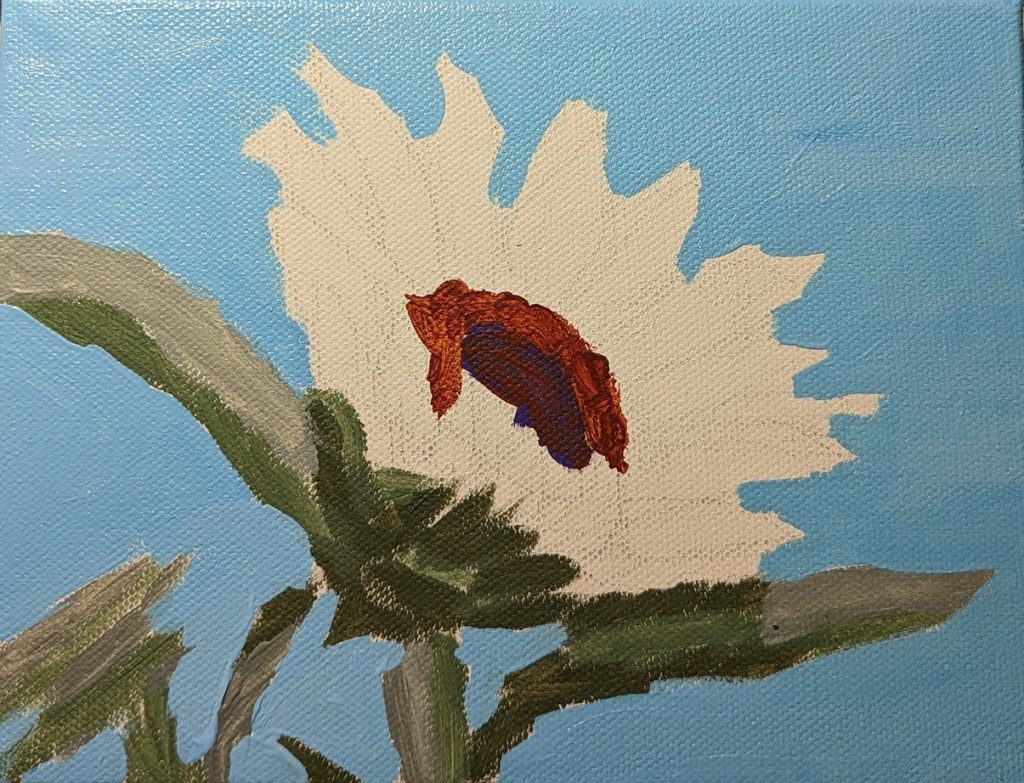
The green I used was one of my favorites — Chromium Oxide Green (PG 17) Liquitex Heavy Body. For the darkest green, I mixed it with Alizarin Crimson. The medium green is straight from the tube. And the lightest silvery green is Liquitex BASICS Green Gray.
This time for the sky I used Phthalo Blue from Golden Fluid, mixing it with the Golden Fluid Titanium White.
This sunflower painting was based on an image by Engin Akyurt from Pixabay. For the sky, I used Utrecht Fluid Cerulean Blue and Golden Fluid Titanium White — which works better for tinting as it doesn’t get so chalky looking as the Heavy Body. My camera doesn’t quite capture the color, but it’s close.
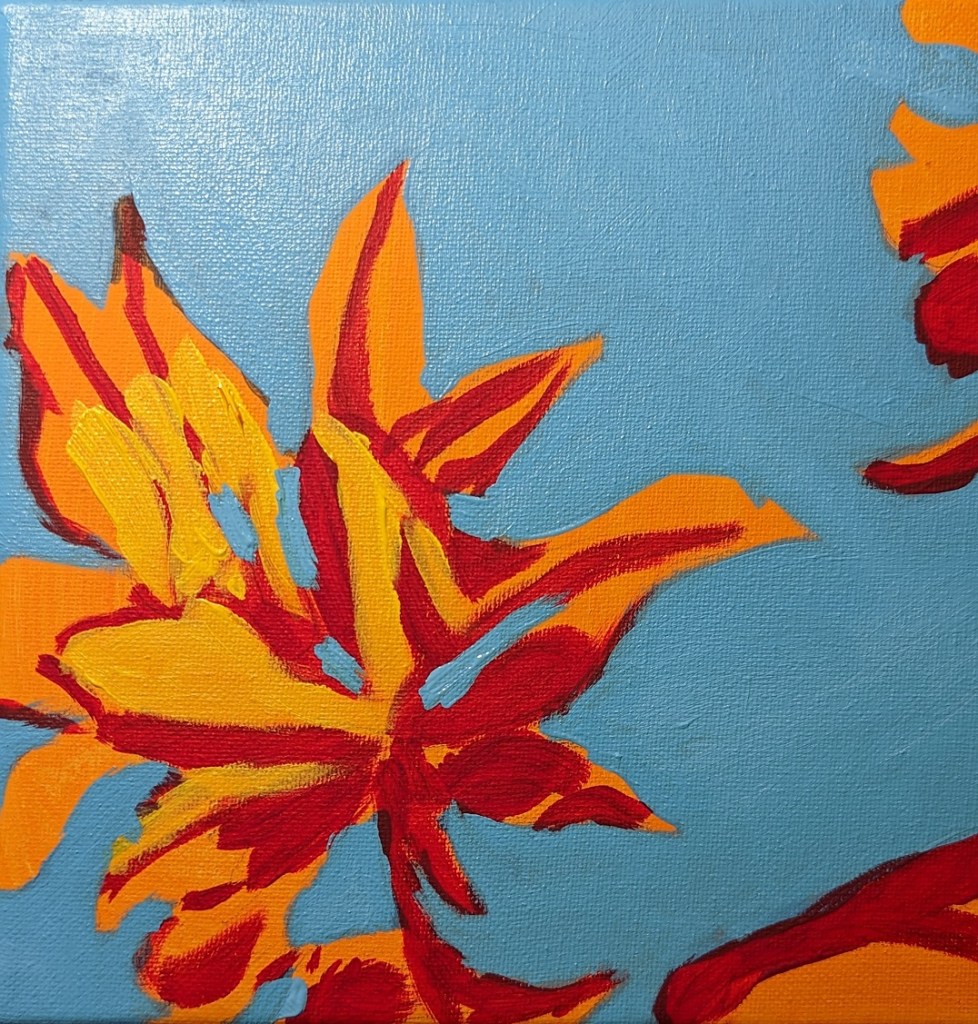
Here is the completed work. The orange I left untouched from the initial wash of color, adding alizarin crimson and yellow for the brighter and darker parts of the leaves.
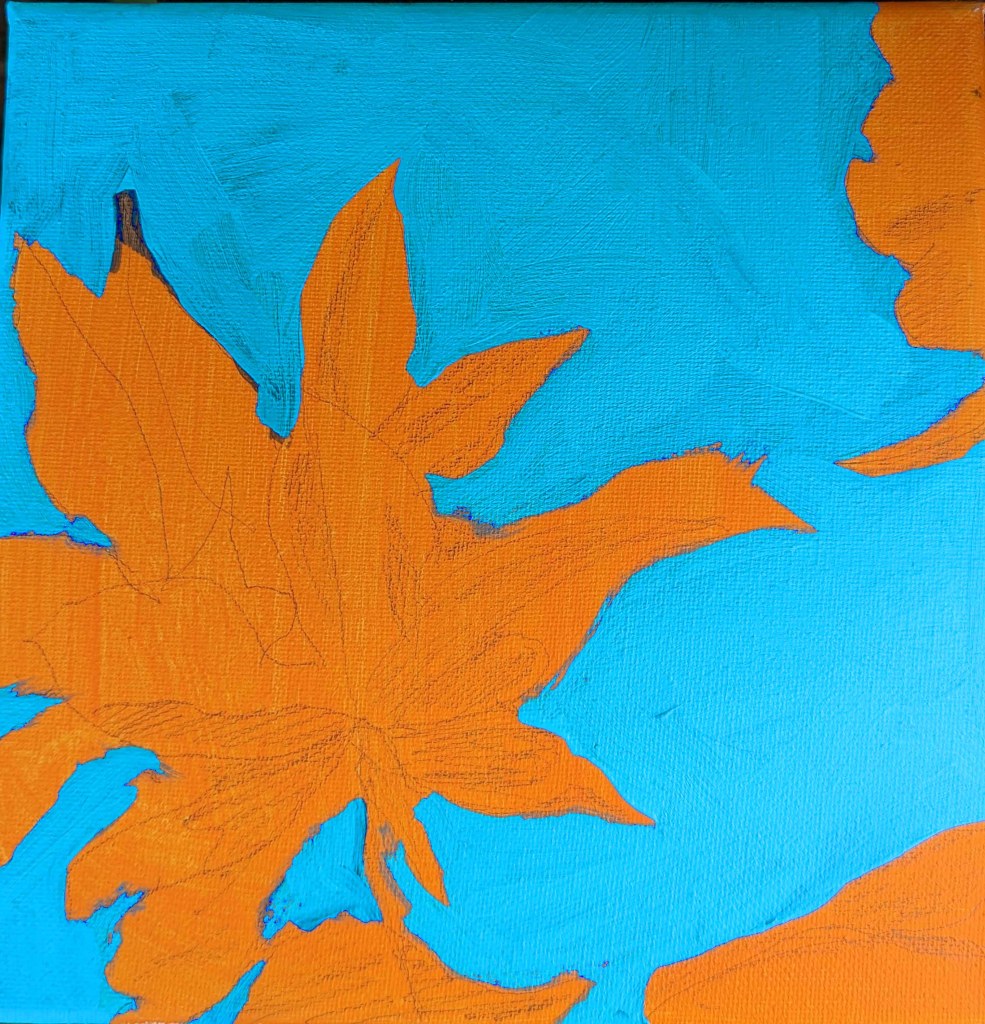
One more study I’ve done in the Adventures in Acrylic class. I did not do the fluorescent orange spray paint, and this time, instead of using my Perinone Orange (a close substitute), I went with Liquitex’s Cad-Free Orange paint, more soothing to my eyes.
Then I did a free-hand drawing in pencil of some of the orange leaves from the reference photo provided in the class, and did some light shading of the shadow areas as I saw them.
My blue was a mix of Utrecht’s cerulean blue (fluid) and Liquitex’s soft-body Light Blue Permanent (I think it is). I used a long-handled small bright brush to paint in the negative spaces.
This is really an in-progress painting, but I’m tempted to leave it as it is and go on to something else. We’ll see!
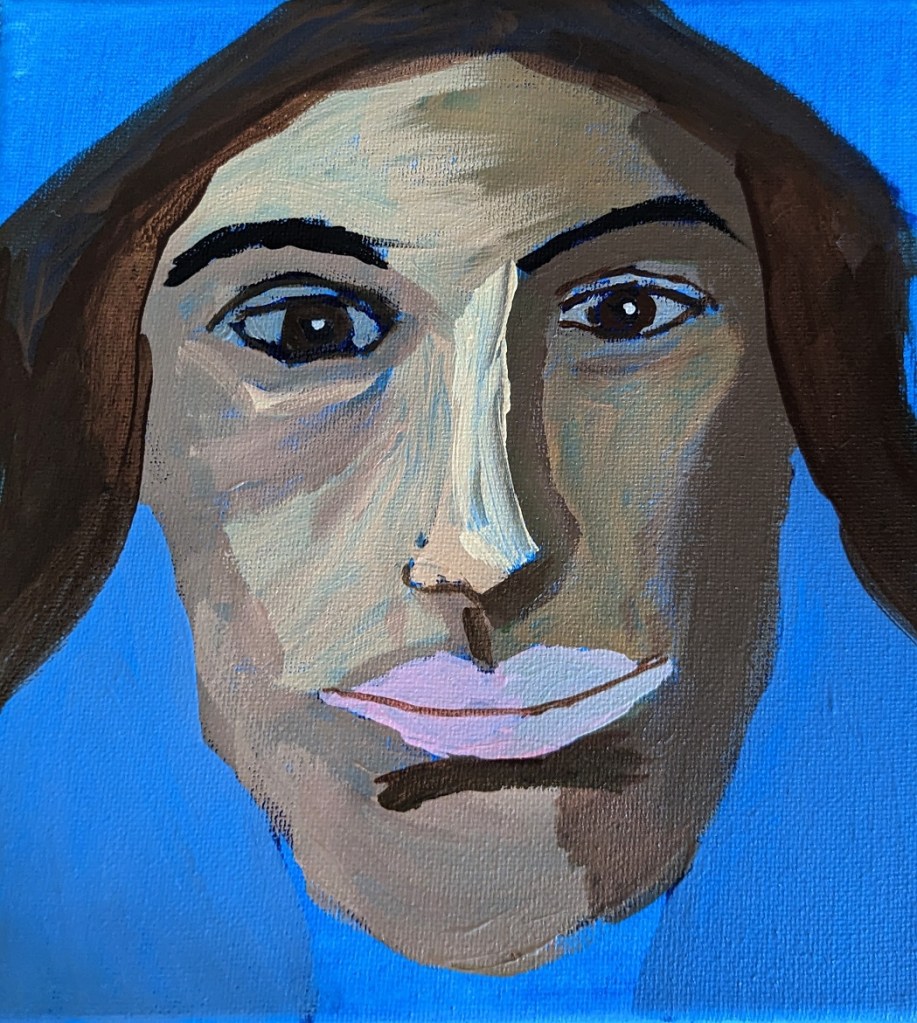
This is another work from Marla Baggetta’sAdventures in Acrylic class I’m taking. I have to say I’m NOT a big fan of phthalo blue, at least as a background. Especially a portrait background! That blue just shines through in an aggravating fashion! And, obviously, it affects the look of the other paint colors used. All in all, she looks greener than I had wanted her to be. Until I get portraits down well, I don’t see the purpose of using wacky colors. 🙂
Anyway, painting a portrait — though this was supposed to be “expressive” and “fun” not an absolute likeness — is one thing, drawing is another. I fiddled with the proportional divider I bought for sketching, and the drawing was pretty decent. But once I started painting over my pencil lines, the drawing went out the window. Ugh!
I AM reasonably satisfied with the facial planes and the shadows — for a first attempt.



 BetterLateThanNeverArt