
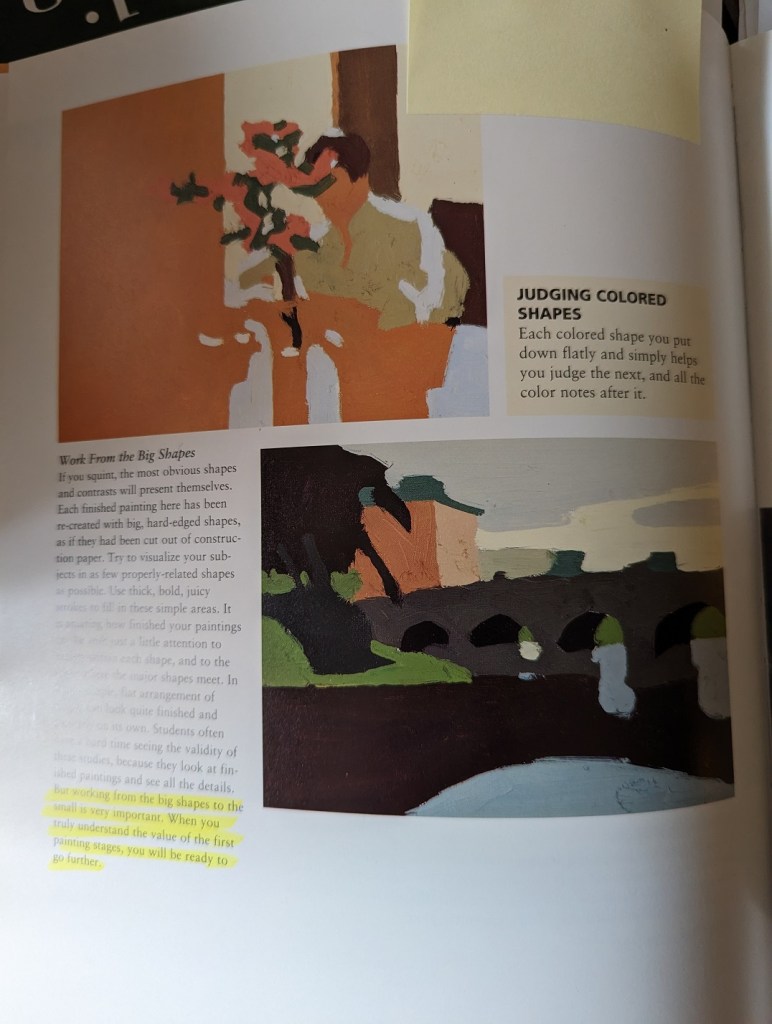
I did a second “big shapes” study today, referring to one from the Kevin MacPherson book mentioned in the last post.
Author: cathmary1030
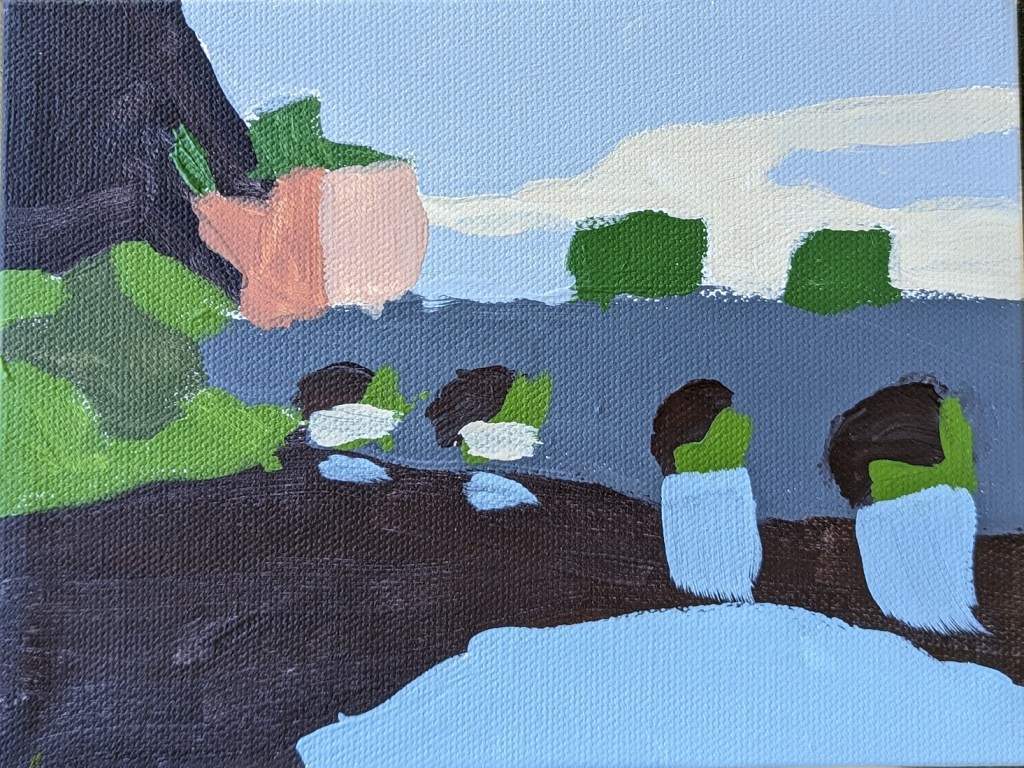
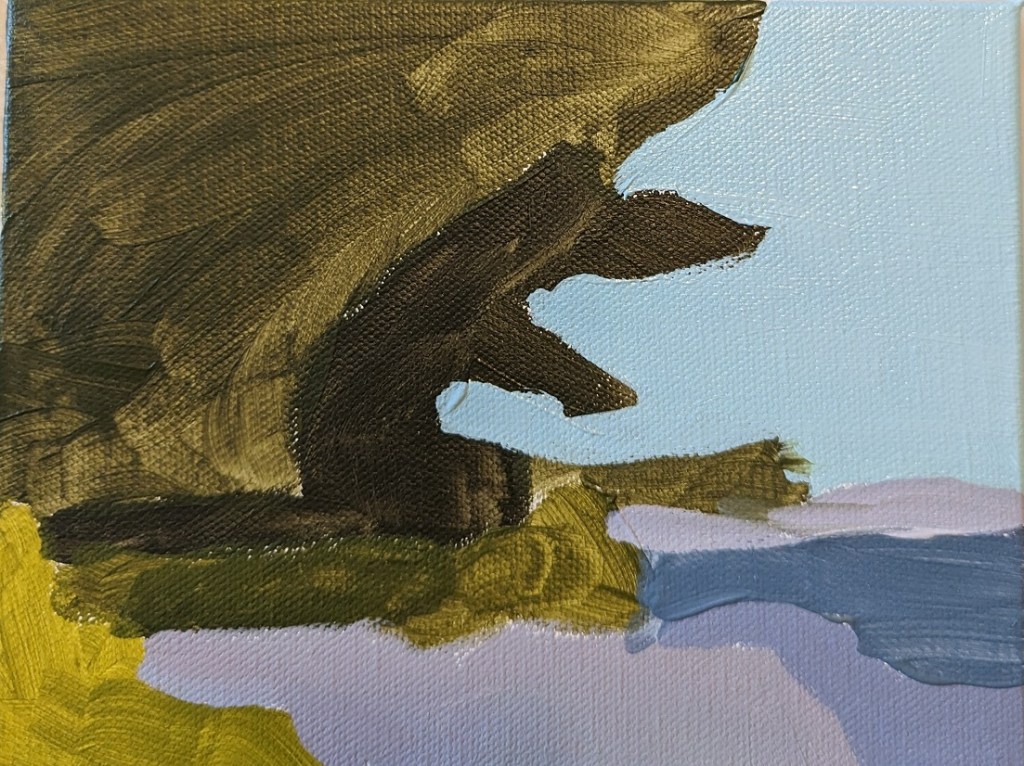
Big Shapes Seascape – Start
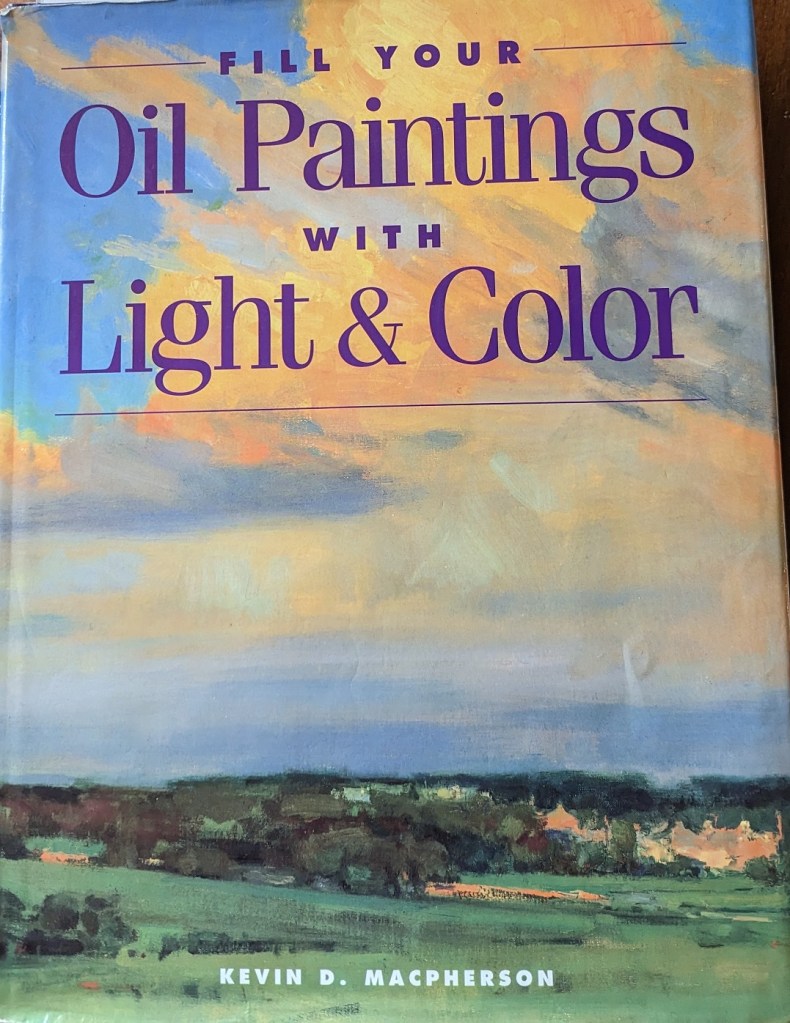
Kevin MacPherson, in his book Fill Your Oil Paintings with Light & Color suggests beginner painters get into the groove of thinking first of big shapes (whether for landscapes, still life or figure studies) and then mapping out those big shapes first before getting into the smaller shapes & detail.
I found out about Kevin MacPherson when I signed up as a Patreon for PaintCoach (aka Chris Fornataro); Chris teaches the same thing in his tutorials on Patreon and videos on YouTube.
MacPherson even suggests doing 100 of these “starts” (the big shapes) as I did below, based on one of the PaintCoach tutorials.

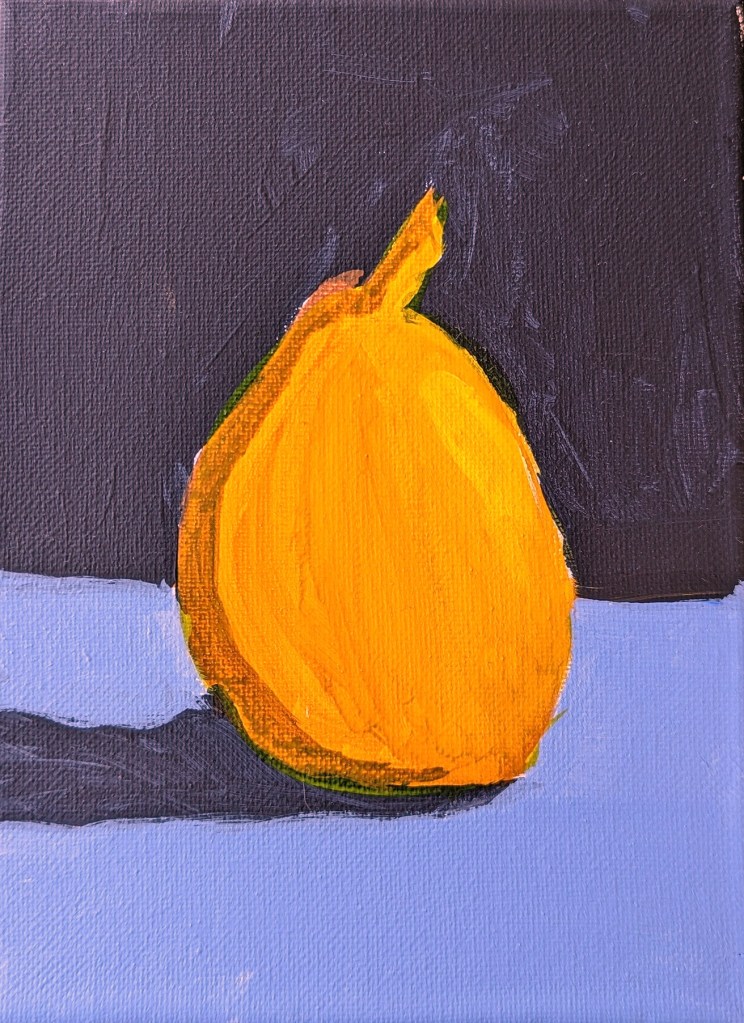
Pear Study
Nothing special about the results of this study, which I found on Patreon… I used a glaze of yellow and satin glazing medium on top of the brightest side of the pear. Might as well use some of the features of acrylic painting.
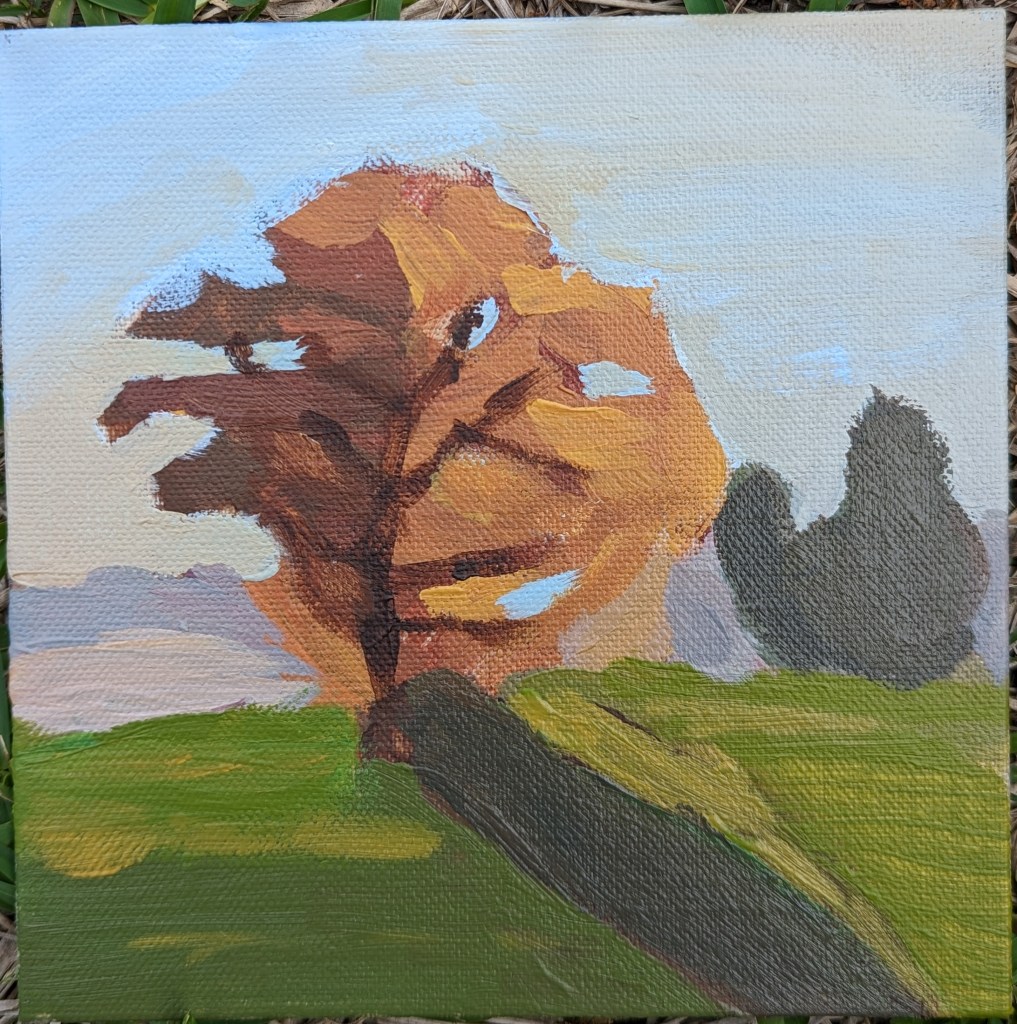
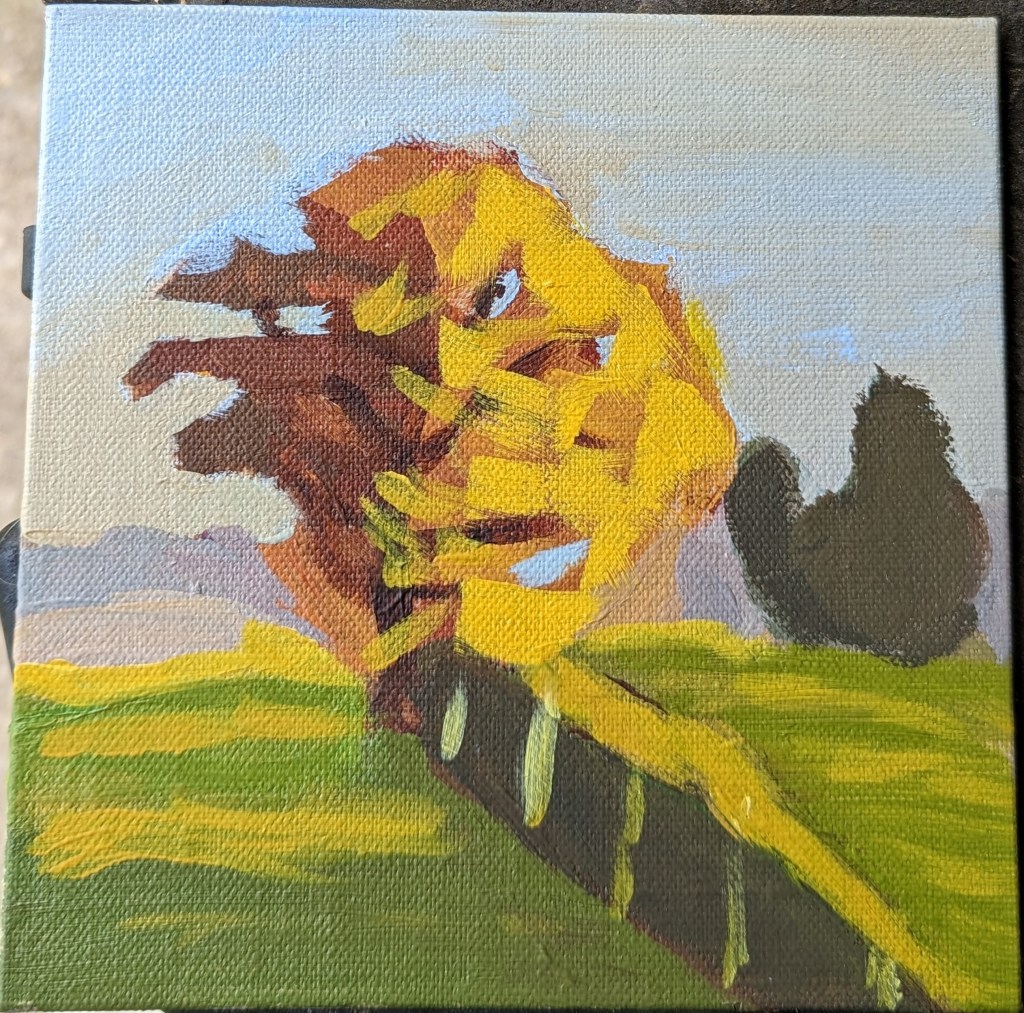
Autumn Tree from #PAINTCOACH Patreon

This Autumn Tree exercise was from a PaintCoach post on Patreon. I did it on a 6×6 linen panel in acrylic. Getting the colors even close to correct was a beat-down. I’m discovering I prefer liquid or soft-body acrylics to the heavy-body, at least when I’m trying to imitate painting in oils!
One photo is of the work-in-progress; the other is the “I’m done with this!” version.
I’m most satisfied with the sky. If I were to paint this again, I’d use much less yellow in the tree, and make shorter and less uniform brush strokes.
Redo of “50 Small Paintings”: Mountain Landscape
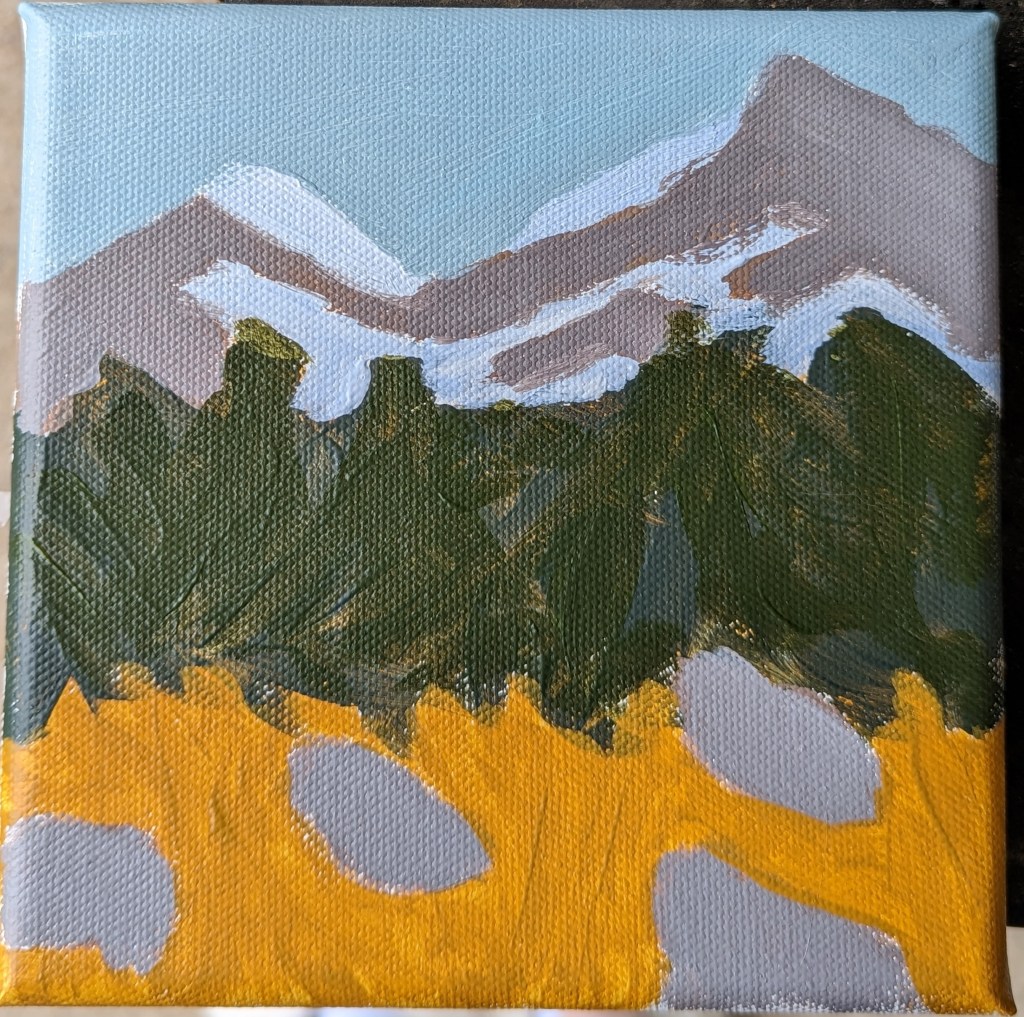
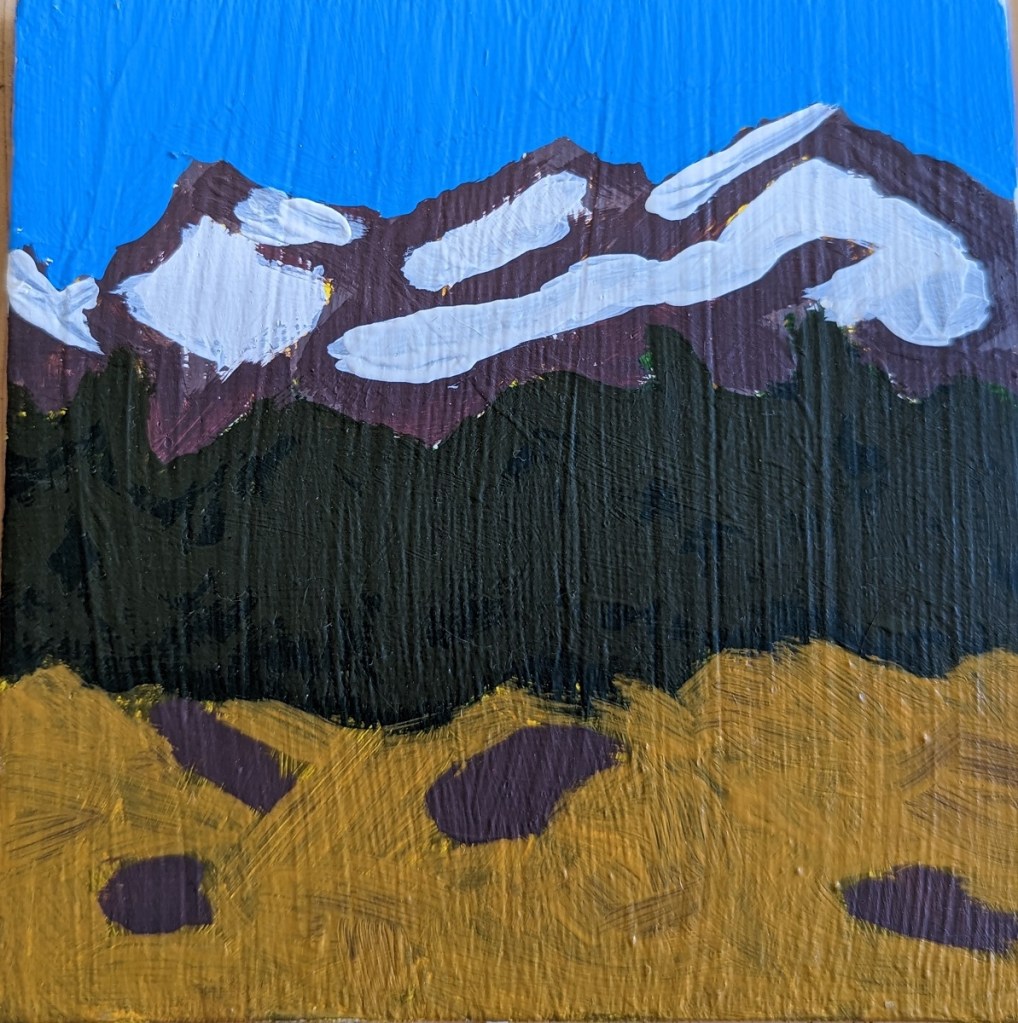
My original 5×5 painting of a mountain landscape, based on Mark Nelson’s “Learn to Paint in Acrylics with 50 Small Paintings: Pick up the skills * Put on the paint * Hang up your art” did not adequately reflect, in my opinion, atmospheric perspective. The mountain was unrealistically brown, the snow was unrealistically white, and the sky unrealistically blue!
So, I’ve tried again. The new version, obviously, is on the left. This was a 6×6 canvas, also painted in acrylics. It’s marginally better.
However, I think if I were to paint it yet a third time (!), I’d leave out the rocks in the foreground, instead adding a path through the meadow to the trees. I’d also work on my brushwork for both the mountain and the snowcap, and would add shadowed shapes to better indicate the form of the mountainside.
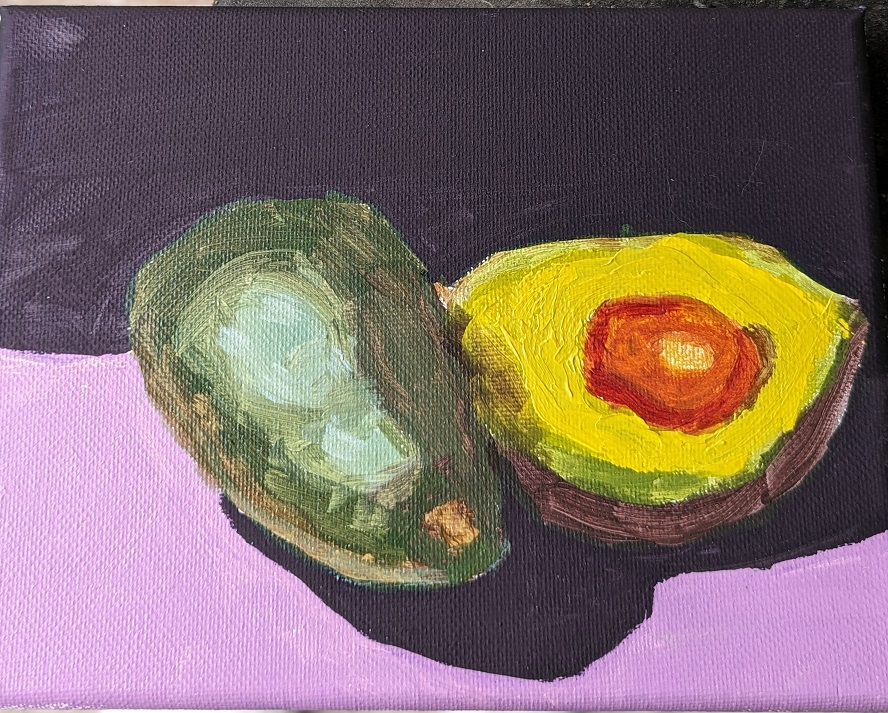
Avocado Still Life: #PAINTCOACH Patreon
I’m a Patreon subscriber to PaintCoach’s account, and one of the still life project is to do an avocado. This work is done in acrylic. I’m happiest with the whole avocado. As for the yellowish flesh of the avocado half, I painted it thickly with a palette knife, and later applied a satin glaze mixed with yellow paint.
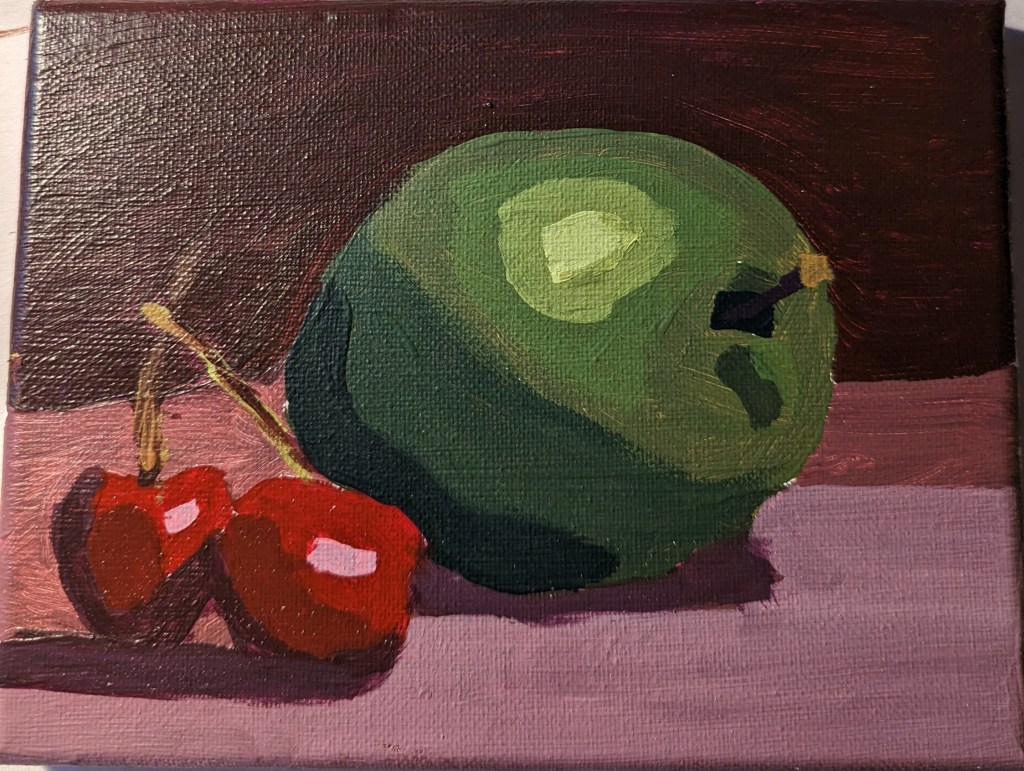
Apple & Cherries from #PAINTWEEK
I signed up to Paintcoach’s PaintWeek class, and did this demo painting of an apple with cherries. Because I was using acrylics and not oils, the gradations between the values are harsher. I didn’t blend; I was layering.
I am more satisfied with the cherries than the apple.
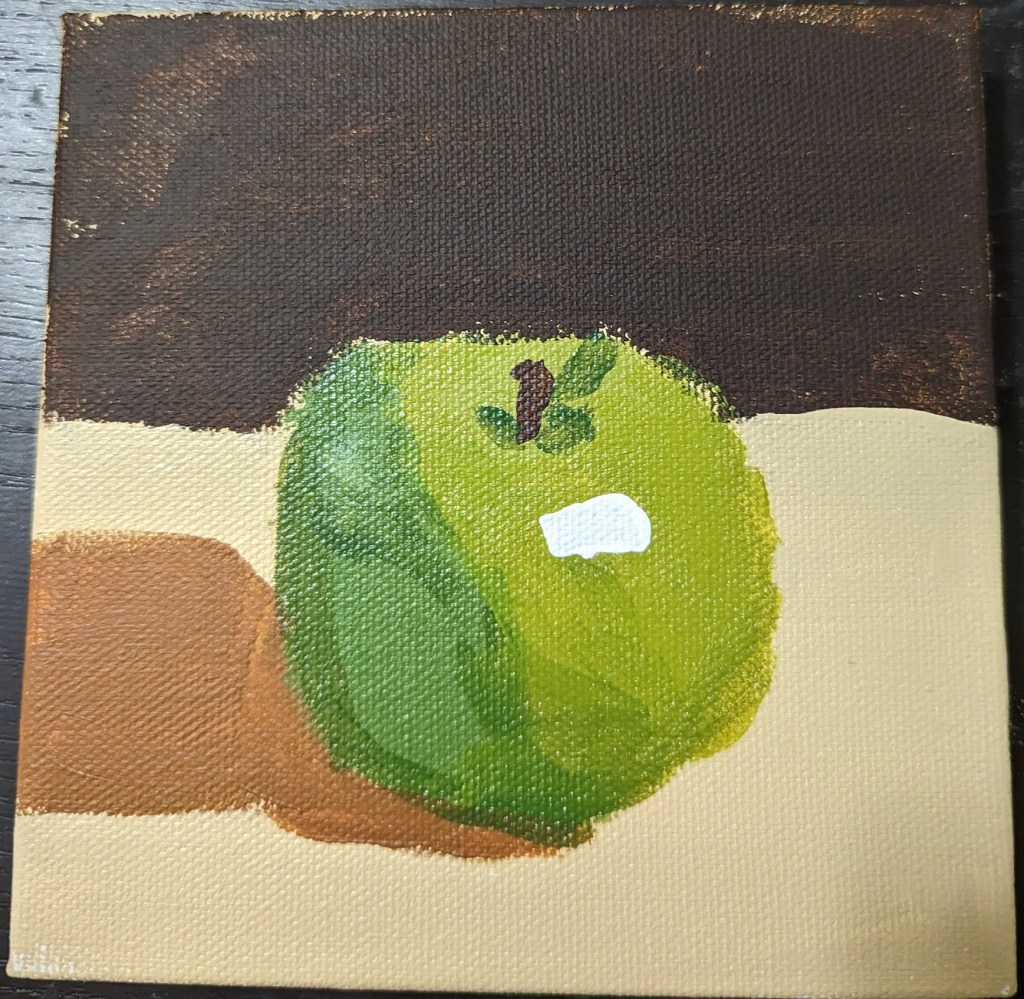
Two Different Apples.. from #PAINTCOACH
These two apples are from YouTube videos by PaintCoach.

Lessons Learned
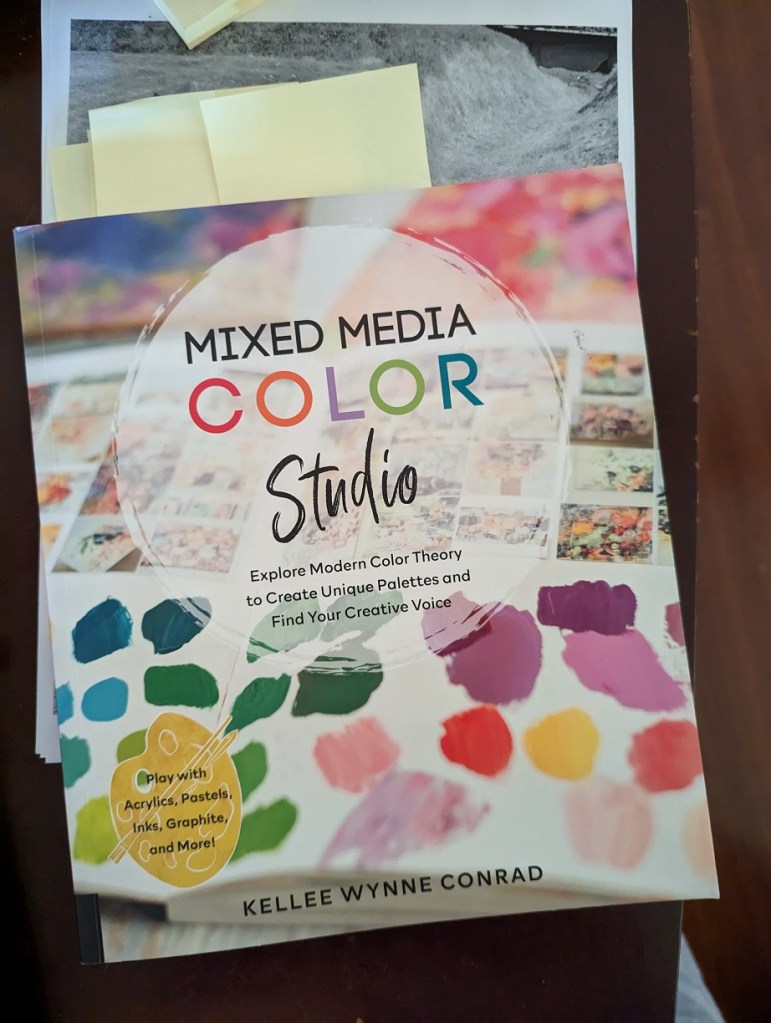
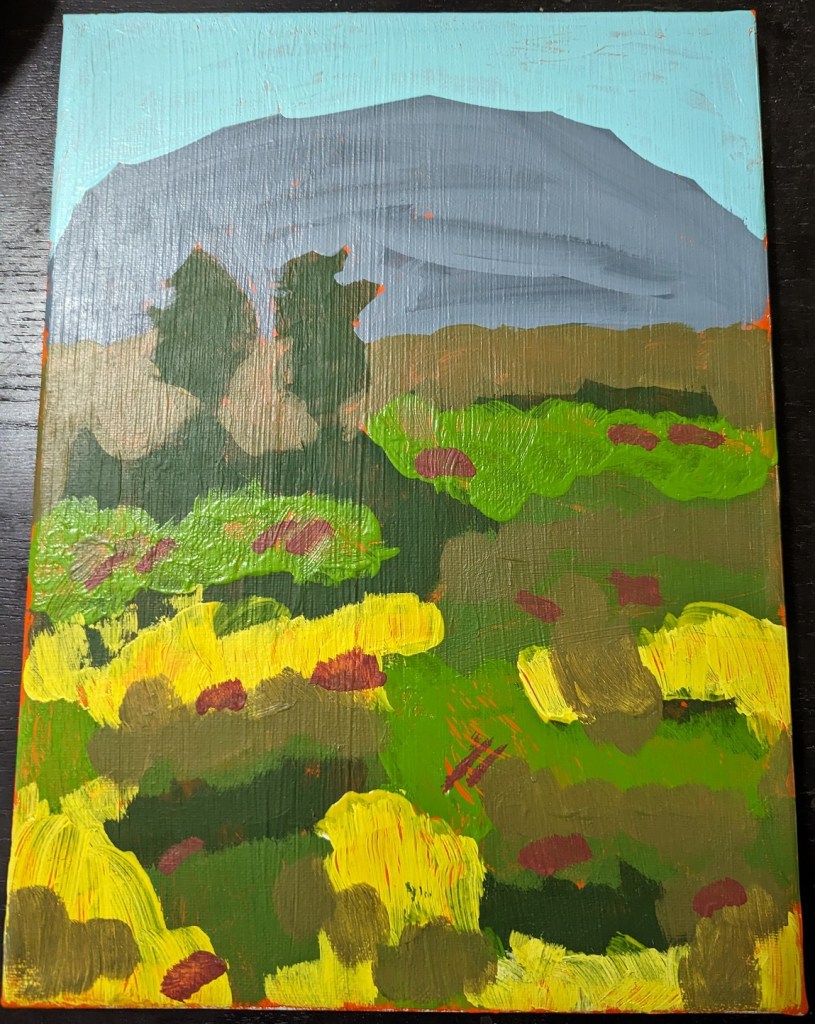
Using a demo project in Mixed Media Color Studio by Kellee Wynne Conrad, I attempted a landscape scene. And unfortunately I used a vivid fluorescent orange paint as background. This was a huge mistake!
The entire landscape became, for me, an exercise in trying to paint over the vivid orange, so I got very sloppy. I also discovered that my yellow paint was entirely too transparent — and that I need to pay attention to how transparent or opaque the paint I’m using is.
I also broke basic landscape rules around atmospheric perspective, in that the more distant the shapes (mountains, trees, etc.) are, the bluer they should be.
 BetterLateThanNeverArt